
ALMATY — Kazakhstan’s role as a key strategic partner of the United States is expanding, experts say, as President Kassym-Jomart Tokayev’s recent visit to Washington yielded more than $17 billion in new investment agreements. Speaking to The Astana Times, experts emphasized that the partnership reflects a shift from symbolic diplomacy to a results-driven model grounded in mutual trust and economic pragmatism.
According to Semetey Amanbekov, PhD candidate at the Kyrgyz Diplomatic Academy and editor-in-chief of Exclusive news agency, the Kazakh-U.S. partnership has evolved into a “stable system where mutual interests form a practical agenda.”
“Kazakhstan offers transparency and predictability to American business, and in return, gains access to capital, technology, and new markets,” Amanbekov said.
Deepening economic ties
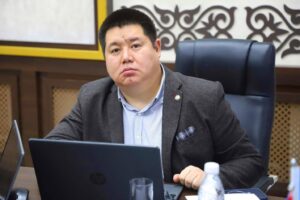
Semetey Amanbekov.
The U.S. remains Kazakhstan’s largest investor, accounting for 80% of all U.S. investment in Central Asia. Direct investments in Kazakhstan now exceed $60 billion, with over 630 American companies operating in the country, including Chevron, ExxonMobil, Wabtec, and PepsiCo.
Amanbekov noted that this engagement reflects long-term confidence in Kazakhstan’s economic stability.
“The figures are not accidental. They demonstrate a sustained interest from American corporations in Kazakhstan’s consistent investment policies,” he said.
He highlighted several landmark projects, including the $4.2 billion contract between Wabtec and Kazakhstan Temir Zholy (KTZ) for the production of locomotives. According to Amanbekov, another milestone is Kazakhtelecom’s partnership with Amazon Kuiper, involving $200 million to expand satellite infrastructure in Almaty, Akkol, and Aktau.
“These projects set the tone for a new technological era. Kazakhstan is no longer just a market; it is becoming a platform for innovation,” he said.
Kazakhstan’s financial transformation
Amanbekov also pointed to the Astana International Financial Centre (AIFC) as a driving force behind Kazakhstan’s transformation into a regional financial hub.
“AIFC’s position as the leading financial centre in Eastern Europe and Central Asia strengthens investor confidence. It provides a predictable environment for global business and reinforces Kazakhstan’s role as an international platform for finance and innovation,” he said.
He also noted that the expected recognition of Kazakhstan as a market economy and the country’s preparation for Permanent Normal Trade Relations (PNTR) status from the U.S. Congress will further anchor this cooperation, opening wider access for American investors and securing their long-term position in the Kazakh market.
Energy and critical minerals as pillars of partnership
According to Amanbekov, new energy forms are taking center stage. Kazakhstan currently produces around 40% of the world’s uranium and supplies roughly a quarter of U.S. uranium imports.
The country possesses 19 of the 50 most critical elements for advanced industries, including tungsten, cobalt, gallium, and germanium.
“These resources are no longer just commodities. They are strategic assets that make Kazakhstan a key contributor to global energy security and technological progress,” he said.
A new Eurasian hub
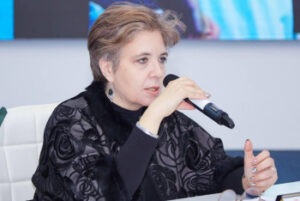
Taisiya Marmontova
In a comment to The Astana Times, Taisiya Marmontova, head of the Institute for Regional Integration Studies, emphasized that Kazakhstan’s development strategy is increasingly focused on combining logistics and digitalization into a unified model of sustainable connectivity.
“The Trans-Caspian route moves goods, and digital networks move data and capital. Together, they make Kazakhstan the nucleus of a new Eurasian economy where transparency and trust become the main currencies,” she said.
For the U.S., she noted, this partnership opens “reliable supply corridors, access to technological initiatives, and a region where the future can be built without geopolitical risk.”
Strategic and political outcomes
Marmontova noted that the in-person Tokayev–Trump meeting confirmed the elevation of Central Asia’s priority on the White House agenda. According to her, the phone conversation between Tokayev and Israel’s Prime Minister, discussing Kazakhstan’s accession to the Abraham Accords, also reflected a broader diplomatic opening and international recognition of Kazakhstan’s balanced approach.
Particular attention was paid to critical minerals, including uranium, tungsten, and rare-earth elements. Marmontova explained that discussions focused on “moving from extraction to processing and integration into U.S. and EU supply chains.”
Toward strategic autonomy
Marmontova highlighted that Kazakhstan’s foreign policy allows it to maintain stable relations with Russia and China while deepening cooperation with the U.S. and the EU.
“The strength of Kazakhstan’s diplomacy lies not in choosing sides but in building bridges. The country’s task now is to move from exporting raw materials to exporting certified, high-tech value chains,” she said.
She noted that in an increasingly competitive Eurasia, Kazakhstan’s success will depend on its ability to integrate compliance, certification, and digital traceability into trade, as “the new global currency of trust.”
Building a 21st-century partnership

Lujbica Vasic.
Lujbica Vasic, PhD, professor of American and British Literature and International Relations, added that the C5+1 summit between the U.S. and Central Asian countries marked a milestone in regional cooperation, focusing on economic, energy, and security partnerships, as well as climate resilience, digital transformation, and human capital development.
She emphasized that the U.S. views Kazakhstan as a reliable and predictable partner, accounting for over 60% of Central Asia’s GDP and attracting 80% of all U.S. investments in the region.
“Kazakhstan’s foreign policy remains multi-vector and pragmatic with the country acting as an initiator of regional integration, while the U.S. views the C5+1 format as a platform for strengthening stability and development in Central Asia,” Vasic said.
