
ALMATY – Kazakhstan has built 312 new cultural facilities over the past seven years as part of efforts to preserve its national heritage, support domestic artists and modernize cultural infrastructure, according to the Ministry of Culture and Information’s press service.
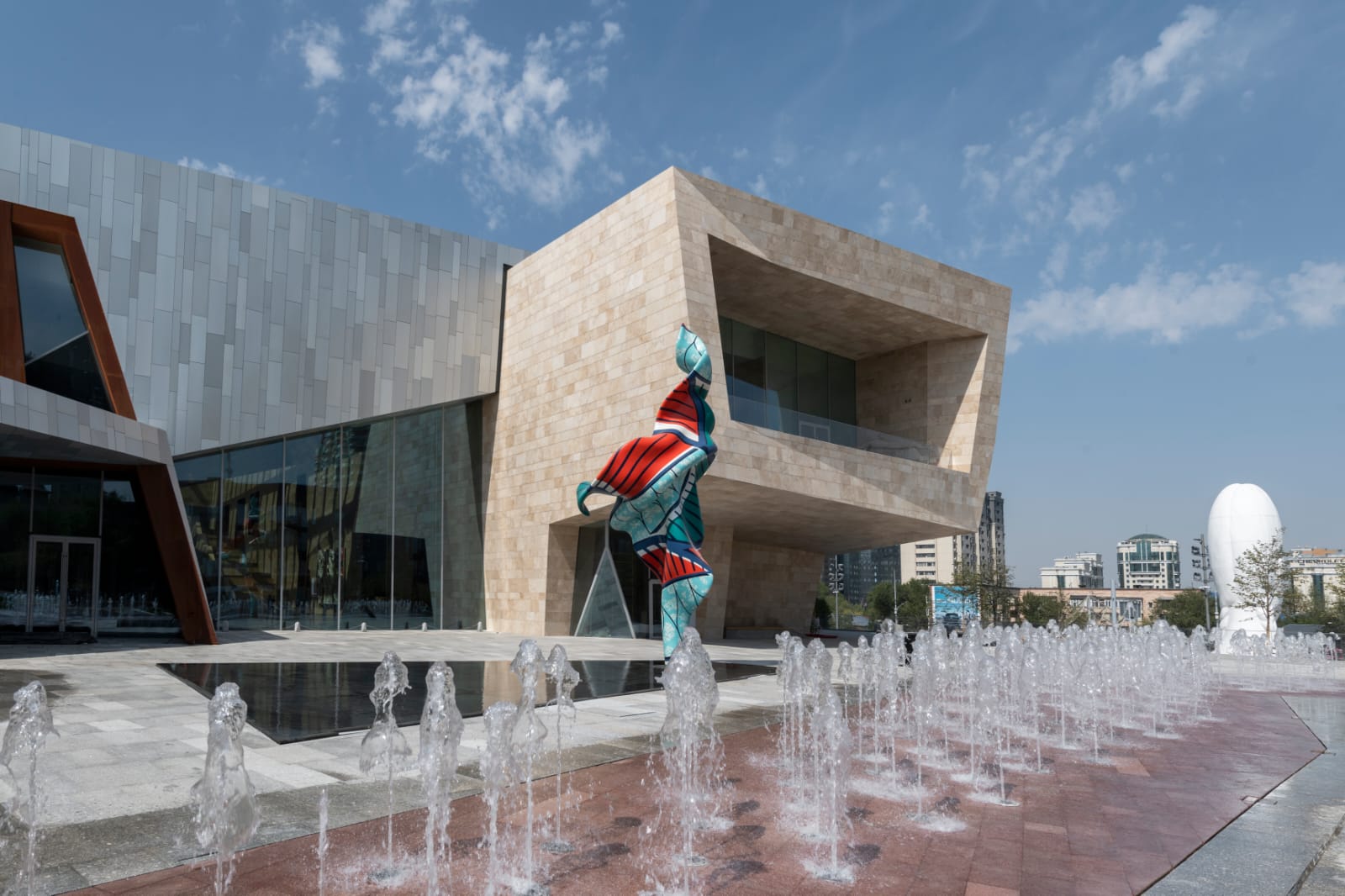
The Almaty Museum of Arts. Photo credit: arte8lusso.net
The measures have covered theaters, museums, libraries and cultural centers, alongside the renovation of existing institutions, upgrades to equipment and efforts to expand access to cultural services across the regions.
The government has also focused on creative education and library modernization. A roadmap for upgrading libraries through 2027 is underway, while regional cultural centers are receiving infrastructure improvements. A branch of the Kazakh National University of Arts has opened in Petropavl, and work is underway to establish a University of Culture and Arts in Shymkent.
Theater network and national repertoire expand
Theater development has been one of the main priorities. Five new state theaters have been established in Astana, Atyrau, Kyzylorda and Shymkent over the past seven years. New buildings have also been provided for the Kalibek Kuanyshbayev Theater in Astana, the Sabit Mukanov Theater in Petropavl and the Turkistan Musical Drama Theater.
Construction of theaters is continuing in Aktobe and Konaev, while projects are being considered in Shymkent, Kyzylorda and Semei. Reconstruction is also underway at the Mukhtar Auezov Theater and the Natalia Sats Theater.
Astana Ballet theater. Photo credit: The Astana Times
The status of leading cultural institutions has been strengthened. Over the past six years, 10 institutions received national status, while 10 national and regional organizations were designated academic institutions. The honorary title of People’s Artist of Kazakhstan was also reinstated after a pause of nearly three decades.
Domestic theaters have expanded their national repertoire with productions including the ballets “Kozy Korpesh – Bayan Sulu,” “Altyn Gul,” and the historical drama “Jochi Khan.”
Museums modernize as heritage preservation advances
Kazakhstan’s museum network has expanded, with the number of museums increasing from 250 to 286 over the past seven years. Museum collections grew by 68,669 items.
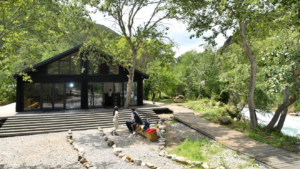
Turgensai visitor center. Photo credit: PM’s press service.
Five visitor centers have been completed and opened at the Tanbaly site in the Almaty Region, Otyrar and Ordabasy in the Turkistan Region, Ulytau in the Ulytau Region, and Sarayshyk in the Atyrau Region. New visitor centers are also being developed at Sauran and Gaukhar-Ana in the Turkistan Region and at Esik in the Almaty Region.
Other initiatives include the opening of Golden Horde exhibition halls in two museums, a paleontology hall and a crafts center. One of the major projects is the Bozok open-air archaeological park. The Abilkhan Kasteev National Museum of Arts has also undergone a major renovation.
Digitalization has become another focus. In 2025, Kazakhstan introduced the E-museum platform, bringing together information on 284 museums. More than 66,000 museum objects have been entered into its digital catalog, alongside 750 three-dimensional models and 15 virtual tours.
International cooperation has also expanded. Kazakh collections have been exhibited in Russia, Italy, France, China and Azerbaijan. In 2025, works from the Kasteev National Museum of Arts were displayed at the State Tretyakov Gallery, while Kazakh national projects were presented at the Venice Biennale and the Guimet Museum of Asian Arts in Paris.
In 2026, Kazakhstan hosted the International Museum Congress and the Kazakhstan-France Museology Forum.
Authorities have also strengthened legal protections for historical and cultural heritage, improved regulation of archaeological activities and established a special legal status for Turkistan as a spiritual, historical, cultural and tourism center.
Domestic cinema gains audiences and international recognition
Kazakhstan’s film industry has also expanded. From 2019 to 2025, 150 film projects received state support, of which 124 have been completed. The law on cinematography, adopted in 2019, established a legal framework for the sector’s development.
Domestic cinema has recorded growth in both releases and box office revenue. The number of Kazakh films released in theaters increased from 94 in 2024 to 103 in 2025.

Poster of Dias Azimzhanov’s film “Moments of Enlightenment”
Kazakh films have also gained international recognition. “Akyn,” “Scheme” and “Ademoka’s Education” received awards at film festivals in Tokyo, Berlin and Warsaw. In 2024 alone, seven Kazakh films won a combined 34 international awards, while “Bauyryna Salu” was selected as Kazakhstan’s submission for the Academy Awards.
According to the World Intellectual Property Organization’s Global Innovation Index 2024, Kazakhstan rose from 61st to 31st place in the indicator for national feature films, placing among Asia’s top three.
Kazakh cinema has also broadened its international reach, with national film days held in more than 30 countries. Cooperation with foreign film producers continues, alongside efforts to develop domestic animation and expand Kazakh-language content.
Cultural diplomacy expands Kazakhstan’s international presence
Over the past seven years, Kazakhstan has expanded its cultural presence abroad through international festivals, exhibitions, competitions and cultural exchange programs. Kazakhstan Culture Days have been held in 15 countries.
In 2023, cultural events took place in Uzbekistan and Azerbaijan. Cairo hosted events marking the 800th anniversary of Sultan Baybars, including the opening of the Sultan al-Zahir Baybars Mosque. Cultural exchanges continued in subsequent years, including with Turkmenistan.
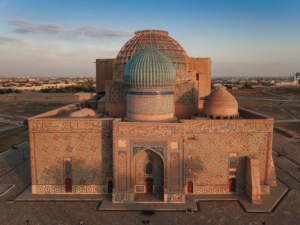
The Khoja Ahmed Yasawi mausoleum. Photo credit: Kazakhtourism
In 2025, Kazakhstan opened a cultural center in Beijing to promote its national arts and traditions. That year, Aktau was named the Cultural Capital of the Turkic World.
Cooperation with UNESCO has also remained a priority. Kazakhstan’s World Heritage properties include the Mausoleum of Khoja Ahmed Yasawi and the Tamgaly petroglyphs. The source materials also identify the rock-cut mosques of the Mangystau Peninsula as an addition in 2026.
Fourteen elements of Kazakh culture are included in UNESCO’s Representative List of the Intangible Cultural Heritage of Humanity. They include the art of performing kuis on the dombra, traditional yurt-making, aitys and the betashar wedding ritual. In 2026, Kazakhstan approved a comprehensive plan to promote UNESCO cultural heritage for 2026–2028.
