
ASTANA – Belgium’s King Philippe and Queen Mathilde will make their first state visit to Kazakhstan on Oct. 11-14, bringing a high-level government, business and academic delegation to talks on critical minerals, transport routes, health care and artificial intelligence as the two countries seek to expand economic ties.
The visit, the first Belgian state visit to Central Asia, comes as Europe looks to diversify critical raw material supplies and strengthen transport links with the region. For Kazakhstan, closer ties with Belgium offer access to European technology, investment and logistics expertise as Astana works to broaden its economic partnerships and reduce its dependence on traditional export routes.

Belgium’s King Philippe and Queen Mathilde. Photo credit: Belgian Royal Palace
The royal couple will visit Astana, where they are scheduled to meet President Kassym-Jomart Tokayev, before travelling to Almaty. They will be accompanied by a 110-member delegation, including senior Belgian government officials, 25 business executives and academic representatives.
The foreign ministries are also expected to sign a 2026-2029 roadmap, according to an official government release, and the fourth meeting of the Kazakh-Belgian Business Council is also scheduled.
“It will provide an opportunity to highlight success stories and explore new forms of cooperation in logistics and agriculture, two areas in which Belgium and Kazakhstan already enjoy close collaboration,” reads Belgium’s official government release.
Philippe previously visited Kazakhstan three times as crown prince, in 2002, 2009 and 2010. This will be his first visit as king. As a crown prince, he travelled to Baikonur cosmodrome in 2002 and 2009 for the launches of Belgian astronaut Frank De Winne’s missions to the International Space Station. He returned in 2010 to lead an economic mission to the country.
The royal visit also reflects a broader effort by Kazakhstan to strengthen European partnerships as geopolitical tensions reshape trade routes, investment decisions and access to strategic resources.
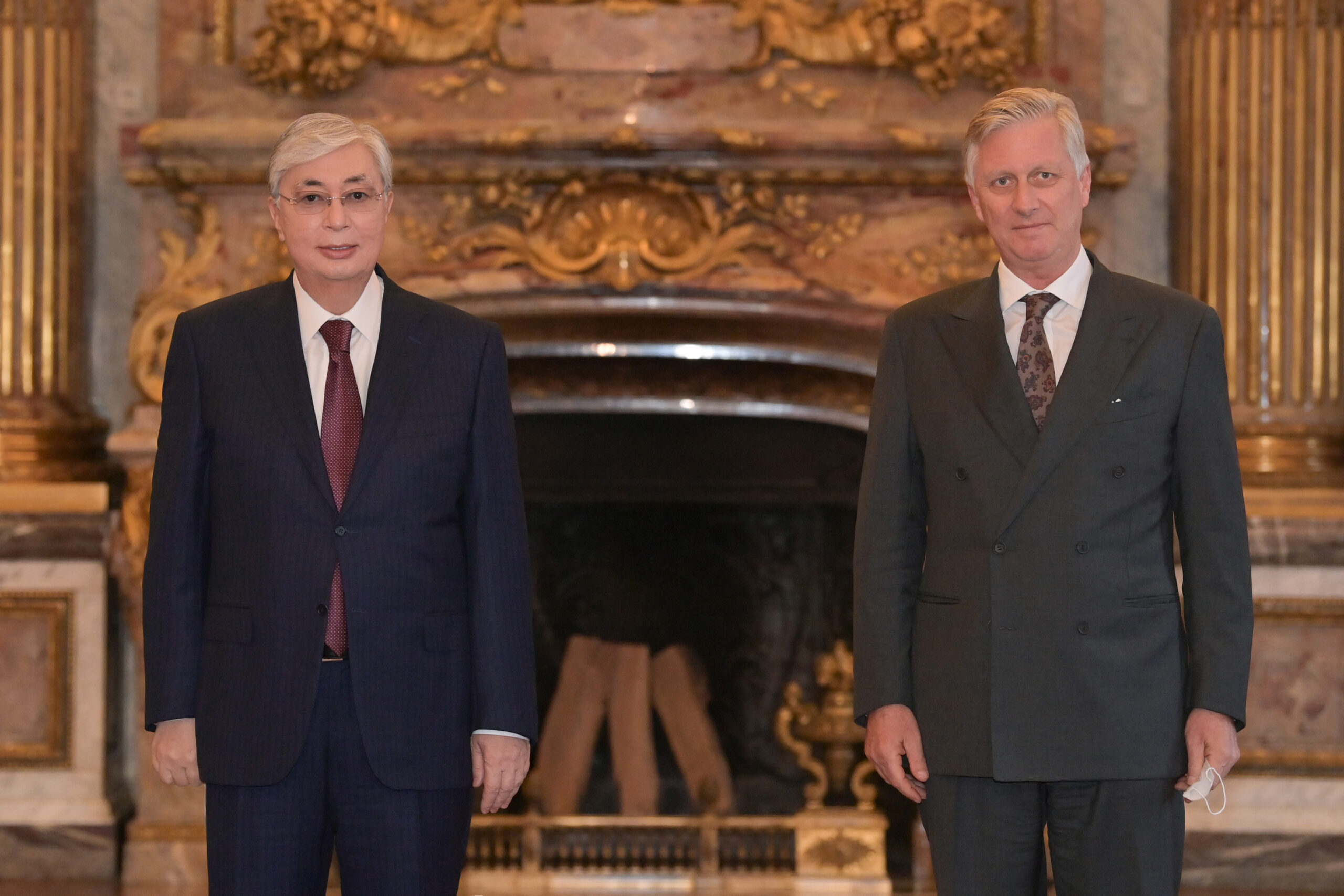
President of Kazakhstan Kassym-Jomart Tokayev and King Philippe of Belgium during the official visit of the President of Kazakhstan to Belgium in November 2021. Photo credit: Akorda
President Tokayev paid an official visit to Brussels in November 2021, which was his first official visit to Europe since the pandemic and his first to Belgium as the country’s president. He also traveled to Brussels in June and Berlin and Munich in September this year, underscoring Astana’s efforts to translate closer political relations into investment, trade and industrial cooperation.
“In the face of current geopolitical challenges, Belgium intends to diversify its partnerships and strengthen its presence in a region that offers significant strategic opportunities. It wishes to deepen its cooperation with Kazakhstan, in order to build a more sustainable, resilient and prosperous future together,” reads an official Belgium government release.
What do the two countries trade
Belgium’s trade with Kazakhstan has also grown over the past several years, although the latest figures show uneven momentum. Bilateral trade reached $582.4 million in 2025, up nearly 28% from the previous year, according to the Kazakh government. Kazakhstan exported $311.5 million in goods to Belgium and imported $270.9 million.
Kazakhstan is also an important Central Asian market for Belgian exporters. Figures from the Belgian Foreign Trade Agency show that Belgian goods exports to Kazakhstan in 2025 were nearly five times those to either Uzbekistan or the Kyrgyz Republic.
Within the European Union, Belgium ranked seventh among exporters of goods to Kazakhstan in 2025, accounting for 5.7% of the bloc’s 10.6 billion euros (US$11.9 billion) in exports. It ranked 14th among EU importers of Kazakh goods, with a 0.5% share of the EU’s approximately 30.9 billion euros (US$34.6 billion) in imports.
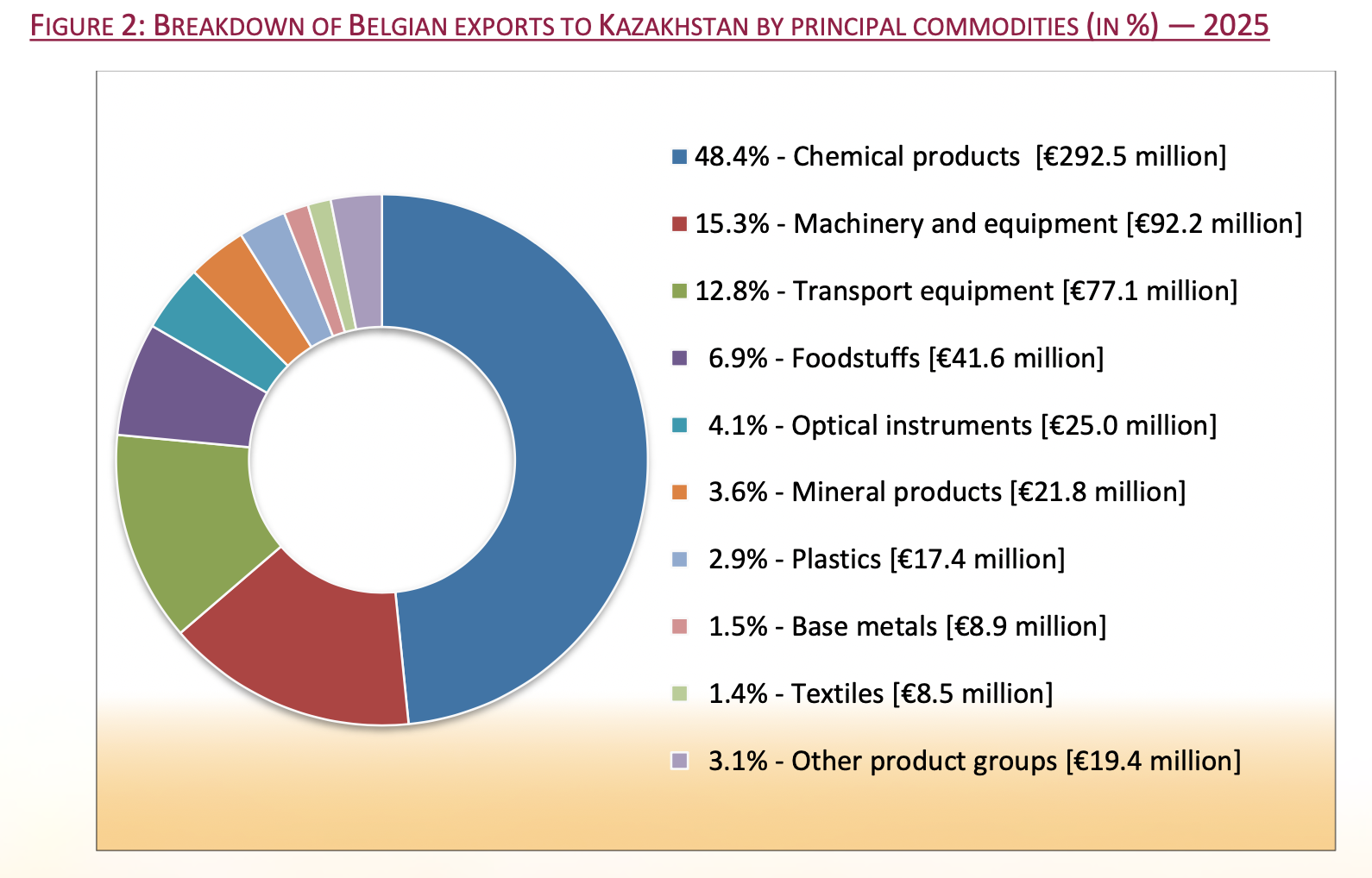
Breakdown of Belgian exports to Kazakhstan in 2025. Photo credit: Belgian Foreign Trade Agency
The two countries trade largely different products. Pharmaceuticals lead Belgium’s exports to Kazakhstan. Chemical and pharmaceutical products, primarily medicines, immunological products and vaccines, accounted for 48.4% of Belgian goods exports in 2025, worth 292.5 million euros (US$327.8 million). Machinery and equipment, along with transport equipment, were also among the leading export categories.
Kazakhstan’s exports to Belgium remain concentrated in a handful of commodities. Vegetable products, primarily linseed, accounted for 46.2% of Belgian goods imports from Kazakhstan, worth 74.6 million euros (US$83.6 million). Mineral products, largely molybdenum ores and concentrates, followed at 61.1 million euros (US$64.5 million), or 37.9%. Base metals, including ferroalloys and refined copper, made up another 8.8%.
Belgium has also been a substantial source of foreign investment in Kazakhstan, with gross foreign direct investment inflows exceeding $14 billion between 2005 and 2025, including $1.045 billion last year. To facilitate trade cooperation, Belgium established a Trade Office AWEX in Almaty in 2007. In 2021, a Chamber of Commerce for the countries of Benelux, Belgium, the Netherlands, and Luxemburg, was launched.
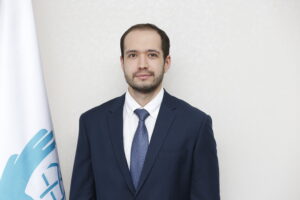
Alisher Abdreshev. Photo credit: KazISS
“Kazakhstan and Belgium have significant potential to expand cooperation, particularly in investment, transport and logistics, industry and technology. For Kazakhstan, Belgium is not only an economic partner in its own right but also a major industrial, financial and logistics hub within the European Union,” Alisher Abdreshev, a lead expert in the Department for European and American Studies at the Kazakhstan Institute for Strategic Studies, told The Astana Times.
He sees Kazakhstan’s appeal extending beyond its domestic market. “Kazakhstan can offer Belgian businesses an integrated platform for industrial production, logistics and access to the wider Eurasian market,” he said.
“Kazakhstan can offer opportunities in specific export sectors. In 2025, Kazakh exports to Belgium rose 48% to $311.5 million, with linseed accounting for a significant share. Kazakhstan is already a leading supplier of linseed to the European Union, while Belgium is the largest European market for Kazakh linseed,” said the expert.
Agricultural processing offers one potential avenue for moving beyond commodity trade. In August, Kazakhstan’s Foreign Ministry reported talks with Belgian companies Maselis Group and Borlix NV on food ingredients, processing and possible investment projects.
Critical minerals: moving beyond raw material exports
Critical minerals are also expected to feature prominently in the discussions, reflecting Europe’s efforts to diversify its supplies of materials essential for clean energy technologies, electronics and advanced manufacturing. Kazakhstan says it has 21 of the 34 raw materials identified as critical by the European Union.
“Belgium, meanwhile, has a well-developed chemical industry, advanced metallurgical technologies and expertise in materials processing. This creates opportunities to move beyond trade in raw materials toward joint manufacturing projects that generate greater added value,” said Abdreshev.
“Potential areas of cooperation include metals processing, industrial component manufacturing and the development of resilient supply chains serving European markets. Such partnerships would support Kazakhstan’s efforts to diversify its economy while aligning with the European Union’s goal of diversifying its sources of strategic raw materials,” he explained.
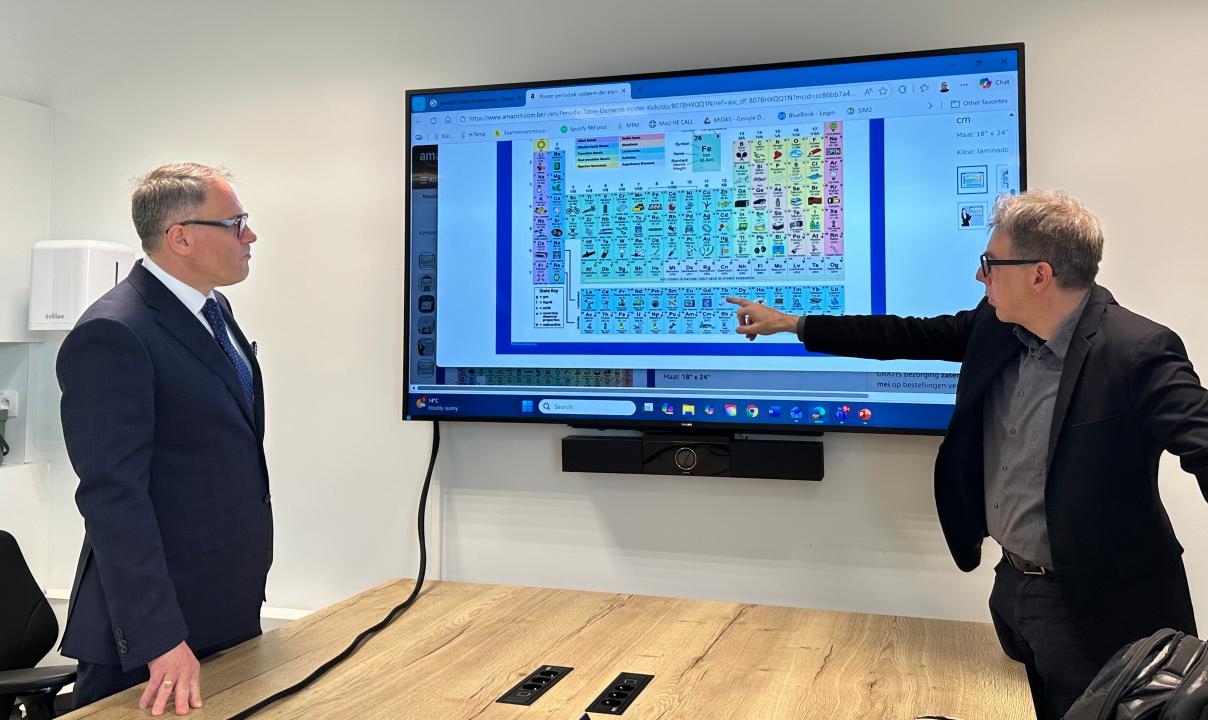
Ambassador of Kazakhstan to Belgium Roman Vassilenko visited the Institute for Sustainable Metals and Minerals of KU Leuven in April 2026. Photo credit: Kazakstan’s Embassy
The two countries have explored cooperation in sustainable metallurgy and critical raw materials through Belgian research institutions, including KU Leuven. The cooperation also aligns with the strategic partnership on sustainable raw materials, batteries and renewable hydrogen that Kazakhstan and the EU established in 2022.
Transport connectivity
Transport and logistics are another priority as Kazakhstan seeks to strengthen its position along trade routes connecting Asia and Europe.
Kazakhstan’s Caspian ports of Aktau and Kuryk, which form part of the Trans-Caspian International Transport Route, could open opportunities for Belgian logistics companies seeking access to Central Asian and Chinese markets, Abdreshev said. One of the companies with ongoing projects is Jan De Nul, a major Belgian family-owned engineering and construction company specializing in dredging, marine and port infrastructure, offshore energy and complex engineering projects.
The expert also pointed to Kazakhstan’s existing investment infrastructure and experience working with European companies.
“Kazakhstan is seeking Belgian technology and management expertise to develop the Trans-Caspian International Transport Route, also known as the Middle Corridor. The Port of Antwerp-Bruges, one of Europe’s largest logistics hubs, could play a key role in these efforts. Its expertise in digitalizing port operations, multimodal transport and cargo management could help modernize Kazakhstan’s ports of Aktau and Kuryk,” said Abdreshev.
Technology, health care and academic cooperation
The royal visit is also expected to advance cooperation in artificial intelligence and health care.
During Tokayev’s June visit to Brussels, Kazakhstan signed cooperation agreements with Ghent University and KU Leuven covering joint research, academic exchanges and technological development. One of them brought together the Serikbayev East Kazakhstan technical University, KU Leuven and the SIM2 KU Leuven Institute for Sustainable Metals and Minerals, along with Astana Hub.
The Ghent University partnership focused on establishing a mirror research laboratory in Kazakhstan focused on mathematical modeling, scientific computing, digital twins and AI. The agreements provide a foundation for further collaboration between Kazakh and Belgian universities, including research projects linked to European scientific programs.
Health care is another established area of economic cooperation, given Belgium’s strong pharmaceutical exports to Kazakhstan. The visit could provide opportunities to explore further cooperation in medical technologies, pharmaceutical production and research.
“The greatest potential for Kazakhstan-Belgium cooperation therefore lies in moving beyond traditional trade toward deeper investment and technological partnerships. Belgium could become an important partner in Kazakhstan’s efforts to modernize its industries and expand access to European markets. For Belgian businesses, Kazakhstan offers opportunities as Central Asia’s largest economy and a gateway to broader regional markets,” said Abdreshev.
“The upcoming visit of the King of Belgium to Kazakhstan could provide an opportunity to translate this potential into concrete results, including a portfolio of joint investment and infrastructure projects aimed at strengthening long-term economic ties,” he added.
Broader European push
“Amid continued tensions between Russia and the West, the restructuring of global supply chains and growing competition for strategic resources, Europe is showing increasing interest in Central Asia,” said Abdreshev. “Kazakhstan holds particular significance for the European Union as an energy supplier, a country with substantial mineral reserves and a key transit link between Europe and Asia. Astana, in turn, is seeking to attract European investment and technology while diversifying its export routes.”
“What is particularly important is that Kazakhstan is increasingly approaching its relations with Europe through the lens of its own economic interests,” he added.
For Kazakhstan, closer engagement with Belgium fits into a broader effort to diversify its economic partnerships while maintaining relations with other major powers. The European dimension offers opportunities to attract technology and investment, develop alternative trade routes and build industries that extend beyond raw-material exports.
