
ASTANA — Türkiye inaugurated a new railway section near its border with Bulgaria on Oct. 9, marking a step in the European Union’s efforts to strengthen transport links with Central Asia and reduce shipping times along the Middle Corridor.
Turkish President Recep Tayyip Erdogan and EU Enlargement Commissioner Marta Kos attended the opening of the 153-kilometer Cerkezkoy-Kapikule section, part of the larger Halkali-Kapikule railway connecting Istanbul to the Bulgarian border.
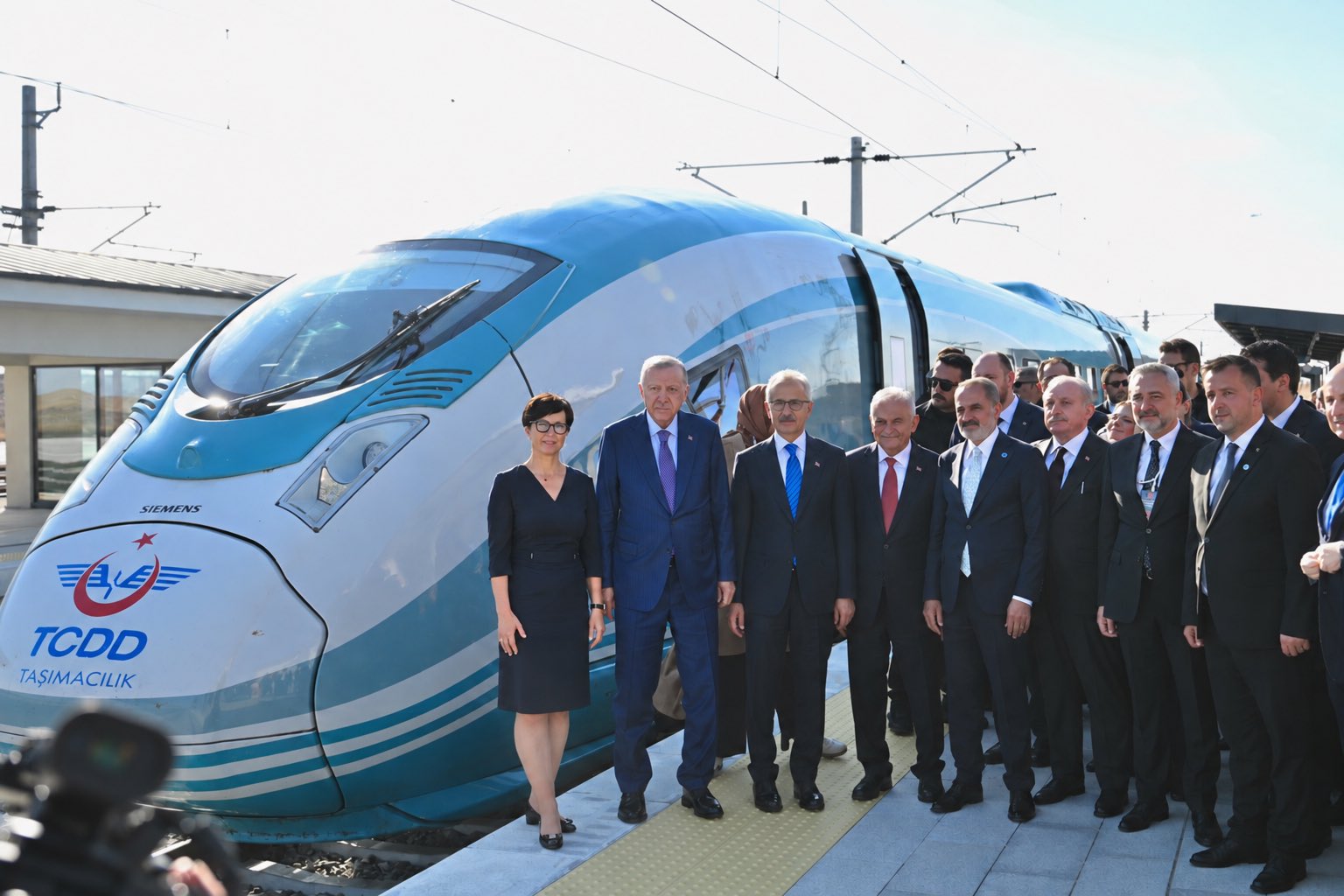
Officials pose beside a high-speed train during the inauguration. Photo credit: EU Commission
The project received 275 million euros ($308 million) in EU grant funding through the Instrument for Pre-Accession Assistance (IPA II), according to an Oct. 8 statement from the European Commission.
The commission described the railway as the largest infrastructure project undertaken so far in EU-Türkiye cooperation and the first concrete result of its cross-regional Connectivity Agenda, which seeks to strengthen transport, energy and digital connections between Europe and Central Asia through the South Caucasus and the Black Sea region.
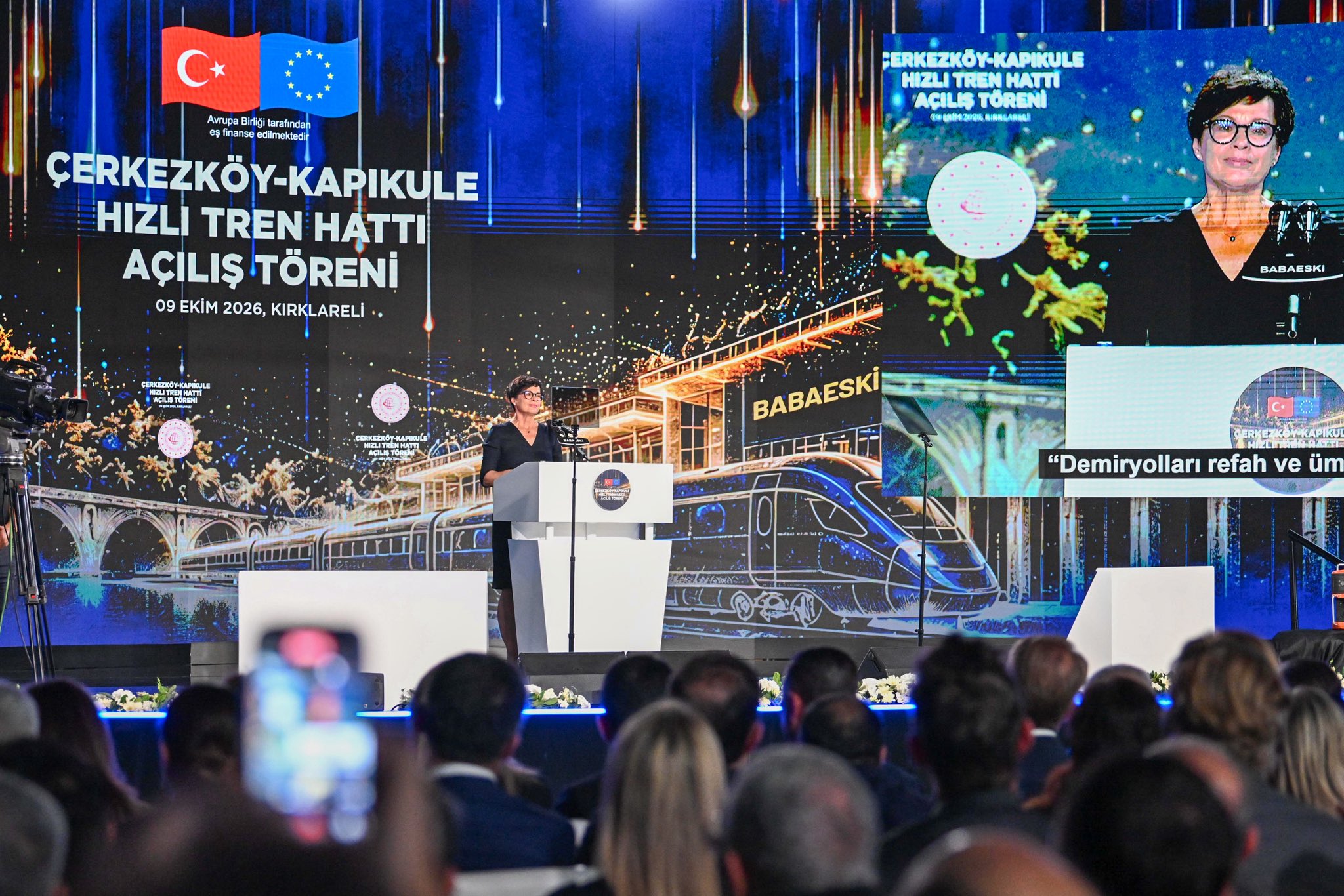
Marta Kos. Photo credit: EU Commission
The new railway section is expected to ease congestion and improve freight capacity along the western end of the Middle Corridor that links China and Europe through Kazakhstan, the Caspian Sea, Azerbaijan, Georgia and Turkey.
According to the commission, the new high-speed connection will help reduce transit times along the corridor, which has gained strategic importance as countries seek alternative trade routes between Europe and Asia.
The newly opened section is the longest stretch of the 229-kilometer Halkali-Kapikule railway project. The new section begins in Cerkezkoy in the northwestern province of Tekirdağ and extends to Kapikule, a major road and rail border crossing near Edirne in northwestern Türkiye.
Erdogan said the broader project is expected to reduce freight transport times between Halkali and Kapikule from 8.5 hours to 3.5 hours, while cutting passenger journeys from four hours to 1.5 hours.
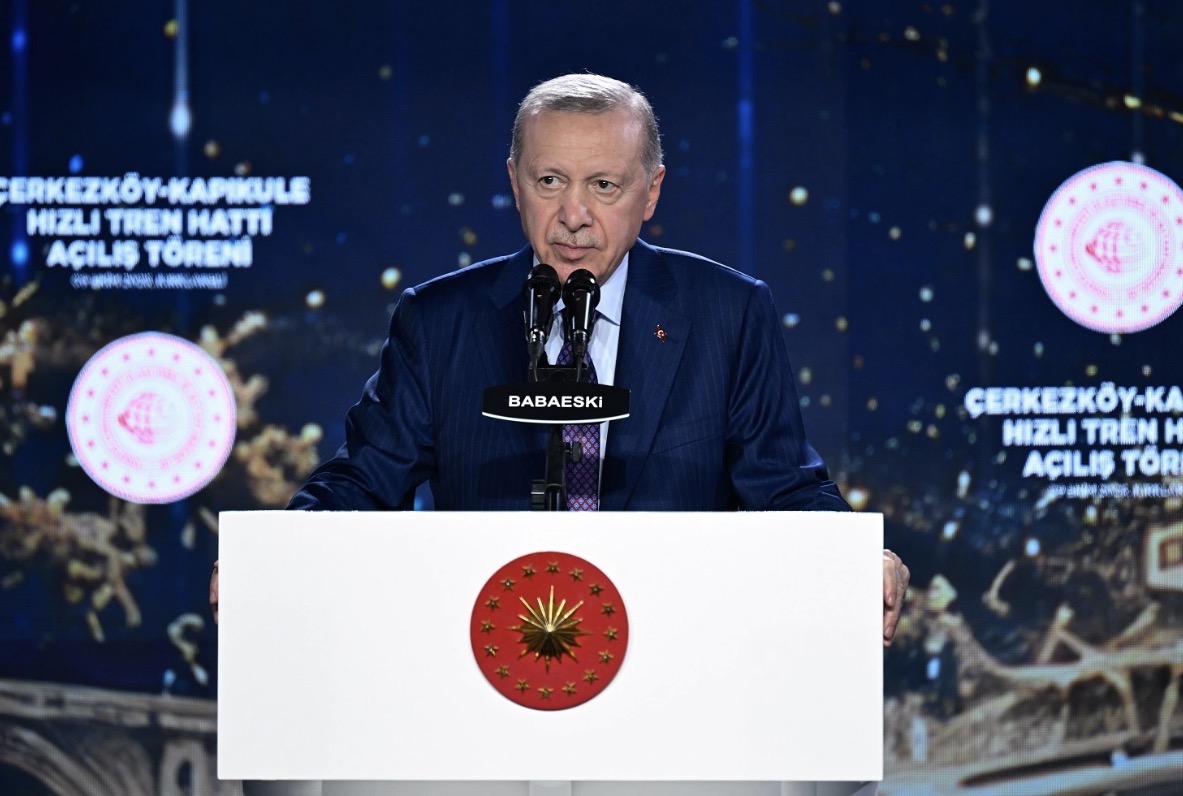
Erdogan addresses the launch. Photo credit: Ak Parti
Rail capacity is also expected to increase approximately fourfold, with annual freight capacity projected to rise from 1.5 million tons to 9.5 million tons, according to the Turkish officials.
The inauguration follows the EU’s launch of its Connectivity Agenda Platform in June, when it announced agreements with international financial institutions expected to mobilize up to two billion euros for strategic transport and infrastructure investments in the Black Sea region and the South Caucasus.
A day before the railway inauguration, Kos attended an international conference on Corridor VIII in Sofia, Bulgaria, where officials discussed efforts to complete missing transport connections through Bulgaria, North Macedonia and Albania.
“Europe has learnt the hard way that excessive dependencies make us vulnerable. We have seen that energy blackmail, critical raw material shortages, or overreliance on a small number of key trading routes can all limit our freedom to act. We need to diversify our options,” she said at the conference.
The opening of the section also comes less than two weeks after a World Bank report highlighted the economic potential of improved transport connections along the corridor. The Sept. 28 report estimated that targeted investments and reforms could more than triple trade volumes, halve transit times and create two million additional jobs across the region by 2040.
