
ASTANA — Kazakhstan joined more than 150 countries at the International Union for Conservation of Nature (IUCN) World Conservation Congress in Abu Dhabi on Oct. 9-15, where over 10,000 participants explored global conservation and sustainable development solutions.
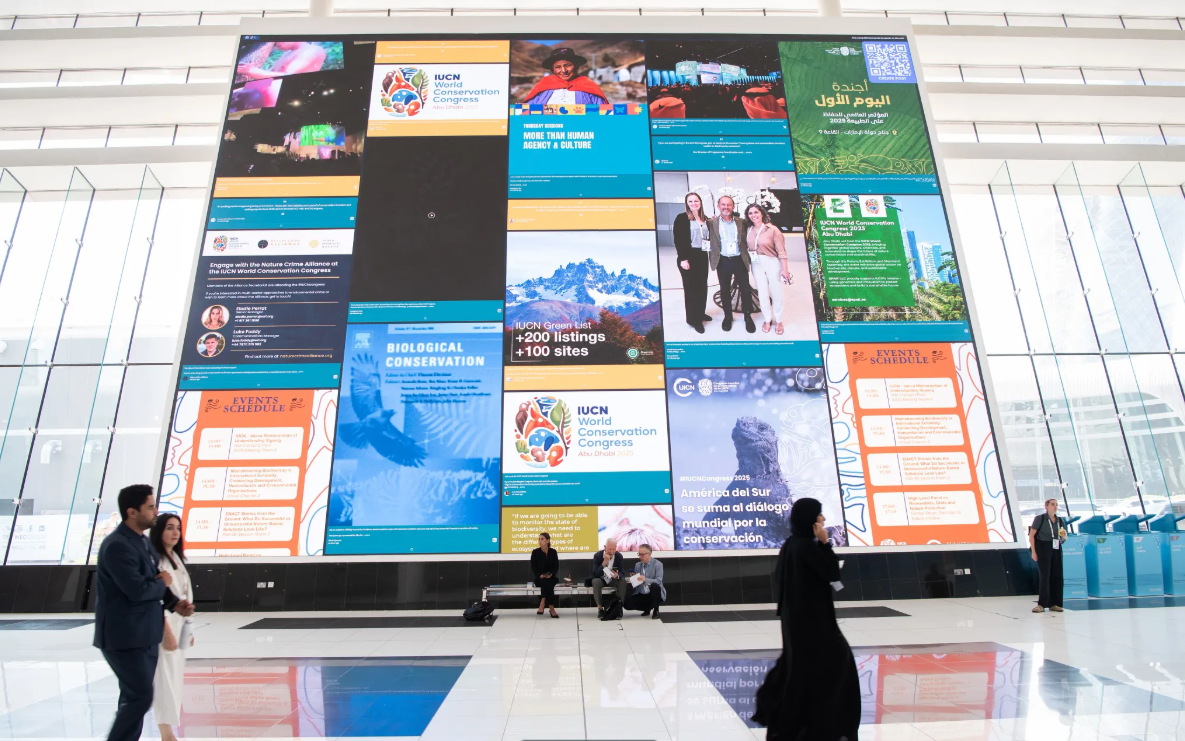
IUCN World Conservation Congress 2025. Photo credit: IUCN/Marcus Rose
The congress is held once every four years. This year’s program cut across five key topics: scaling up resilient conservation action, reducing climate overshoot risks, delivering on equity, transitioning to nature-positive economies and societies, and disruptive innovation and leadership for conservation.
With just five years remaining to meet the 2030 goals outlined in the Global Biodiversity Framework, the Paris Agreement and the Sustainable Development Goals, the congress urged governments and institutions to accelerate joint action and scale up transformative, cooperative solutions that deliver for both people and the planet. Speakers stressed that the current political momentum should be seized to deepen coordination across multilateral environmental agreements and to ensure that the upcoming United Nations Climate Change Conference in Belém serves as a turning point toward a net-zero, resilient and nature-positive future.
Central Asia in the global context
The IUCN Congress featured over 1,000 events where governments, civil society, business leaders and scientists discussed the future of biodiversity and sustainable development. Sessions on Central Asia highlighted the region as one of the world’s last great migration hotspots and addressed rising pressures from land degradation, biodiversity loss, and climate change.
In June, IUCN opened its Central Asia office in Tashkent. It is envisioned as a strategic hub for coordination and knowledge exchange, linking national and regional stakeholders with IUCN’s global expertise, science-based tools and internationally recognized standards.
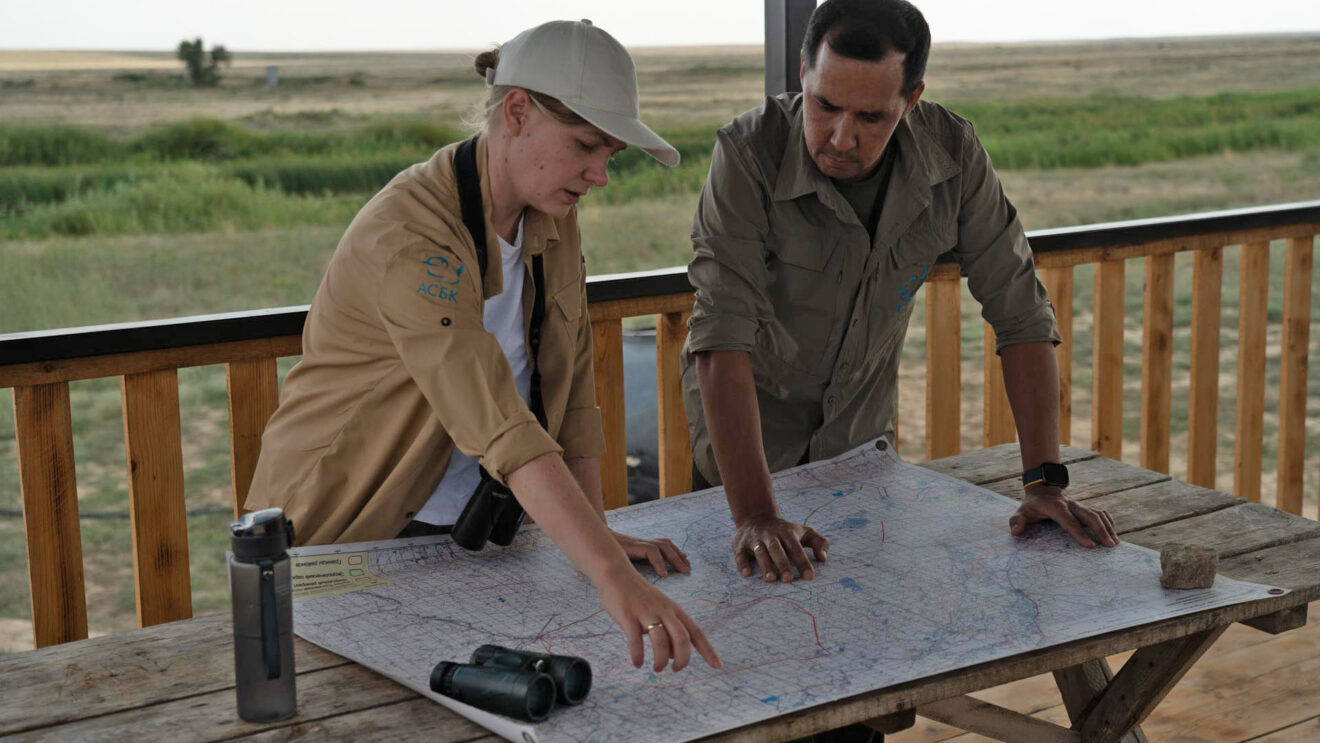
Vera Voronova and Albert Salemgareev. Photo credit: Earthshot
“Many see Kazakhstan’s steppes as holding vast potential for global climate and ecosystem solutions from preserving carbon reserves to restoring the migrations of large herbivores. It is a chance to show that our region can serve as a model for other countries,” Albert Salemgareev, a lead specialist at the Association for the Conservation of Biodiversity of Kazakhstan (ACBK), told The Astana Times.
Salemgareev said the congress offered a unique opportunity to demonstrate Kazakhstan’s approach to protecting rare species and returning them to the wild.
“For us, this is an important opportunity to present Kazakhstan as a country where rare species are not only protected but also reintroduced into the wild. We are sharing our experience in the reintroduction of Przewalski’s horses and kulans, as well as the conservation of the saiga antelope, a symbol of Kazakhstan’s steppes,” he said.
Discussions also focused on strengthening scientific knowledge, establishing ecological corridors, and enhancing management practices to meet the targets of the Kunming-Montreal Global Biodiversity Framework. This 2022 UN agreement aims to halt biodiversity loss by 2030 through protecting 30% of land and oceans and restoring degraded ecosystems.
Kazakhstan’s projects, alongside initiatives from Turkmenistan, Tajikistan, the Kyrgyz Republic, and Uzbekistan, were presented as models of regional collaboration for conservation.
“Today, we are showing real results from restoring the saiga population to returning Przewalski’s horses to Central Kazakhstan for the first time in more than 200 years. Many colleagues call this one of the most inspiring wildlife recovery stories in Eurasia,” said Salemgareev.
Altyn Dala steppe conservation success
The IUCN World Commission on Protected Areas launched a new publication, titled Scaling Up Conservation in a Connected World. The report, which included Kazakhstan’s Altyn Dala Conservation Initiative, examined case studies of large-scale conservation projects across five continents and addressed financing models, ecological connectivity, and governance.
Kazakhstan’s case comes from the initiative’s success with the saiga antelope, where the population has rebounded from fewer than 40,000 individuals to more than four million, one of the most successful mammal recoveries ever achieved.
“Until recently, many large-scale initiatives were working largely in isolation by default. Therefore, it is energizing that IUCN created this invaluable opportunity for comparable teams to meet and share efforts, solutions, and experience for the first time,” ACBK Executive Director and the initiative’s chairperson Vera Voronova told the IUCN.
“Being profiled alongside such impressive work is humbling for us. It builds confidence in delivering at scale and at speed, and we hope it inspires others to act too,” she added.
During the congress, IUCN members voted to adopt a new 20-year strategic vision and four-year program.
