
ASTANA — Beyond their stone walls and ancient carvings, Kazakhstan’s heritage sites tell stories of trade, faith, conquest, and resilience, offering travelers more than just destinations to visit – narratives that connect the country’s nomadic past with its evolving identity today.
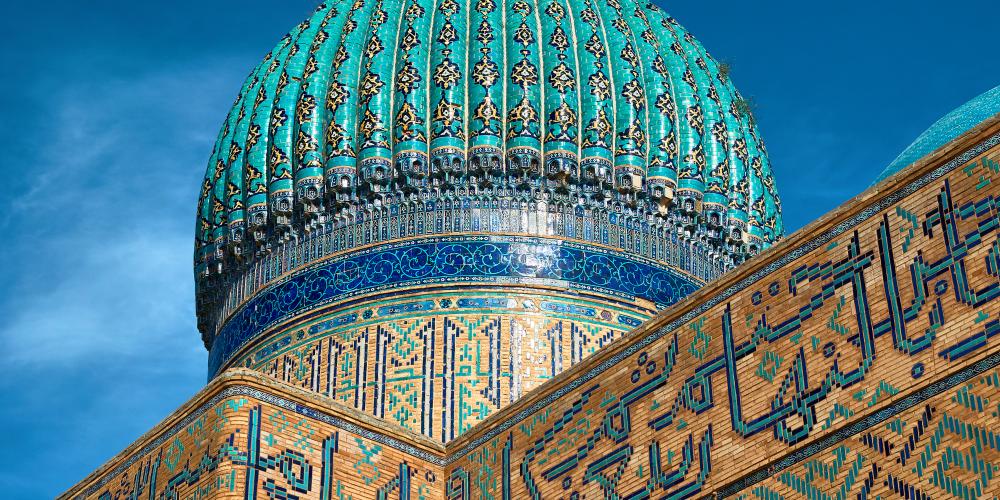
Mosaic Dome of the Khoja Ahmed mausoleum. Photo credit: Yevgeniy Volkov / Shutterstock
The Astana Times highlights some of the country’s most remarkable and relatively easy to access historical landmarks. From sacred mausoleums and medieval fortresses to prehistoric rock carvings and mysterious red-stone ruins, these places highlight the richness of Kazakhstan’s past and the country’s growing efforts to make heritage tourism a central part of its future.
Turkistan’s spiritual heart
No journey into Kazakhstan’s history is complete without visiting the Khoja Ahmed Yasawi Mausoleum in Turkistan, a United Nations Educational, Scientific and Cultural Organization (UNESCO) World Heritage site. Commissioned by Timur, the 14th-century conqueror who founded the Timurid Empire, the turquoise-domed mausoleum honors one of the most revered Sufi poets in Central Asia.
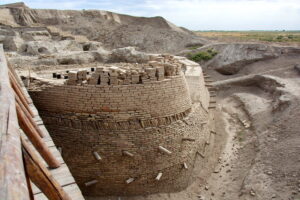
Ruins of Otyrar, once a flourishing Silk Road city famed for its scholars and its legendary library. Photo credit: Advantour
For centuries, the site has been a place of pilgrimage, and today, it continues to draw worshippers and tourists with its grandeur and symbolism. Turkistan is easily reached by flights and trains from Astana and Almaty, and the mausoleum is just minutes from the city center, with a modern visitor complex and information desks for travelers.
Just outside Turkistan lie the ruins of Otyrar, once a flourishing Silk Road city famed for its scholars and its legendary library. When Genghis Khan’s army swept across the steppe, Otyrar became one of the first cities to fall, marking a turning point in Central Asian history. Walking through the excavated remains, visitors encounter traces of a city that once bridged cultures and empires.
The site is roughly an hour’s drive from Turkistan and is often visited as part of guided excursions that combine it with the Yasawi Mausoleum.
Rock art of the steppe
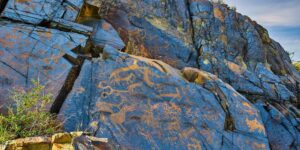
A rock wall full of petroglyphs. Photo credit: [email protected]
In the Almaty Region, Kazakhstan’s prehistoric past is preserved at the Tamgaly petroglyphs, a vast open-air gallery of more than 5,000 carvings. Etched into the rocks by Bronze Age communities, these figures of sun-headed gods, hunters, and animals reflect early steppe spirituality and cosmology.
Recognized by UNESCO for their outstanding cultural value, the carvings offer a rare chance to stand where ancient nomads once performed rituals. The site lies approximately 170 kilometers from Almaty, with organized tours and guides available. A small visitor facility at the entrance provides maps and basic information for independent travelers.
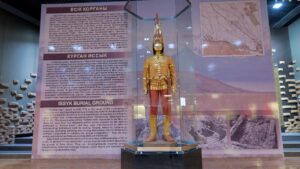
Golden Man found in a Saka burial mound in 1969. Photo credit: Daily Sabah
Another defining discovery of Kazakhstan’s early civilizations is found in the town of Esik, east of Almaty. In 1969, archaeologists unearthed the famous Golden Man in a Saka burial mound, a find that became a national symbol of independence and pride. The original golden armor is secured in controlled conditions at the National Museum of Kazakhstan in Astana, while replicas are displayed across the country. The Esik Burial Mound and its museum offer the most authentic atmosphere, allowing visitors to stand where the discovery was first made.
Esik is located about 50 kilometers east of Almaty. Travelers can reach it by car in just over an hour, or by shared minibus from the Sayakhat bus station. Once in Esik, the burial mound and museum can be reached quickly by a local taxi. Walking is also possible if the accommodation is nearby, though most visitors find a short taxi ride more convenient.
Legends of love and power
Further west, in the Zhambyl Region, the Aisha-Bibi Mausoleum tells a different kind of story, one of love and devotion. Built in the 12th century, it is celebrated for its exquisite terracotta ornamentation and the legend of a young woman who died tragically before marriage. Her grieving suitor, according to tradition, ordered the mausoleum’s construction in her honor. Today, couples from across Kazakhstan visit the site as a symbolic gesture of love and fidelity, inspired by the legend that surrounds it. Located just outside Taraz, the mausoleum is easily reached by road, with visitor walkways and a landscaped park enhancing the site’s atmosphere.
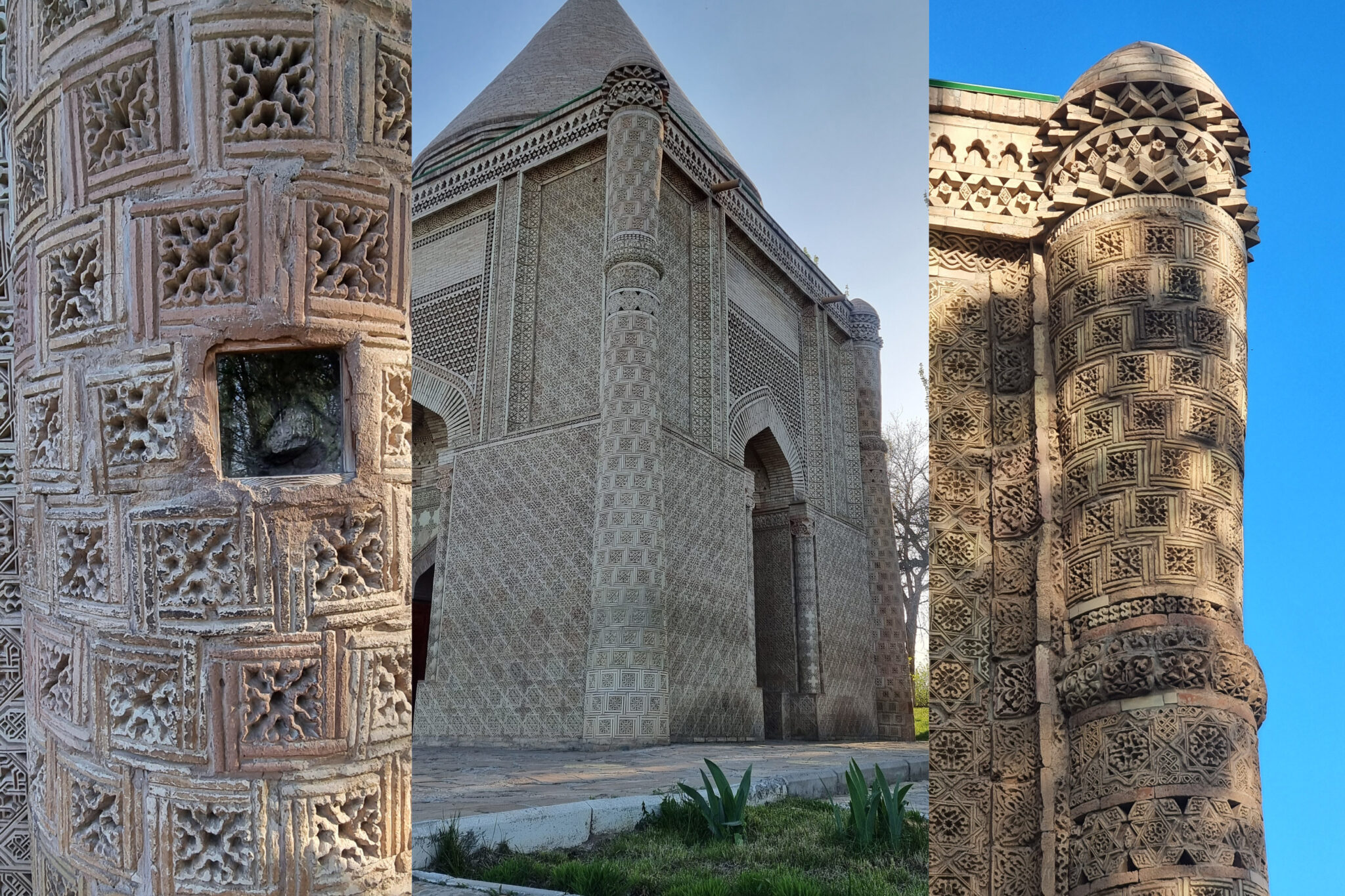
The western wall of the mausoleum of Aisha Bibi, dating to the 12th century, remains original, with a preserved column section displayed under glass. Photo credit: The Astana Times
Close to Turkistan, another reminder of medieval power rises out of the open steppe. The fortress of Sauran, once one of the largest cities on the Silk Road, still preserves impressive stretches of its defensive walls. Archaeological excavations have uncovered an underground water system that sustained life in the arid steppe. Standing before the ruins, visitors can picture the caravans and merchants who once traveled through its gates.
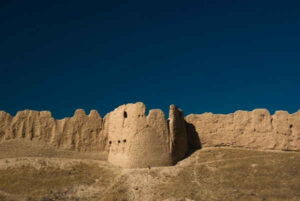
The fortress of Sauran. Photo credit: Caravanistan
The site is around 45 kilometers from Turkistan and is best visited with a local guide, as it is located in an open steppe with no shelter from the sun.
Mysteries in stone
Not far from Taraz lies Akyrtas, one of Kazakhstan’s most mysterious monuments. Built from massive red sandstone blocks, the unfinished complex stretches across several hectares and has puzzled historians for centuries.
Some archaeologists suggest it may have been planned as a grand palace or caravanserai (Silk Road inn for merchants), while local legends tie it to mystical powers and ancient rulers. The massive foundation stones, some weighing several tons, hint at an ambitious project that was never completed.
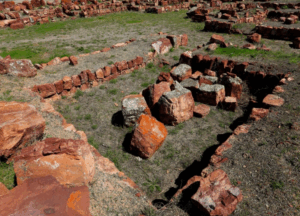
An unfinished Akyrtas monument built from massive red sandstone blocks. Photo credit: silkadv.com
Akyrtas is on UNESCO’s tentative World Heritage List under the Silk Roads Network. A paved road to a small visitor center has improved access in recent years, making the site easier to reach. Approximately 40 kilometers from Taraz, it is less than an hour’s drive by car. Facilities remain limited, but the red-stone ruins against the steppe offer a striking stop for travelers interested in Kazakhstan’s medieval history.
Sacred silence of the steppe
Far from Kazakhstan’s urban centers, the Mangystau Region is home to one of the country’s most extraordinary pilgrimage destinations: the underground mosque of Beket-Ata.
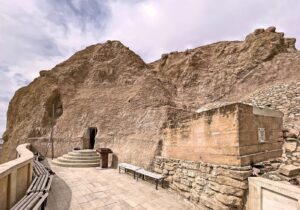
Beket-ata underground mosque. Photo credit: Tripadvisor
Carved into chalk cliffs in the 18th century, the mosque is dedicated to Beket Myrzagululy, a revered Sufi teacher and healer whose name continues to inspire devotion across Central Asia. Pilgrims and travelers step down into its cool stone chambers, where the echo of prayers creates an atmosphere both intimate and timeless.
The mosque lies nearly 280 kilometers east of Aktau, a four- to five-hour drive depending on road conditions. A road built in 2011 now reaches a guesthouse above the cliffs, where pilgrims and tourists can find simple lodging and meals. Stairways and reinforced slopes provide safer access to the underground chambers. Because of its remoteness, many visitors join guided tours from Aktau or arrange transport with experienced drivers. The journey across the Ustyurt Plateau is long but unforgettable, offering travelers stark landscapes and a sense of deep spiritual history.
