
ASTANA — Kazakhstan’s strategic position in the Middle Corridor makes it a game-changer for regional logistics and innovation, said Vice president of the European Investment Bank (EIB) Kyriacos Kakouris in an interview with The Astana Times on the sidelines of the Astana International Forum.
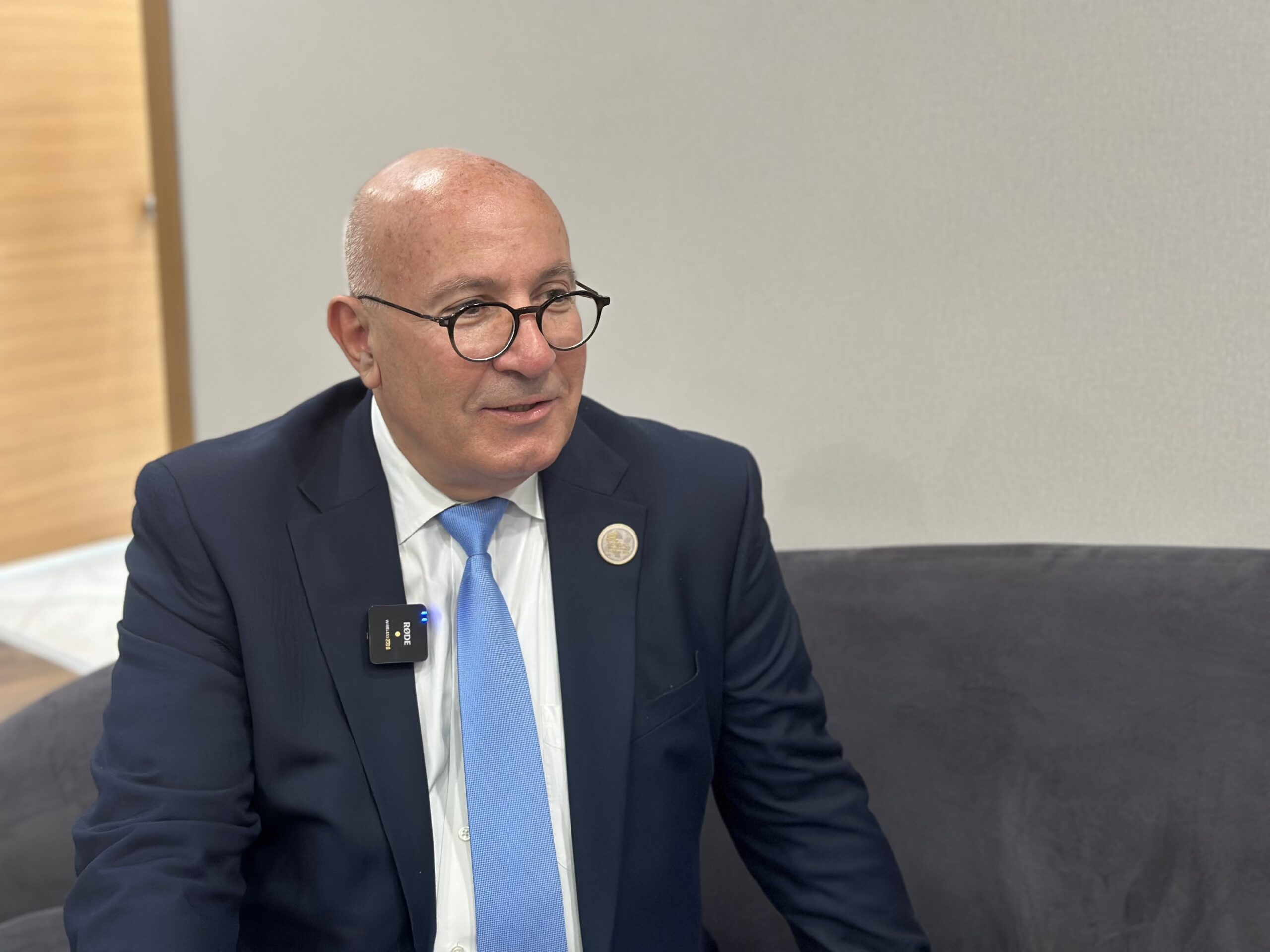
Kyriacos Kakouris, a vice president of the European Investment Bank (EIB). Photo credit: Nargiz Raimbekova / The Astana Times
He highlighted the country’s pivotal role within the EU’s Global Gateway strategy and outlined the EIB’s expanding investments in sustainable infrastructure, energy transition, and digital connectivity across Central Asia.
“Kazakhstan is a key partner for the European Investment Bank in Central Asia. We are focused on supporting water, energy, critical raw materials, transport and digital connectivity, which are core pillars of the EU’s Global Gateway strategy for the region,” said Kakouris.
Kakouris highlighted recent milestones, including a 200 million euro (US$228.5 million) loan signed with the Development Bank of Kazakhstan (DBK) to support transport and green energy initiatives, as well as a memorandum of understanding with the Kazakhstan Housing Company to promote the construction of energy-efficient homes.
He also emphasized the EIB’s ongoing support for small businesses, farmers, and sectors affected by the pandemic.
“Our goal is simple: to improve lives, strengthen the economy, and build a greener, more connected future for Kazakhstan,” he said.
AIF as a platform for international dialogue and Kazakhstan’s role
According to Kakouris, platforms such as the AIF play a critical role in fostering international dialogue and cooperation in an increasingly divided world.
Kyriacos Kakouris and The Astana Times reporter Nagima Abuova. Photo credit: Fatima Kemelova / The Astana Times
“They bring people together to talk, share ideas, and build partnerships. I was honored to join three high-level panels — on water security, trade routes, and green investment. These are big issues for the region and for Europe,” he said.
He stressed that the forum exemplifies Kazakhstan’s contribution to global dialogue and presents the EIB with opportunities to deepen its commitment to Central Asia through sustainable development initiatives.
Kazakhstan’s strategic geographic position also places it at the heart of the Middle Corridor — a key trade and transit route connecting Europe and Asia. Kakouris described it as a “game-changer” for regional logistics and innovation.
“This route is not just about transport. It is about trade, energy, and innovation,” he said.
To support this corridor’s development, the EIB has signed memoranda of understanding worth nearly 1.5 billion euro (US$1.7 billion) to co-finance sustainable transport projects across the region.
“Our first major step was a 200 million euro (US$228.5 million) loan with the Development Bank of Kazakhstan. It is a clear sign that both sides are serious about fostering connectivity between Europe and Asia,” he added.
Global economic fragmentation
Kakouris noted the challenges posed by rising geopolitical tensions and global economic fragmentation, which are reshaping investment flows, supply chains, and multilateral cooperation.
“The world is changing fast. We are seeing more fragmentation in trade, investment, and global cooperation. In the current geopolitical context, Europe is a beacon of stability, clarity and confidence,” he said.
In response to these shifts, the EIB has adapted its focus on resilience and inclusion.
“Since 2024, we have sharpened our core priorities from climate action and digital innovation to agriculture and social infrastructure. We are also stepping up in areas like security and defense, cohesion, capital markets, and high-impact global investment and partnerships,” said Kakouris.
According to Kakouris, Central Asia remains a key part of this strategy, with the bank investing in clean energy, transport, and digital networks that align with EU priorities and regional development goals.
“I believe there is no doubt that the EU and its member states offer extensive experience in climate action and green transition, which can serve as a valuable reference for Kazakhstan and Central Asia,” he said.
Kakouris noted that despite the global uncertainty, the EIB remains committed to strong international partnerships.
“We remain a reliable partner and encourage deeper cooperation with Kazakhstan for a sustainable and resilient future. And we are doing it through strong partnerships. Because in uncertain times, working together is the best way forward,” said Kakouris.
