
Editor’s Note: The Astana Times continues its Forgotten Cities of the Silk Road series, exploring Kazakhstan’s tentative UNESCO World Heritage sites. This edition features Yassy-Turkistan, an ancient urban settlement beneath modern Turkistan that once served as a key hub on the Silk Road and a spiritual center long before the renowned mausoleum was built.
ASTANA — Beneath the streets of modern-day Turkistan lies the ancient settlement of Yassy-Turkistan, an archaeological complex that spans over a millennium of history and represents the earliest layers of urban life in southern Kazakhstan.

Yassy-Turkistan. Photo credit: kultobe.com Click to see the map in full size. The map is designed by The Astana Times.
Once a thriving Silk Road hub and later a spiritual center of the Kazakh khanate (a historical nomadic state led by a khan), the site is now part of Kazakhstan’s nomination to the United Nations Educational, Scientific and Cultural Organization’s (UNESCO) World Heritage Tentative List within the Fergana-Syrdarya Corridor. It has been a UNESCO World Heritage site since 2003.
Located approximately 350 meters south of the Mausoleum of Khoja Ahmed Yasawi, the ancient settlement reveals how layers of trade, religion and governance shaped the city long before its renowned mausoleum was built. The remains cover a pentagonal mound where the ancient citadel once stood, with structural remnants dating from the first century C.E. to the early 14th century.
Archaeological excavations show that Yassy-Turkistan’s cultural layers date back to the early Iron Age, with key periods marked by the presence of caravan routes, market quarters, residential zones and civic infrastructure. By the Middle Age, the city had become a commercial and religious hub, serving as a link between Central Asia, China, and the nomadic steppe. It later became the capital of the Kazakh khans, enhancing its regional role beyond trade.
Layers of an ancient urban core
The ancient settlement of Yassy-Turkistan is not a single site, but a multi-component complex that includes early urban centers such as Kultobe and Shoitobe. Each offers a distinct chapter in the development of Turkistan.
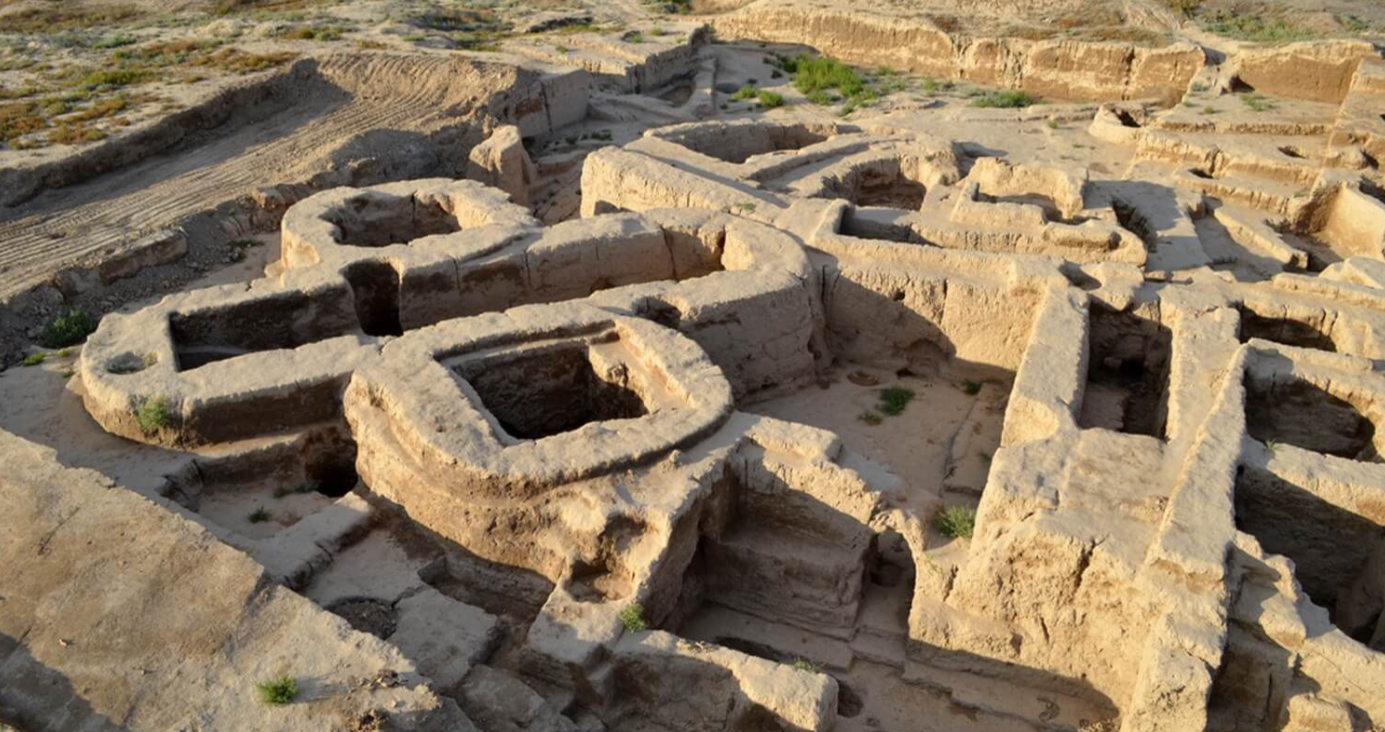
Citadel of the Kultobe settlement of the I-II c. Photo credit: kultobe.com
Kultobe, the oldest cultural layer, dates back from the first century B.C.E. to the fourth century C.E. Excavations have uncovered dwellings, urban layouts, and inscriptions in Greek, Sogdian and Old Turkic, which became evidence of early cross-cultural contact and the emergence of proto-urban life in the region.
Shoitobe, a neighboring archaeological mound, contains residential and economic structures from the early and medieval periods, possibly serving as a suburban or specialized quarter of the expanding city.
The preserved western wall of the city, measuring approximately 350 meters, along with remains of streets and gates, reflects Yassy’s organized urban planning. Markets and caravanserais were once located along the southern perimeter as a stop on the Silk Road trade route.
Managing the legacy
Since 1989, the site has been managed by the Azret-Sultan State Historical and Cultural Museum-Reserve, which also oversees the mausoleum complex. The ancient settlement has been recognized as a national monument and forms a critical component of Kazakhstan’s broader cultural heritage policy.
Other nominated sites as part of the Silk Roads Fergana-Syrdarya Corridor include Otyrar, Sauran, Kyshkala, Asanas, Syganak, Zhankala, Zhankent, and the Zhetyasar oasis settlements.
Kazakhstan is also involved in other Silk Road nominations, including the Volga-Caspian Corridor, which features Kyzylkala, Saraychik, and Zhayik settlements, and the Silk Roads: Early Period (Prehistory) route, which highlights burial complexes such as Besshatyr, Boralday, and Esik.
