
ASTANA – Kazakhstan is preparing a major overhaul of its innovation development model, Minister of Science and Higher Education Sayasat Nurbek said at a March 31 government meeting, emphasizing the need for stronger coordination and a more applied, economically driven approach to innovation.
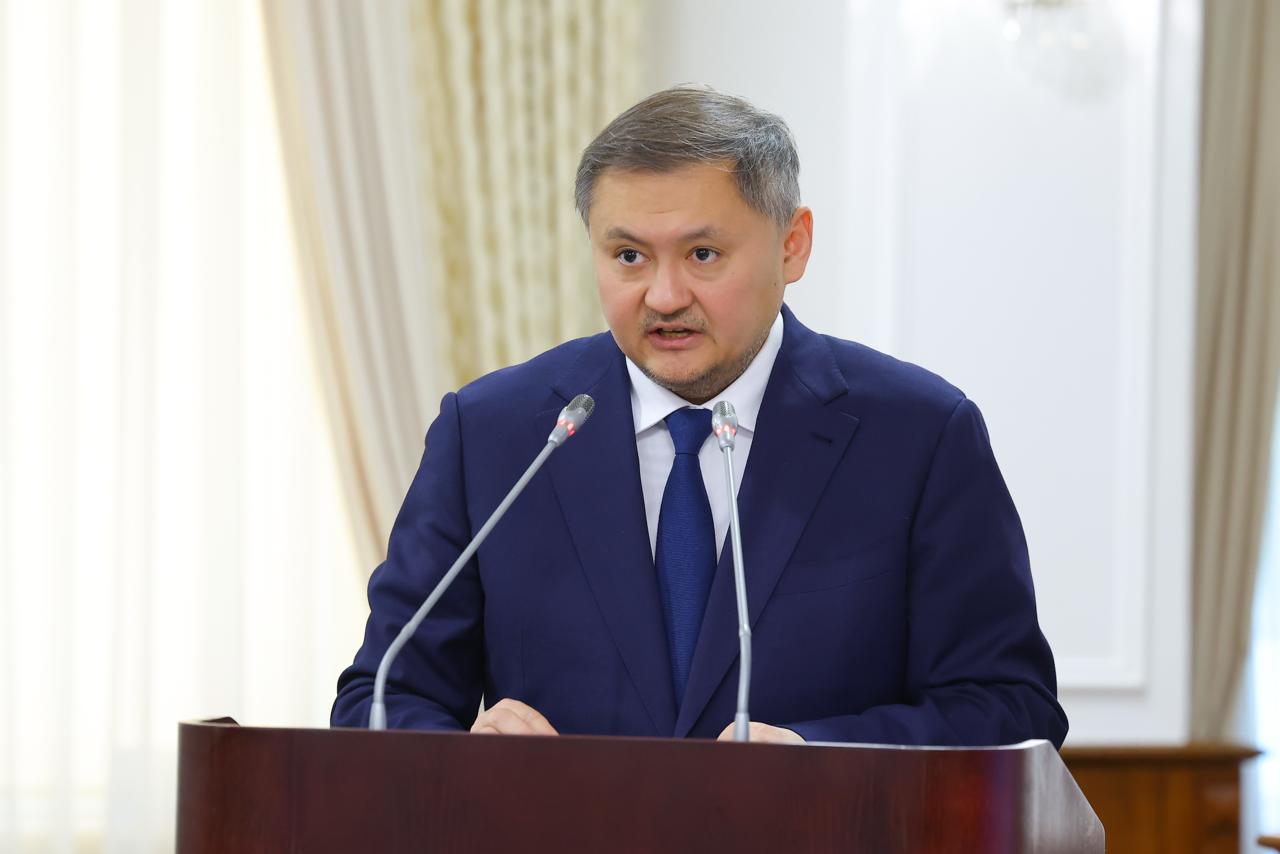
Minister of Science and Higher Education Sayasat Nurbek. Photo credit: gov.kz
Nurbek stressed that innovation is inherently cross-sectoral and cannot be managed by a single institution. To address fragmentation, he proposed establishing an Innovation Headquarters to coordinate efforts across the entire government system.
Systemic gaps and weak coordination
Kazakhstan currently ranks 81st in the Global Innovation Index and 55th in the Economic Complexity Index, reflecting structural challenges that go beyond the scope of any single agency. According to Nurbek, one of the main problems is weak coordination among government bodies involved in innovation policy.
Another critical constraint is a break in the innovation cycle. While the government supports early-stage research (Technology Readiness Levels, or TRL 1-3) and businesses engage at later stages (TRL 7-9), the intermediate phase (TRL 4-6) remains underfunded. This gap prevents many projects from reaching commercialization.
To address this, the ministry is proposing a new funding instrument – grants for experimental design and development. At the same time, Kazakhstan’s R&D (research and development) spending remains low at just 0.16% of GDP, significantly below levels seen in developed economies.
Building an innovation ecosystem
Despite these challenges, Nurbek noted that a foundational innovation ecosystem is already taking shape. Efforts are underway to strengthen human capital through industrial PhD programs, updated engineering education models, and international internships.
Institutional reforms include the adoption of a law on science and technology policy, an expanded role for the Academy of Sciences, and the creation of a National Council for Science and Technology.
Infrastructure is also growing, with 303 research laboratories and 62 commercialization centers established. Financial support is being expanded through increased public funding, tax incentives for businesses, and the creation of an endowment fund.
Integration across the ecosystem is being reinforced through platforms such as Astana Hub and the Alem.ai international center, which connect science, startups, and technology teams.
A key priority is strengthening collaboration between science and industry. Through scientific and technological sessions, businesses define specific challenges for researchers. So far, more than 500 scientists have contributed to over 200 such tasks, with mandatory business co-financing of at least 30% to ensure alignment with market needs.
Shift toward regional and applied innovation
The country is now advancing a more applied, regionally driven innovation model focused on DeepTech and knowledge-intensive industries. Universities, working with local authorities and businesses, are expected to play a central role.
This approach includes identifying regional technological priorities, conducting R&D, and implementing solutions directly in production. It is supported by the development of science cities and technology parks as integrated innovation clusters.
The so-called smart specialization strategy will guide regional development, allowing each area to focus on its competitive strengths, such as agribiotechnology or petrochemicals.
The broader model follows a demand-driven approach: businesses define technological needs, which are translated into research tasks and carried out by universities and research institutions, with a clear path to commercialization.
Toward a seamless innovation cycle
Overall, the proposed reforms aim to create a more cohesive and results-oriented innovation system. The goal is to establish a seamless cycle, from scientific research to market-ready products, supported by stronger coordination, targeted funding, and regional engagement.
Key measures include the creation of an Innovation Headquarters, adoption of a national Innovation Development Concept, clearer accountability for government agencies, the introduction of performance indicators, and increased investment in innovation.
According to Nurbek, these steps are essential to improving the effectiveness of science and ensuring its tangible contribution to Kazakhstan’s economic growth.
