
ALMATY – Kazakhstan is moving forward with plans to transform Almaty into Central Asia’s leading year-round mountain tourism hub through the development of the Almaty mountain cluster and the large-scale Almaty Superski project.
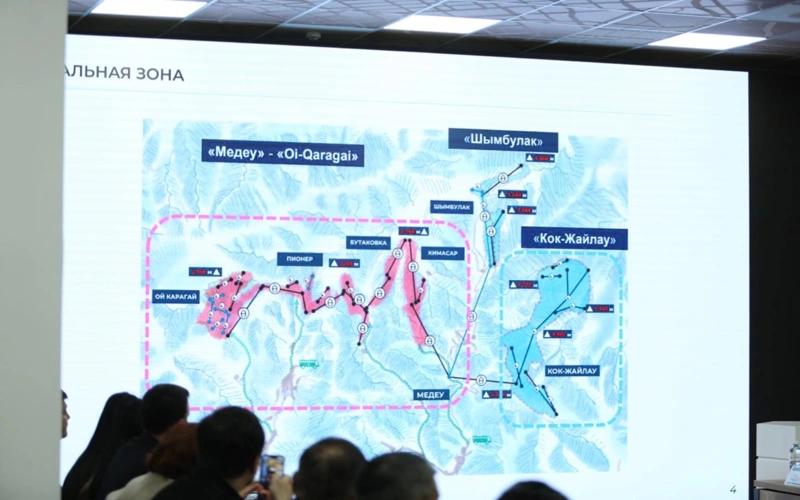
The Almaty mountain cluster concept includes plans for up to 30 cable cars, nearly 151 kilometers of ski trails and daily capacity for up to 30,000 visitors. Photo credit: Atameken.
The initiatives were discussed during a May 12 meeting hosted by the Atameken National Chamber of Entrepreneurs at the Almatygenplan Research Institute, bringing together government officials, tourism executives, business representatives and environmental experts.
The meeting participants described the project as one of the country’s largest tourism infrastructure initiatives, aimed at reshaping Almaty into an international mountain tourism destination comparable to leading alpine resorts.

Kanat Sharlapayev. Photo credit: Atameken.
According to the project figures, the Almaty Superski development envisions infrastructure across 1,022 hectares, including 17 ski lifts, more than 60 kilometers of ski slopes of varying difficulty levels and a 20-hectare mountain village. More broadly, the Almaty Mountain Cluster concept includes plans for up to 30 cable cars, nearly 151 kilometers of ski trails and daily capacity for up to 30,000 visitors.
Unlike traditional winter-only ski resorts, the project is designed as a year-round tourism ecosystem. Plans include hiking routes, cycling and mountain biking infrastructure, modern visitor centers and an integrated mountain safety system.
“The project is not simply about building a ski resort. We are talking about creating a modern, year-round tourism ecosystem of international level. For Kazakhstan, this is an opportunity to create a new center for tourism, investment and international sporting events,” said Yerzhan Yerkinbayev, chief executive officer of Kazakh Tourism Development.
Tourism seen as new economic driver
Officials and business leaders stressed that mountain tourism could become a major non-resource growth sector for Kazakhstan’s economy.
Kanat Sharlapayev, chairman of the Atameken chamber, said the mountain cluster project represents more than infrastructure development.
“The development of the Almaty mountain cluster is the formation of a new economic model capable of ensuring sustainable growth in tourism, business and employment,” he said.
According to estimates presented during the meeting, domestic tourism could see a rise from 1.7 million to 3.4 million visitors by 2028, while international tourist arrivals may rise from 600,000 to 2.5 million people.
Employment in the tourism sector could grow from 89,400 jobs to 119,000 jobs, while annual tax revenues linked to tourism are projected to nearly double from 91.5 billion tenge (US$178 million) to 185.9 billion tenge (US$362 million).
Neighboring countries such as Uzbekistan and the Kyrgyz Republic have also been rapidly investing in mountain tourism infrastructure in recent years, intensifying regional competition for international visitors.
Environmental concerns remain central
A significant part of the discussion focused on balancing tourism expansion with environmental protection in the fragile mountain ecosystem of the Ile Alatau. The project developers said they are working alongside experts in ecology, hydrology, zoology and sustainable land use to minimize environmental pressure and better manage tourist flows.
Officials emphasized that organized infrastructure could help reduce uncontrolled tourism and anthropogenic pressure on mountain landscapes around Almaty.
The meeting also highlighted the importance of maintaining public dialogue around the project, acknowledging that large-scale infrastructure development in mountain areas inevitably raises social and environmental concerns.
Almaty’s position as regional tourism hub
Officials say the project aligns with Kazakhstan’s broader strategy to diversify its economy away from raw materials and strengthen sectors such as tourism, services and digital infrastructure. The mountain cluster initiative also aims to reinforce Almaty’s role as Central Asia’s main tourism and transportation hub.
The project is expected to stimulate small and medium-sized businesses in hospitality, transport, food services and digital tourism solutions, while increasing Kazakhstan’s visibility on the global tourism market.
