
ASTANA — Archaeologists in Kazakhstan’s Zhetysu Region have uncovered rare gold jewelry, elite Saka-era burial mounds, and a unique double burial dating back to the 4th–3rd centuries BC during excavations at the Dauylbay burial ground.
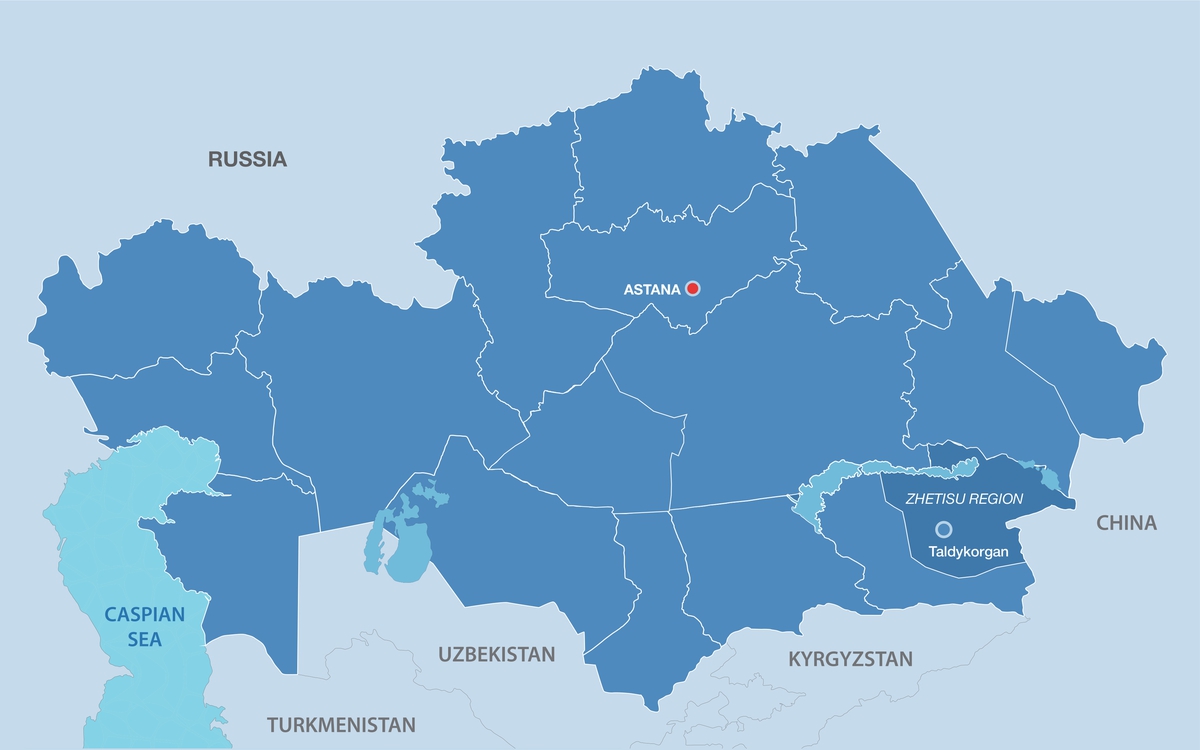
Photo credit: Aigerim Koppayeva/Kazinform.Click to see the map in full size. The map is designed by The Astana Times.
Located at the foot of the Dauylbay mountain range in the Karatal district, the burial ground has yielded a wide array of artifacts, including bronze tools, bone ornaments, intricate ceramics, and ritual objects unearthed from both elite and common mounds.
Fieldwork conducted in 2023-2024 under the supervision of Doctor of Historical Sciences Dosbol Baygunakov revealed the scale and complexity of the site, which contains 23 burial mounds, 11 of them belonging to noble families, reported Kazinform on Nov. 30.
Among the most notable finds were gold plates, beads, earrings, bone buttons, bronze hairpins, buckles, and ceremonial vessels. Of particular importance is a varvorka – a gold ornament traditionally strung on a thread and used as a pendant in high-status ritual attire – as well as a rare bone artifact carved in the shape of a “snake-dragon,” believed to have played a role in ancient ceremonies.
According to Maksat Olzhibek, curator of the Mukhamedzhan Tynyshpayev Regional Museum of History and Local Lore, archaeological research at Dauylbay began in the 1960s, but recent expeditions have produced especially significant results. In one of the larger mounds, measuring around 40 meters in diameter and 3-4 meters in height, archaeologists uncovered the remains of a man. An iron akinak sword, typical of Saka warriors, was found to his right, along with gold plates and a varvorka, indicating his high social rank.
A breakthrough came during the 2024 excavations, when specialists examined three additional mounds – two of them elite – and discovered a rare double burial, the first found in the area. A woman and a child were laid to rest together; gold earrings were found near the child’s skull, and bronze plaques crafted in the Saka animal style, including a depiction of a deer, were also retrieved.
All artifacts were transferred to the museum in November 2024. This year, specialists from the Scientific and Experimental Applied Archaeology company completed a full restoration, cleaning metal objects of corrosion and returning bone and ceramic items to their original appearance. The restored pieces have now been added to the museum’s temporary exhibition.
The Dauylbay Range remains one of the least studied archaeological zones in the region. Covering more than 100 square kilometers, it includes over 190 archaeological sites: around 150 burial complexes, more than 20 ancient settlements, and 20 clusters of petroglyphs spanning periods from the Bronze Age to modern times.
