
ASTANA — Astana Opera hosted “Rigoletto” on Nov. 5-6, the famous opera by Giuseppe Verdi, filled with complex characters – the old hunchback, the cynical Duke, and innocent Gilda. Remarkable artists Medet Chotabayev and Sayan Issin made their debuts as the Duke of Mantua.
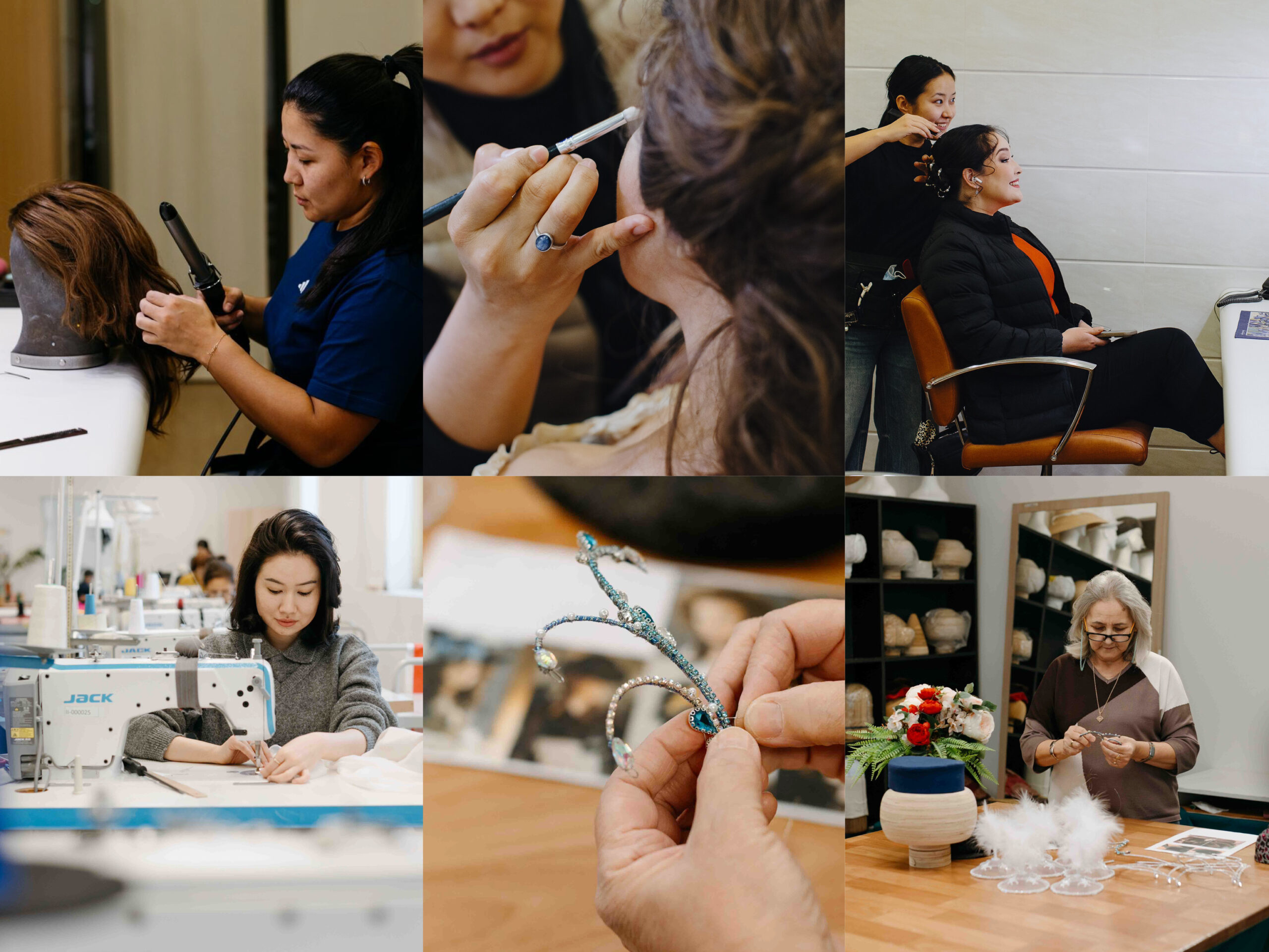
Photo credit: Astana Opera
While audiences admire the brilliance on stage, much of what they see, from the costumes to the captivating looks of the characters, is the result of people working behind the curtain.
Makeup artists
While the stage lighting is adjusted and the sets are checked, the characters’ faces are brought to life. Makeup artist Assel Zhakupova carefully arranges jars, brushes, and bottles on the table as she prepares the performers for the stage. She explains that everything should be ready before the performance so that artists do not have to wait and can feel at ease before going onstage.
While Zhakupova and her team work quietly but quickly to prepare each performer, they also play a key role in setting the emotional tone before the curtain rises. Soprano Yelena Ganzha says that an artist’s mood often depends entirely on how they feel in their makeup and hair.
“If it is done beautifully, you are ready to perform. If something is wrong… well, it is hard for us, girls. We all get nervous before going onstage. I always say they deserve a monument during their lifetime,” she said.
Zhakupova smiles as she listens and says that she and her colleagues understand the performers’ emotions and always try to help them stay calm. She explains that they have to do everything perfectly the first time because there is no second take onstage, and sometimes they even have to act as psychologists.
When asked if makeup artists have a phrase that always works, Yelena Ganzha laughs and answers that when the artists hear, “you are most beautiful today,” they instantly become happy and ready to sing.
Even after the curtain rises, the makeup artists remain backstage, ready to adjust a wig, glue a moustache, or touch up a performer’s face. Zhakupova said they sometimes watch rehearsals from the audience hall because what looks good in the dressing room can look different under stage lights.
Makeup artist Nazym Abubakir, who has worked at the opera house for six years, said she thinks with her hands. When she begins her work, the world disappears, and the performer’s face becomes a blank canvas. She noted that even for light makeup, artists still come to her — it is a ritual that helps them get into character.
Another team member, Azhar Khassenova, graduated from the university’s design department but chose opera out of love for music and ballet. She said she takes part in the entire process from rehearsals to the premiere and finds joy in watching each character come to life.
The makeup artists witness how performers evolve and mature over the years, celebrating their successes and feeling their absence when they move on.
The Astana Opera Makeup Department, led by Serik Basbayev, consists of just nine specialists who create dozens of looks for every performance. They especially enjoy productions that involve transformations, when a performer becomes unrecognizable until you hear their voice.
A hump, a crown, a wrinkle, it all begins here, in the makeup room filled with the scent of hairspray and the spirit of theater.
Seamstresses
When people think of craftsmanship, they often imagine workshops or factories. Yet within the walls of Astana Opera, many have dedicated their lives to this art, especially the sewists working in the costume shop.
Twenty people work in this department, including sewists, patternmakers, and technologists, among other specialists.
Headwear patternmaker Dina Dzhakiyenova, who has spent 43 years in this field, said she followed her heart into the profession. For half of her life, she has worked in opera houses, first in Almaty and later at Astana Opera. She explained that making costumes for opera and ballet is very different from tailoring private clothes. Each costume should perfectly fit the designer’s sketch while allowing performers to move freely and comfortably.
Dzhakiyenova specializes in creating headwear, which requires delicate hand stitching. She said that when work brings joy, time passes unnoticed, and any challenge becomes bearable. Her advice to the younger generation is simple: never be afraid to master a skilled trade, as it is a profession worthy of great respect.
Colleague Gulbanu Mukanova agreed with her. She said that difficulties disappear when you see a finished costume onstage, and that every piece is the result of teamwork among designers, technologists, and sewists.
Both women are retiring this year and now share their knowledge with young specialists through the Theatrical Crafts Children’s Studio, where girls learn sewing skills under the guidance of experienced mentors.
One of these young specialists, Aigerim Zhanabergenova, joined the costume department after graduating from the Kazakh National University of Arts. She said she loves her job and dreams of opening her own sewing workshop. Knowing how to sew, she adds, will always be a valuable skill.
The article was originally published on the Astana Opera official page.
