
ASTANA — Fresh from presenting her credentials to President Kassym-Jomart Tokayev this August, the new UN Resident Coordinator in Kazakhstan Sarangoo Radnaaragchaa has quickly immersed herself in the country’s dynamic capital. In an exclusive interview with The Astana Times, she shared her first impressions, outlined her priorities, and reflected on the milestones UN agencies have helped achieve in Kazakhstan.
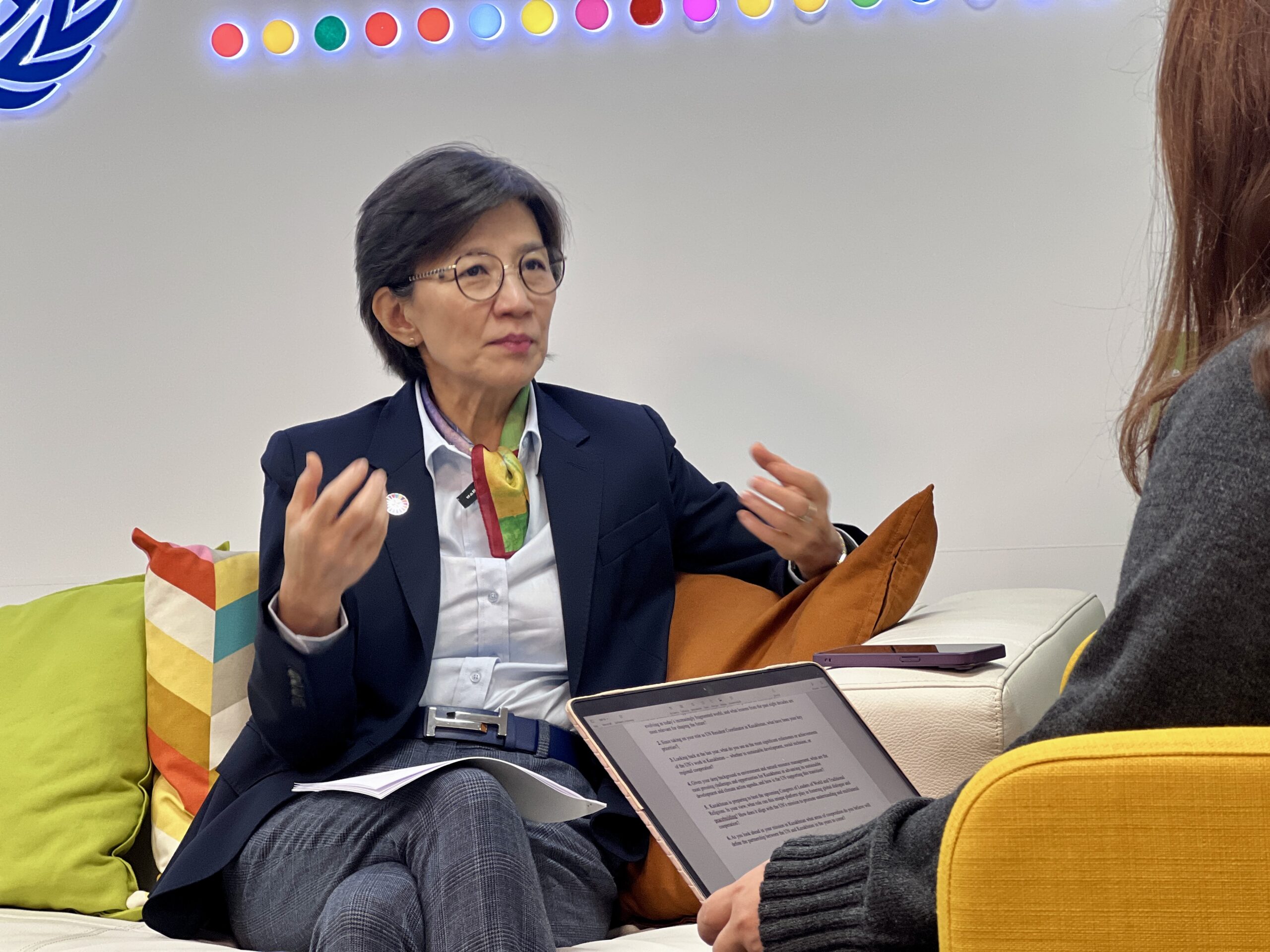
UN Resident Coordinator in Kazakhstan Sarangoo Radnaaragchaa summarized her mission in Kazakhstan in three priorities. Photo credit: The Astana Times
“These first two months have been so active and vibrant, full of events and activities, but also deeply enriching. Every day I am learning something new and becoming part of very interesting processes, which gives me many ideas,” she noted.
Although new to Astana, the country is not unfamiliar to her. With 25 years of experience in sustainable development across Europe and Central Asia, she previously served as Regional Advisor on Environment at the UN Economic Commission for Europe (UNECE), where she worked extensively on Central Asian environmental issues.
Priorities for the UN in Kazakhstan
In her short time on the ground, Radnaaragchaa has already traveled to regions such as Kyzylorda and Aktau, witnessing firsthand both challenges and opportunities. She summarized her mission in Kazakhstan in three priorities.
“First, to further strengthen our partnership with the Government, building on the country’s strong support for multilateralism. Second, to promote social inclusion, ensuring that women, youth, and vulnerable groups are not left behind. And third, to accelerate action on climate and the environment — particularly in light of the forthcoming Regional Ecological Summit that Kazakhstan will host next year, which the UN is actively supporting,” she said.

Radnaaragchaa presented her credentials to President Kassym-Jomart Tokayev this August. Photo credit: UN in Kazakhstan
While stressing the importance of climate change, Radnaaragchaa said water is the “priority within the priority” for the region. She recalled President Tokayev’s recent state-of-the-nation address, where he highlighted the role of artificial intelligence in smart water management. She also pointed to the newly signed Cooperation Framework with the government, soon to be officially launched. Kazakhstan, she noted, is outperforming the global average, with 39.7 percent of its Sustainable Development Goals (SDGs) targets either on track or progressing.
“It is essentially our roadmap — guiding the UN’s work in Kazakhstan for the next five years, until 2030, in alignment with national priorities and the SDGs,” she said.
Among her additional priorities is the upcoming commemoration of the UN’s 80th anniversary and UN Day in October. “There is a lot of work ahead, but it is exciting and deeply rewarding,” she added.
Radnaaragchaa emphasized that working with young people will be another key focus.
“Kazakh youth are dynamic, well-educated, and highly motivated to achieve both professional and personal growth. As a mother of two sons, I also know that young people sometimes feel pessimistic about climate change, conflicts, global tensions, or cybersecurity risks,” she said, noting that these challenges can feel overwhelming and that supporting and empowering youth is therefore essential.
UN priorities in action: people, governance, and sustainable growth
Radnaaragchaa outlined the UN’s work in Kazakhstan through three main pillars: empowering people, good governance, and sustainable economic development. On the first pillar, empowering people, she noted that in 2024 a new national nutrition standard was introduced for educational institutions, benefiting 1.7 million children and future generations. Public information campaigns on vaccination reached 4.6 million people, while more than 4,478 cancer patients accessed critical treatment. The UN also worked to identify 728 people of undetermined nationality, with 642 now holding legal documents.

Radnaaragchaa shared with The Astana Times’ Aida Haidar that the partnership between the UN and Kazakhstan will be guided by the new Cooperation Framework. Photo credit: The Astana Times
“It’s a great achievement that now these people can show a national identity document, which gives access to all services and benefits,” she said.
Turning to governance, Radnaaragchaa highlighted training for nearly 5,900 prison officers on the Nelson Mandela Rules and for 550 civil servants on digital reforms and project management. She also noted that the HeForShe campaign promoting positive social norms “reached over 100,000 people,” creating broader awareness of gender equality.
On sustainable development, she pointed to the creation of 15 start-ups in the creative economy and efforts to reintroduce Turan tigers and kulans into the wild. Equally important, $4.2 million in renewable energy investments spurred 19 projects, collectively reducing 163,500 tons of CO₂ emissions.
“When you trigger such investment or infrastructure development for renewable energy, it immediately, of course, contributes to the reduction of CO₂ emissions. This is a very concrete example of how we are supporting the country to meet the global commitment to reduce CO₂,” she explained.
Another milestone came in social protection. Following the adoption of the new Social Code, the government shifted from using the subsistence minimum to a median income measure for poverty—an approach the UN strongly advocated. “This will ensure that more vulnerable families become eligible for state support,” she added.
Advancing sustainable development and climate action
Radnaaragchaa highlighted that Kazakhstan has adopted a carbon neutrality strategy to 2060, along with frameworks for a green economy, water management, and a water code. The UN’s role, she stressed, is to work hand in hand with the government to turn these strategies into action. At the same time, she cautioned that water will remain the most urgent challenge, as climate change, glacier melt, and declining supply place the country under mounting pressure in the years ahead.
“We support the recently announced plans of Kazakhstan to enhance the water governance. In terms of building an AI-enabled unified water platform, supporting Caspian and Aral seas water-preservation program and fostering environmental culture: adopting a unified environmental-education standard from schools to universities,” she added.
Last year, she reminded, was the hottest on record, with global temperatures 1.55°C above pre-industrial levels.
“This must be a wake-up call. For Kazakhstan, the risks are even greater. Temperatures here are rising twice as fast as the global average, which threatens water, agriculture, and public health. Kazakhstan faces pressing environmental challenges: the legacy of the Aral Sea disaster, rising water stress, air pollution in urban centers, and the increasing impacts of climate change. Yet, there are also enormous opportunities. Kazakhstan has vast potential in renewable energy, sustainable agriculture, and digital innovation,” Radnaaragchaa said.
The UN, she explained, is already supporting Kazakhstan in developing low-carbon strategies, expanding renewables, and securing climate finance bringing technical expertise, global best practices, and access to international platforms and financing. “We are working closely with the government on the forthcoming Regional Ecological Summit,” she added.
Radnaaragchaa also noted that President Tokayev, in his recent address to the nation, emphasized renewables, critical minerals for the green transition, and even technologies like clean coal.
“This aligns with the UN’s focus on a green and just transition. Just transition means that while diversifying the economy, we must consider the social impact of how local communities will be affected in terms of jobs, social protection, schooling, and healthcare,” she explained.
She added that the UN country office is also working with the European Union representatives in Kazakhstan to bring diverse perspectives to the table.
Looking to the future
Radnaaragchaa said the partnership between the UN and Kazakhstan will be guided by the new Cooperation Framework, structured around four priorities. The first is empowered people — ensuring women, youth, and vulnerable groups can access quality education, healthcare, and social protection, and fully participate in society. The second is an inclusive economy — driving innovation, diversification, and green growth so that progress benefits everyone. The third is a sustainable environment — advancing climate action, renewable energy, sustainable agriculture, and addressing ecological challenges such as the Aral Sea. The fourth is social cohesion — strengthening human rights, gender equality, and resilient institutions while fostering trust and participation.
“All of these areas are also aligned with the global Pact for the Future, adopted at last year’s SDG Summit. This means placing a strong emphasis on involving young people more actively in decision-making and investing in the digital sector,” she noted.
Radnaaragchaa welcomed Kazakhstan’s digital ambitions, including plans to establish a Ministry of Artificial Intelligence and Digital Development, expand the Digital Kazakhstan program, and integrate AI across government, education, agriculture, and trade. She emphasized that for the UN, the priority is to ensure technology is developed responsibly and inclusively, creating opportunities that serve societies while protecting people’s rights and safety.
UN80 is a moment both to reflect and to look forward
Radnaaragchaa also reflected on the approaching 80th anniversary of the UN, a milestone to take stock of past lessons and consider its evolving role.
“The lesson of the past eight decades is clear: when nations cooperate, progress is possible. One of the greatest advantages is the convening power of the United Nations — its unique ability to bring countries, communities, and people together, even in times of deep division, to find common ground and work toward shared solutions,” she said.She stressed that the UN’s work extends far beyond conflict resolution. Its initiatives have contributed to falling child mortality rates, wider access to education, stronger voices for women, and conflicts resolved through dialogue rather than war.
“To date, the United Nations remains the only truly universal platform that unites almost every country in the world. When we look back at history, the UN Charter was born out of the scourge of war, carrying the hope of generations. Today, of course, the UN is often criticized, sometimes rightly so. But we should not forget that at 80, the UN is still young — learning, evolving, and responding to a changing world,” Radnaaragchaa noted.
She also highlighted President Tokayev’s recent address, in which he reaffirmed the UN’s unique role as the universal platform for multilateral diplomacy and called for reform, especially of the Security Council, with Kazakhstan preparing proposals for UNGA80.
“Of course, the Organization must adapt to new realities such as climate change, digital transformation, demographic shifts. But its mission remains timeless: to bring countries together to find common solutions and to uphold peace, human dignity, and sustainable development,” she said.
Faith, tolerance, and global responsibility
With Kazakhstan soon to host the Congress of Leaders of World and Traditional Religions, Radnaaragchaa noted that the platform reflects the UN’s core mission: promoting tolerance, respect, and cooperation among nations.
“The Congress is a unique platform, and Kazakhstan deserves recognition for convening it already for the eighth time. At a time when mistrust and division are on the rise, dialogue among faith leaders can make an essential contribution to peacebuilding. Religion has often been misused to divide, but it can and must also serve as a force for unity and reconciliation,” she said.
She emphasized that the issue cannot be viewed in isolation. Across the globe, racial profiling, discriminatory policies, and violence against individuals and places of worship highlight a wider scourge of intolerance and extremist ideologies. Attacks on one community, she warned, undermine the rights and freedoms of all.
“As a global community, we must reject and eradicate bigotry. Governments must foster social cohesion and protect religious freedom. Online platforms must curb hate speech and harassment. And we must all speak out against xenophobia, and discrimination,” Radnaaragchaa concluded.
