
ASTANA – September marks the start of a political season in Kazakhstan, with President Kassym-Jomart Tokayev’s state-of-the-nation address setting the tone for the year ahead and outlining strategic priorities. From the new ministry on artificial intelligence to a proposed parliamentary reform, The Astana Times brings insights from experts and state officials on key initiatives outlined in the address.
A new national idea
Tokayev’s remarks present digital transformation and the adoption of artificial intelligence technologies as a “new national idea,” according to State Counselor Erlan Karin.
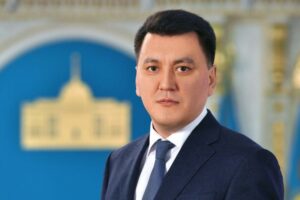
State Counselor Erlan Karin. Photo credit: Akorda.
“The overarching theme of the 2025 address is large-scale digitalization and the widespread use of artificial intelligence. President Kassym-Jomart Tokayev set the task to accelerate the introduction of digital and artificial intelligence tools across key sectors of the economy. All these efforts will be brought together under a new National Digital Development Strategy,” Karin wrote in his Telegram channel.
He underscored that this move makes Kazakhstan one of the first countries in the world to adopt such “systemic, institutional decisions” in this area.
“In doing so, Kazakhstan positions itself as a technologically advanced country of the future,” he added.
Commenting on the proposed reform of the Parliament, which may include dissolving the Senate, its upper chamber, Karin noted that the discussion is not about “immediately amending the Constitution or calling new parliamentary elections.”
“That is not the ultimate goal,” he said.
The main objective is to “further strengthen the institutional foundations of the political system.”
“For this reason, the President advocates a balanced and gradual approach, beginning with comprehensive discussions among experts and the wider public. In this way, Kazakhstan once again demonstrates an example of phased and inclusive political modernization,” he wrote.
The initiative that draws the most attention
Nikita Shatalov, deputy of the Mazhilis, a lower chamber of the Kazakh Parliament, describes the announcement of the parliamentary reform as one that draws the most attention.
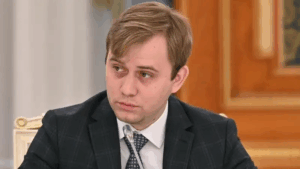
Nikita Shatalov, deputy of the Mazhilis, a lower chamber of the Kazakh Parliament. Photo credit: Shatalov’s personal archive
“The idea of merging the Senate and the Mazhilis has been discussed for a long time, with both critics and supporters weighing in. As the President himself acknowledged, this was not an easy decision, but it fits into his reformist logic,” Shatalov wrote in his Telegram channel.
The previous reforms, he noted, gave deputies and the Parliament as a whole a “new sense of agency.”
“The Mazhilis and the Senate, while maintaining continuity, were expected to ensure representation of diverse social groups and serve as a counterbalance to the government. Having seen that this works, the President has moved to the next stage of reform: a unified Parliament, which will clearly gain more authority, while gaps in coordination with the executive branch identified in recent years will be addressed,” he wrote.
The reform will not come as a surprise to the public, with dates of a national referendum announced in advance.
“The discussions will help define the scope of parliamentary powers and formalize procedures related to the budget (national, local, and funding for legislative initiatives), the approval and nomination of candidates for positions, electoral thresholds for political parties, and more,” Shatalov wrote.
“In other words, our mandates will end roughly on schedule, and we still have time to implement programs and complete key projects, whether laws or regional initiatives requiring budgetary support,” he added.
Smart urban management
Large-scale digitization will also impact urban management. According to Aidana Akessina, a senior research fellow at the Department of Strategic Analysis of the Kazakhstan Institute for Strategic Studies, developing digital urban ecosystems is becoming particularly relevant amid Kazakhstan’s growing urbanization.
“Over the past decade, the share of Kazakhstan’s urban population has grown by six percentage points from 57.1% to 63.1%. According to the Bureau of National Statistics, as of May 1, 2025, the country was home to 12.8 million urban residents and 7.5 million rural residents,” she said.
She cited expert forecasts suggesting that, if current trends persist, Kazakhstan’s urbanization rate could reach 66% within five years, above the baseline scenario of 62.6% projected initially for the end of 2025.
“The actual figures show the process is moving faster than anticipated. The rapid rise in the number of city residents is placing greater pressure on transport, energy, and social services. This intensifies demand for digital technologies that can improve the efficiency of urban management,” she said.
Alatau city is an example of how a town can evolve into not just a smart city, but a full-fledged innovation hub. For now, the vision remains largely on paper, yet turning this ambitious idea into reality appears well within reach.
The city, situated 47 kilometers north of Almaty’s center, is envisioned as a future hub of business activity and innovation, comparable to the advanced development zones that have become magnets for investment and technology in other rapidly growing countries.
Tokayev’s recent visit to China saw the signing of multi-billion-dollar agreements with major global companies. Among them is a company instrumental in building Shenzhen, the world-renowned technopolis. That same company will now play a direct role in shaping Alatau city’s development.
“In the context of developing digital infrastructure, the arrival of a next-generation supercomputer in Kazakhstan in 2025 carries particular significance. Its computing power opens vast opportunities for developing and testing artificial intelligence systems. One of the priority areas of application is expected to be smart city management: from transport logistics and energy consumption regulation to environmental monitoring and public safety systems,” Akessina said.
