
ASTANA – Public toilets rarely make headlines. However, in Shymkent, a new project is doing just that, attracting international attention for its creative use of technology and design.
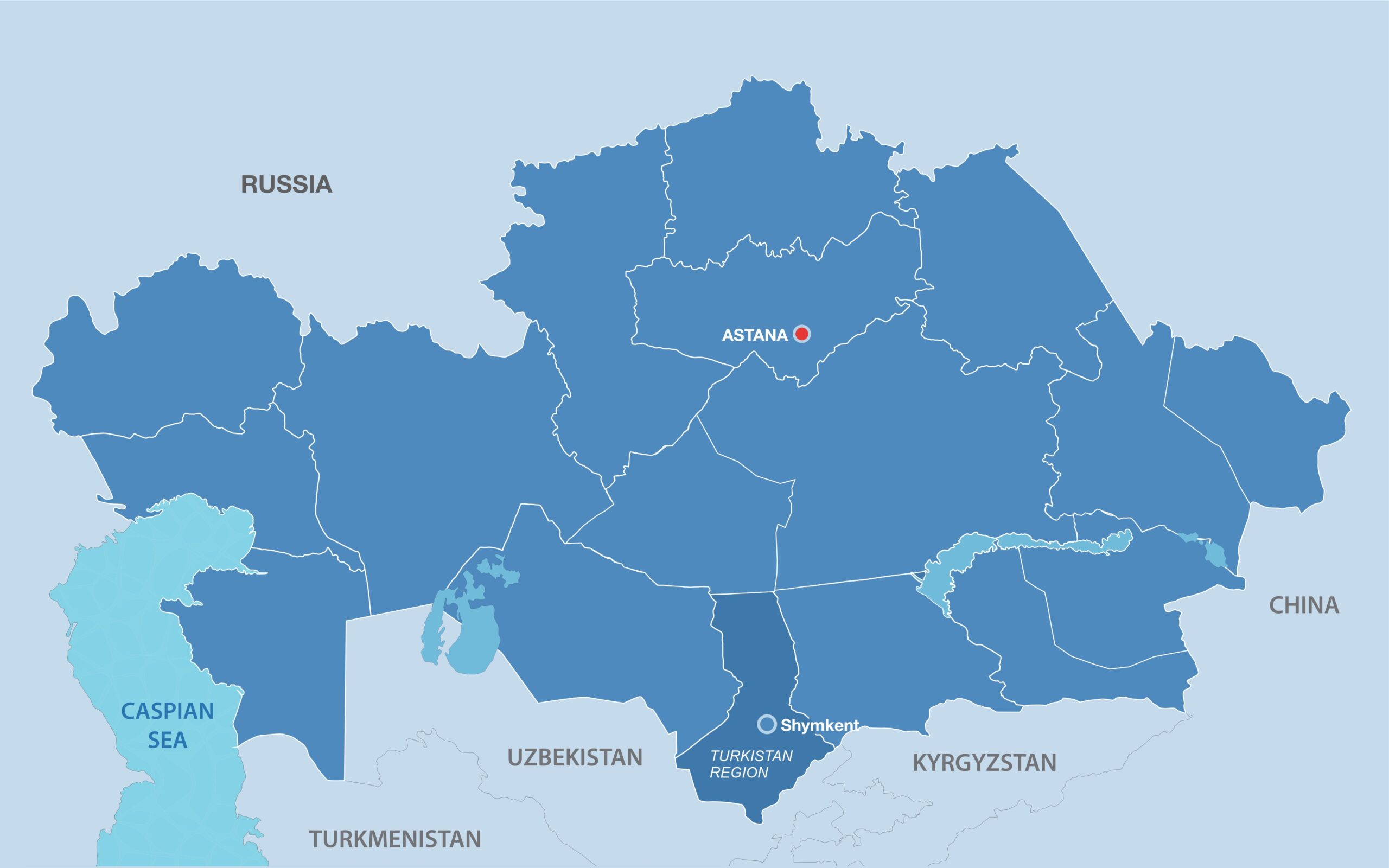
Photo credit: Halykbergen’s personal archive. Click to see the map in full size. The map is designed by The Astana Times.
On the city’s streets, newly installed toilets open with a QR code or facial recognition scan. Once a person steps inside, the glass walls immediately darken for privacy. The facilities are brightly colored, clean, and fully accessible for people with disabilities. The initiative is implemented by the Shymkent Akimat (city administration) in partnership with Miras University.
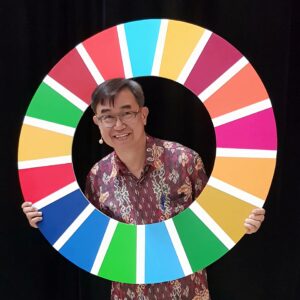
Jack Sim, founder of the World Toilet Organization. Photo credit: Sim’s Facebook page
For Jack Sim, the Singaporean social entrepreneur who founded the World Toilet Organization (WTO), the project represents something much larger than modern conveniences.
“When I crossed into Shymkent from Tashkent, the border toilets were not working. Along the highway, I saw standalone toilets that were poorly maintained. In the city, the pay toilet was dirty and unhygienic. But when I arrived at Miras University, Rector Nurken Halykbergen showed me elegant toilets he had designed on campuses and city streets. His aspirations to uplift the image of public toilets and change public mindsets is potentially the beginning of a toilet revolution in Kazakhstan,” Sim told The Astana Times.
Impressed, Sim invited Halykbergen to share his work at the World Toilet Summit in November in New Delhi.
Founded in 2001, the WTO is a nonprofit that advocates for clean and safe sanitation worldwide. It works through education, training, and building marketplace opportunities that empower communities to improve hygiene.
“Toilets have long been a taboo subject, even though we use them six to eight times a day. That’s why I founded the WTO with the mission of making clean toilets and safe sanitation a priority on government agendas,” he said.
In 2013, the United Nations General Assembly unanimously designated Nov. 19 as World Toilet Day, recognizing the WTO’s global impact.
Sanitation and development in Kazakhstan
Sim noted that Kazakhstan’s rapid economic growth has raised public expectations for higher standards of living.
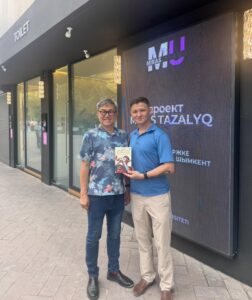
Jack Sim met with Nurken Halykbergen, Rector of the Miras University, during his trip to Shymkent. Photo credit: Miras University
“Kazakhstan is growing well, and with economic growth, people expect higher quality of life in all aspects, including their public toilets. In most new buildings, the toilets are clean and world-class. But we need to improve not only the tourist touchpoints but also facilities for local people. I visited the old train station in Astana, and it was dissimilar from those in new developments,” he said.
He also pointed to the importance of professional training for cleaners, saying sanitation depends not only on infrastructure but also on the people maintaining it.
“We need to train cleaners who can deliver the hygiene service required. I am very keen to help Kazakhstan in this toilet revolution, because I see the vision of the country becoming a shining model of a futuristic city with the highest quality of life for all its people and visitors,” said Sim.
For him, the larger challenge is overcoming cultural reluctance to talk about sanitation.
“Access to toilets has long been a taboo subject, something people avoid discussing because it feels embarrassing. However, what we don’t discuss, we cannot improve. We need to normalize the conversation about toilets, just as we do with food or drinking water. When political leaders, celebrities and the media open this discussion, we can transform society’s approach much more positively. This has been our experience in many other countries,” said Sim.
Learning from global examples
Sim pointed to international examples where partnerships between governments and the private sector produced results at scale.
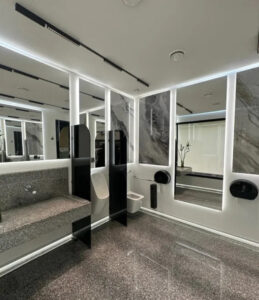
Public toilets in Shymkent. Photo credit: Halykbergen’s personal archive
“In Brazil, privatizing government-owned sewage treatment plants attracted $44 billion in private investment, bringing both money and management efficiency. In India, our work with Prime Minister Modi led to the construction of 110 million toilets, giving 600 million people access to sanitation for the first time. In China, since 2004, all tourism toilets have been transformed from very filthy to sparkling clean nationwide in just 20 years,” he said.
“I am certain we can repeat this in Kazakhstan to ensure everyone enjoys a clean and dignified toilet whenever they need one,” he added.
Sim asked Kazakh Tourism to prepare a comprehensive list of sanitation challenges, noting that once the problems are identified, the WTO could propose solutions by drawing on international best practices and adapting them to Kazakhstan’s culture and budget.
He also suggested that Kazakhstan host a future World Toilet Summit, which would be the first of its kind in Central Asia.
“We could bring experts worldwide to share financing models, training methods, policymaking, and operational knowledge. If Kazakhstan invites its neighbors the event could benefit the entire region. Kazakhstan is a beautiful country with very friendly people. Toilets can be an important part of this hospitality,” said Sim.
