
ASTANA – On Aug. 15, Kazakhstan celebrates 95 years since the birth of a revered composer Shamshi Kaldayakov, a genius for ballroom music, which made him the “king of Kazakh waltz.” It was also Kaldayakov who gave Kazakhstan the beloved national anthem music.
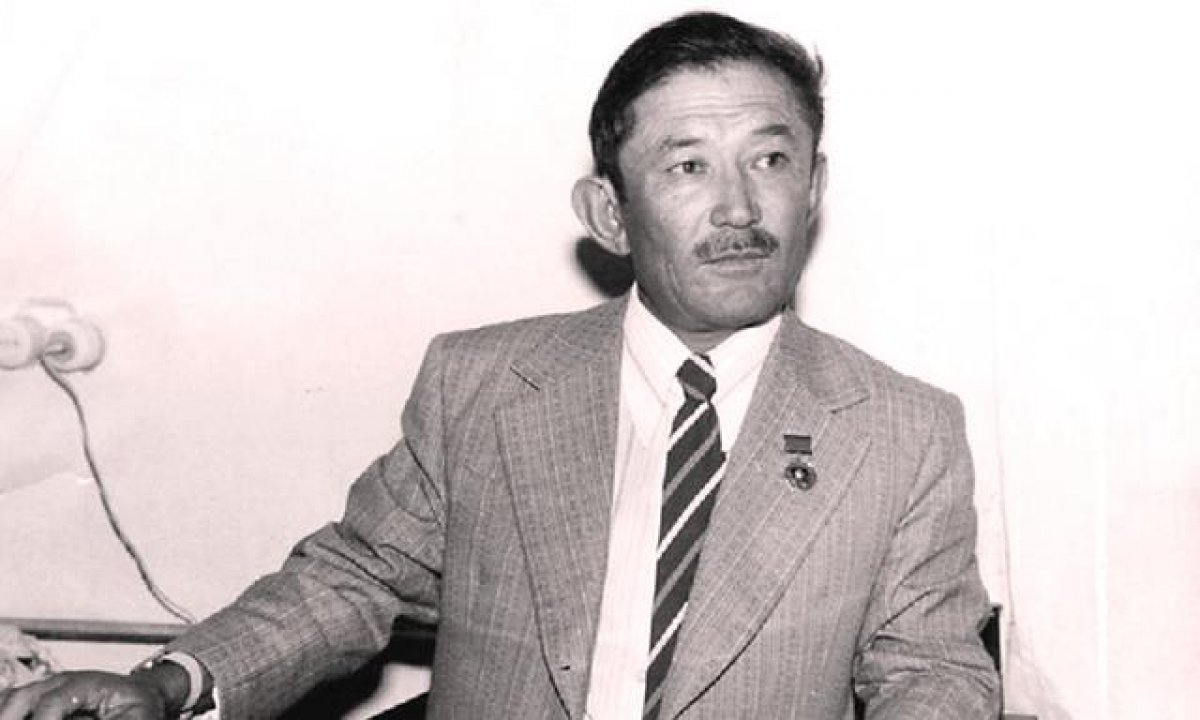
Shamshi Kaldayakov was a genius for waltz music. Photo credit: vecher.kz
Anthem’s author
Born in 1930, Kaldayakov may be best known as the king of the Kazakh waltz, but there were a few significant traces of patriotism in his works as well. He will forever be associated with one song in particular.
The song “My Kazakhstan,” which became the national anthem in 2006, was composed by a 26-year-old Kaldayakov to the words of 21-year-old poet Zhumeken Nazhimedenov. It was Kaldayakov’s artistic protest against the division of the sacred Kazakh land.
“At that time, they were going to rename Akmola [now Astana] into Tselinograd [city of virgin lands in Kazakh] and merge the five regions into one to hand it over to Russia. Not long before, three historically Kazakh regions in southern Kazakhstan had been given to Uzbekistan. When the Kazakh land was about to be divided in this way, I felt the need for an anthem that would celebrate its greatness. ‘My Kazakhstan’ song was born,” Kaldayakov wrote in one of his memoirs.
Waltz King
Kaldayakov began to achieve widespread acclaim in the 1960s and 1970s. Songs like “Quanysh Valsi” (Waltz of Joy), “Qaydasyn” (Where Are You), “Bakhyt Kushagynda” (In the Arms of Happiness), and “Ak Bantik” (White Bow) offer the best introduction to his stylistic range.
Many of his works displayed a popular touch, too – he succeeded in writing music that was gratifyingly accessible and sentimental without being complex.
A song about youth
Probably his best-known work, “Bakhyt Kushagynda” (In the Arms of Happiness), written in 1960, was composed to a text by Tumanbai Moldagaliyev.
At the time, Moldagaliyev was working as a senior editor of the poetry department at the Jazushy (Writer in Kazakh) publishing house. One day, upon arriving at work, he spotted Kaldayakov walking down the corridor. The composer approached him with a request: to write lyrics for a melody he had already composed, capturing the spirit of “young people at a dance.”
“I was still young at the time, and my wife and I often went dancing at KazGU [now Al-Farabi Kazakh National University], so it took me only a few minutes to put down on paper the exciting feelings you experience in a hall filled with music and surrounded by so many young, beautiful faces,” Moldagaliyev recalled.
Kaldayakov liked the poem, especially the lines “Let’s dance some more, don’t leave me.” First performed by the People’s Artist of the Soviet Union Rishat Abdullin, it won the heart of Kaldayakov and subsequently of millions of Kazakhs across the country.
“Shamshi was delighted! He rejoiced like a child. Of course, I did not share his enthusiasm, considering the song to be ordinary hackwork, but when I once went to see a friend off at the train station, I was shocked: ‘Bakhyt Kushagynda’ was playing from all the speakers, and young people were dancing to it right on the platform!” said Moldagaliyev.
Kaldayakov dedicated the song to his wife Zhamilya Kaldayakova, who was very fond of dancing.
“Gypsy Serenade”
Equally successful was the “Gypsy Serenade,” a song surrounded by many legends — from claims that Kaldayakov had fallen in love with a Gypsy woman to tales of him living among gypsies. In reality, however, it was simply Kaldayakov’s admiration for the serenades that inspired him.
“When we were young, Shamshi, Mynzhasar Mangytayev and I – we all got together to sing Russian folk songs and listen to Gypsy romances. We were inspired by that,” said Iliya Zhakanov, Kaldayakov’s contemporary, close friend, and colleague.
“We even had a collection of Gypsy romances specially brought from Moscow for that purpose. Every now and then, when Shamshi came home, he would put them on and listen to them with inspiration. He loved Gypsy romances so much. That’s how the song ‘Gypsy Serenade’ was born,” he said.
Though best known for his waltz repertoire, Kaldayakov was a master craftsman in a range of music genres, extending from tangos to marches and foxtrots. The “Gypsy Serenade” skilful blend of serenade and folk and its tender lyrics written by poet Kadyr Myrza-Ali gave it immense audience appeal.
The blend of waltz motifs with steppe song-legends proved immensely popular with audiences, yet ironically, it was this fusion that led to his expulsion from the conservatory in 1959 on the charge of “incorrect harmony.”
Genius that became a university dropout
The delayed acclaim to Kaldayakov’s legacy is probably due to the complexity of the real story behind his education. The Kazakh waltz king never became a member of the Composers’ Union of Kazakhstan during his lifetime. Moscow rejected his application for membership three times, citing a formal reason: he lacked a complete conservatory education.
Admission to the Composers’ Union required not only popular recognition but also graduation from a conservatory, the composition of a major oratorio or cantata within two years, and the creation of music for a one-act opera or ballet.
After two years at Tashkent Music College—following stints as a veterinary school graduate, collective farm worker, and army serviceman at Sakhalin—Kaldayakov entered the Almaty Conservatory named after Kurmangazy in 1956. More interested in composing than attending classes, he was expelled repeatedly for absences and reinstated just as often, but never completed his degree.
Kaldayakov was admitted to the Union of Composers only posthumously, in the years of independence—a long-overdue recognition, much like the title of People’s Artist of Kazakhstan, which he had received two months before his death.
Kaldayakov passed away on Feb. 29, 1992. Thirty years later, in 2022, the composer was awarded Kazakhstan’s highest honor by presidential decree—the title of Hero of Kazakhstan.
