
ASTANA – More than 50 kymyz producers from all over Kazakhstan took part in the two-day BaiQymyz festival on July 19-20 in Astana, which aims to preserve Kazakh traditions and promote the national drink.
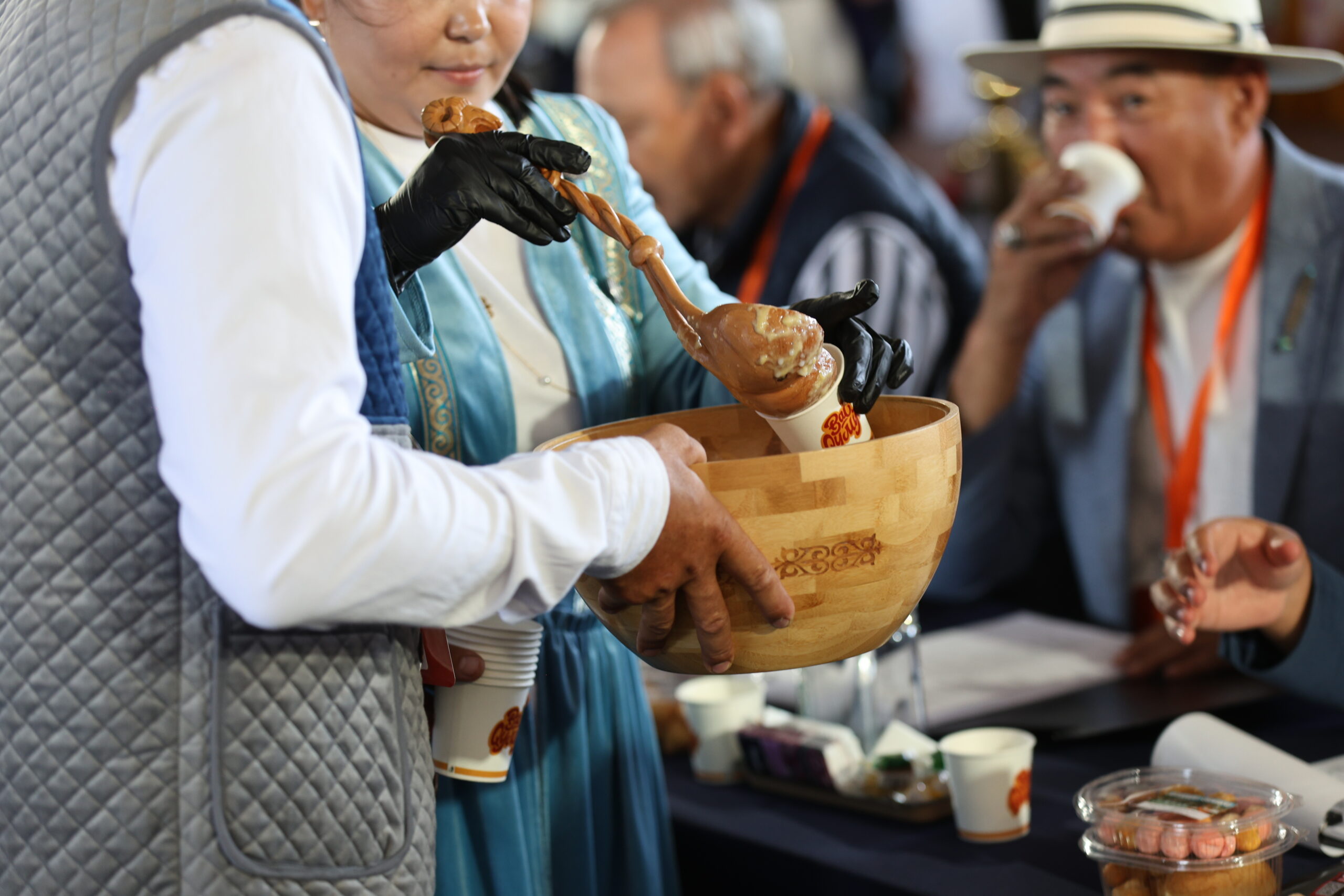
BaiQymyz festival set a new record in Astana by gathering a total of 30 tons of kymyz. Photo credit: BaiQymyz press service.
Kymyz is a fermented mare’s milk cherished across Central Asia not only for its health benefits but also for its cultural significance. Its healing and nurturing properties have been studied for their potential to treat illnesses from diabetes to digestive diseases.
The festival drew more than 70,000 guests to sample different types of kymyz. Each producer brought over 500 liters of the drink, generously offering tastings while sharing insights into their unique production methods, as well as the distinctive qualities and health benefits of their kymyz. They also set a new record in Astana by gathering a total of 30 tons of kymyz.
“I came from the Karagandy Region, the village of Ushtobe. We milk 25 mares and produce around 150 liters of kymyz every day. Today I brought 600 liters so that everyone could try real village kymyz,” said Sergazy Isabekov, the festival participant.
The festival offered 45 million tenge (US$84,000) in prize money for the best qymyz. The winners of the competition were selected by popular vote from festival attendees, with the top producers receiving significant cash prizes.
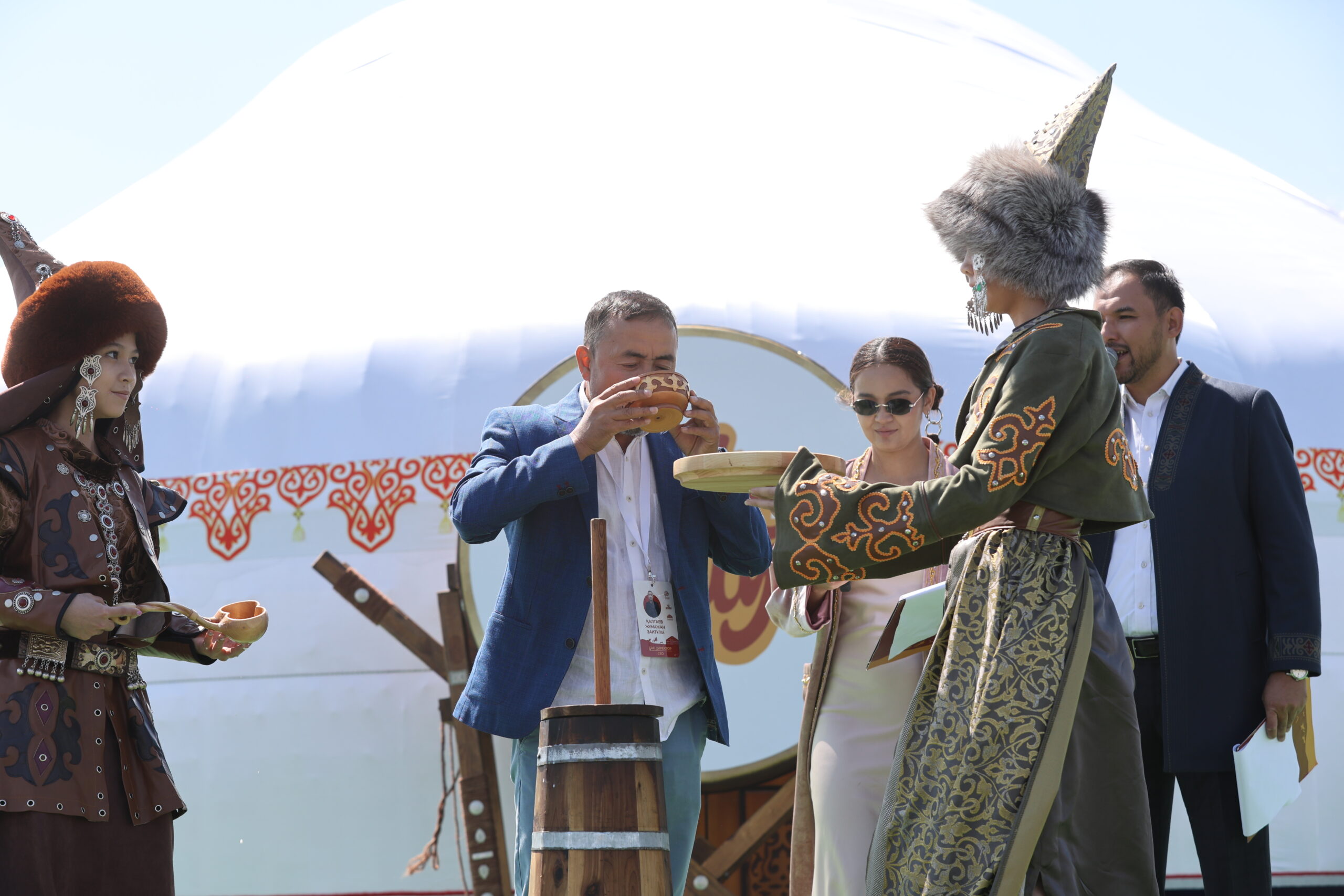
Kymyz is a fermented mare’s milk cherished across Central Asia not only for its cultural significance but also for its health benefits. Photo credit: BaiQymyz press service.
The first place and a cash prize of 20 million tenge (US$37,500) went to the Zhanys farm from Sarzhal village in the Abai Region.
The second place, along with 15 million tenge (US$28,000) was awarded to Qarynshi farm, representing Karkaraly kymyz in the Karagandy Region. Kabdulin farm from the Akmola Region took the third spot and a cash prize of 10 million tenge (US$18,700).
From farm to table, mare’s milk takes a long and complex route. Kymyz is produced by constantly stirring or churning freshly collected mare’s milk in a wooden barrel called saba. Fermentation usually takes one to three days.
“The uniqueness of kymyz depends on its taste and composition. Each has its own methods and technology of preparation. Our specialty is that we make it in a juniper barrel, oiling it, and seasoning it,” said Zhazira, who brought kymyz into the competition from Almaty.
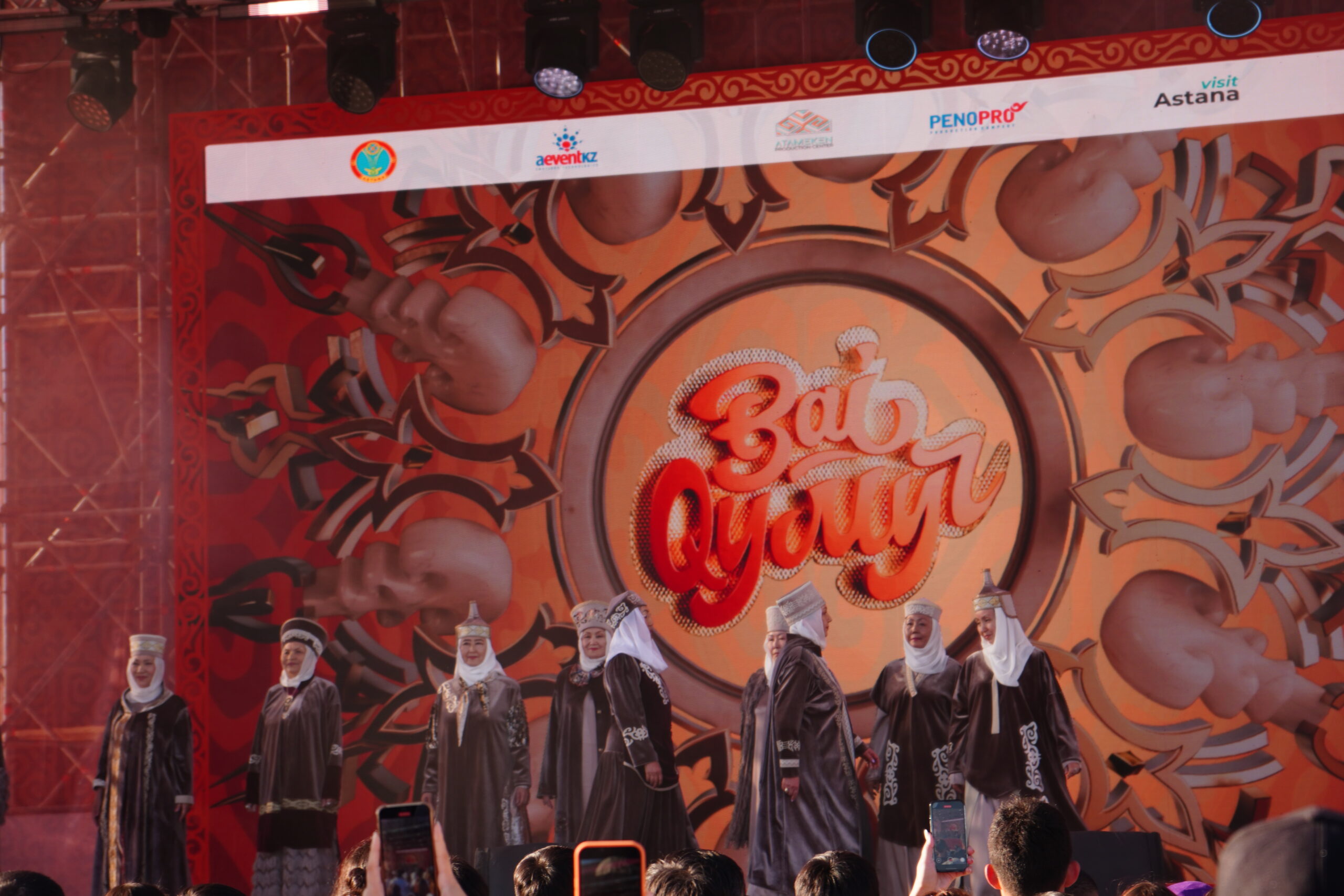
In addition to the kymyz competition, the festival featured a concert, a Tazy dog race, and a stallion showcase. Photo credit: Fatima Kemelova/The Astana Times
“Each region smokes the barrel differently depending on its plants,” said another participant Zhamilya, who came to the festival, representing the Turkistan Region.
“In our southern region, there is a herb called kiik-oty. We smoke the dish for kymyz with it. The herb kiik-oty then gives the kymyz a mild flavor. In the northern region, it is mainly smoked with tobylgy herb,” she said.
A variety of products, ranging from soap and cream to hair treatment, can be made from fresh mare’s milk, called saumal.
“We own a hotel that specializes in saumal therapy. We make ointment from saumal for dermo problems, for leg cramps, and as cometics. We make saumal soap. For hair growth, we make oil. Saumal can be a treatment for many ilnesses,” said Kulziya, an owner of the hotel in the Bekbulak village near Almaty.
