
ASTANA – Kazakh photographer Anel Bazylova sheds light on women living with cancer and rare genetic conditions in her powerful portrait series titled “Be.” Her work earned international recognition by being selected from more than 419,000 entries in the Sony World Photography Awards and was exhibited at London’s Somerset House.
Photo credit: Bazylova’s personal archieve.
The award-winning photo series highlights the resilience of women facing illness and stigma, aiming to challenge societal perceptions and amplify their stories that often remain overlooked.
“Each photo tells a story. These are not just beautiful images — they are portraits of real people who need our attention and support. I want to inspire women living with serious illnesses not to isolate themselves. These photos offer hope and the courage to talk about their journey,” Bazylova told The Astana Times.
A project born from personal struggle
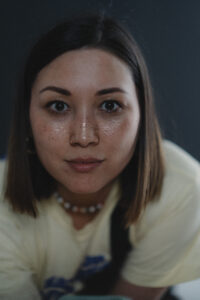
Anel Bazylova, A Kazakh photographer. Photo credit: Bazylova’s personal archieve
The inspiration for “Be” grew from Bazylova’s earlier work supporting mothers of children with special needs. After the birth of her son, she faced postpartum depression.
“I didn’t want to admit I was struggling, but it turned into clinical depression. I started a project called ‘Summer at Grandpa’s,’ where I shared therapeutic stories about childhood and motherhood. The response was huge. People asked to meet in person, and that’s how we created a support circle in Astana,” she said.
Her decision to focus on women with cancer was driven by her personal health scare. Although her tumor turned out to be benign, she continues to undergo regular checkups.
“I met women whose tumors were smaller than mine. Some expected a simple operation, but were left with a cancer diagnosis. Some recovered, some went into remission, and some didn’t survive. That left a lasting impression on me and inspired me to share their stories,” Bazylova said.
Women who “be”
Finding the first participant for her project was difficult, Bazylova said, as many women were afraid to go public about their diagnoses.
Her first portrait featured Dinara Isa, who lived with Gorham’s disease, a rare genetic disorder. Bazylova met Isa at a writers’ gathering and was struck by her optimism.
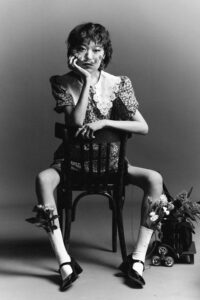
The first story in the project, featuring Dina Isa and her battle with Gorham’s disease, won a Sony World Photography Award. Photo credit: Bazylova’s personal archieve
“Dinara carried an oxygen tank and wore nasal cannulas, but was full of life and joy. She had survived two clinical deaths and had to relearn how to walk and breathe. Our session together was her first photo shoot after a tough chapter in her life,” she said.
Bazylova noted that she wanted to incorporate Dinara’s oxygen tubes into the images by pairing them with flowers, symbolizing oxygen as the flow of life and nature as its source.
“Dinara chose stunning outfits herself, including a floral-collared dress. Later, I found out she was feeling unwell during the shoot but didn’t say a word. That was incredibly brave,” she said.
That portrait later won at the Sony World Photography Awards.
“I was so proud they chose that image. Dinara looked ahead with pride in her eyes. Sadly, she never saw the win — she was in a coma. But she was the reason I knew this project had to continue,” Bazylova said.

The second phase of the project featured Zhanar and Asiya, both living with osteogenesis imperfecta, a condition that causes brittle bones.
The second phase of the project featured Zhanar and Asiya, both of whom live with osteogenesis imperfecta, a condition that causes brittle bones.
“These women are incredibly active and inspiring. This shoot was especially bold because it revealed their scars, spinal curves, and body lines. At first, they were hesitant, fearing judgment. But we had long conversations and eventually moved forward,” Bazylova said.
The third participant was Dina, a woman from Almaty who shared her cancer journey on social media.
“She’s now in remission and speaks in podcasts, writes about cancer, and helps others understand what to expect after remission begins. Of the three women I photographed with cancer, one had just started her first round of chemotherapy when I met her — she was still in shock,” Bazylova said.
More than a photo project
According to Bazylova, the sessions are emotionally challenging, as she carries the stories of her participants with her long after the photographs are taken.
“I cry with them, I feel what they feel, and I always wonder what more I can do to help,” she said.
One of the biggest hurdles, she added, is funding.
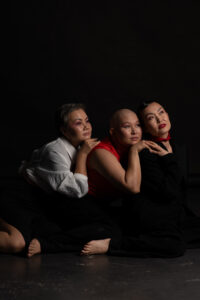
The project aims to empower women living with serious illnesses to speak openly about their experiences.
“Ideas are not the problem. What I need is a team, including stylists, designers, and beauty professionals, who can help these women feel beautiful and confident. I also want to use unique locations, but that requires transportation and logistics,” Bazylova said.
She highlighted that the project’s title was deliberately chosen as a tribute to women who live boldly and without regret, even in the face of serious illness.
“When you feel hopeless, and then you see women smiling and enjoying life, you realize how much strength they have. That’s why I called it ‘Be’ — as in, live. Whatever time you’re given, live. Do not just exist — be seen, be heard,” she said.
She recalled a friend who had been diagnosed with stage four cancer and remained silent for a long time before beginning to document her daily life.
“I wrote to her: ‘Please, be. I want to photograph you.’ It became a kind of rallying cry, and people began commenting ‘be.’ That made me proud. It’s more than just a word now — it connects people,” Bazylova said.
She recently won an Open Call Art competition, allowing her to organize a solo exhibition.
“I hope this exhibition allows me to share these women’s stories with a wider audience. Many women with cancer close themselves off, afraid to show their vulnerability, especially after losing their hair during chemo. Accepting illness is terrifying. Talking about it is even harder,” said Bazylova.
Normalizing discussing illness
She emphasized the need to normalize discussions around illness and difference, for both individuals and society.
“The society we build tomorrow depends on the conversations we start today. If we shield children from understanding differences, nothing will change. I hope my work helps shift that,” she said.
For her next project, she plans to feature a child with Down syndrome and people with albinism in Kazakhstan.
“One of my recent projects, titled ‘The Silence of Beauty,’ was featured in Harper’s Bazaar and highlighted a girl who is a champion swimmer with hearing loss. The project explores vulnerability and the power of support. I want my work to reflect real life, not just pretty images, but the reality behind them. These stories matter and deserve to be heard,” Bazylova said.
