
ASTANA — Specialists at the University Medical Center (UMC) Heart Center in the Kazakh capital are introducing new technologies and methods for treating cardiac arrhythmias, including the use of implantable cardioverter defibrillators (ICDs), which have become an indispensable aid for patients suffering from severe forms of tachycardia and arrhythmias.
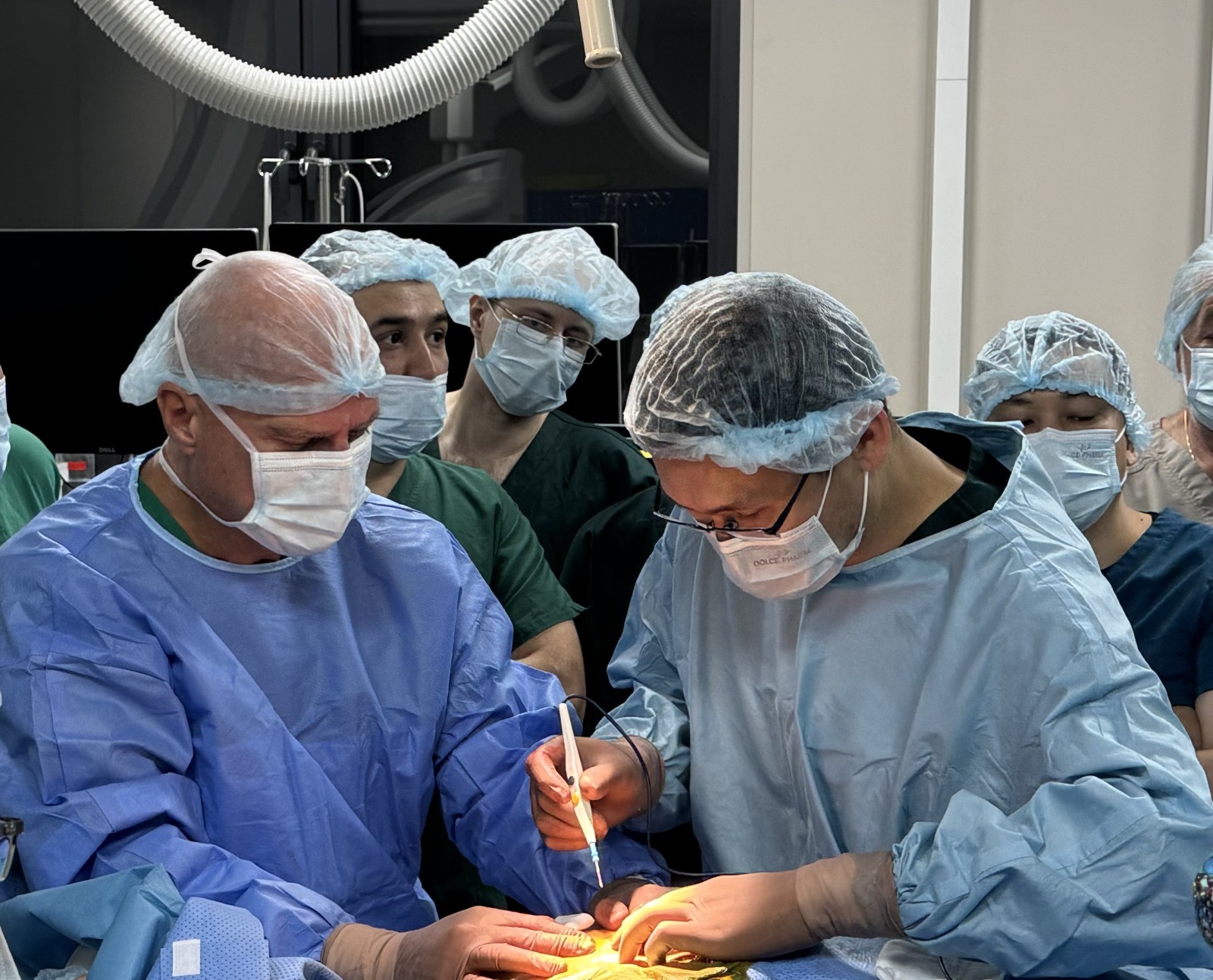
Photo credit: UMC press service
These life-saving devices respond to rapid heart contractions or sudden cardiac arrest by delivering electrical impulses that restore a normal heart rhythm, reported the UMC press service on July 15.
Traditionally, an ICD is implanted in the left shoulder area near the collarbone. During the procedure, special wires are inserted into the heart through a vein and a valve, using radiographic guidance. These wires are then attached to the inner wall of the heart. When the ICD detects a dangerous situation, it activates and corrects the rhythm.
However, over time, the device may need to be removed due to malfunction, infection, or the expiration of its service life – each case requiring high levels of skill and experience from medical professionals.

Photo credit: UMC press service
In response to this challenge, the UMC Heart Center recently held a master class on transvenous extraction of cardioverter defibrillator electrodes in complex cases involving high infectious risks or damaged electrodes.
The training brought together experts from Russia, doctors from the center, and specialists from regional clinics. Over the course of the program, participants performed four extraction surgeries and attended a series of lectures covering methods, indications, risks, and benefits of the procedure. This collaborative experience allowed for the exchange of knowledge and further development of safe and effective extraction techniques.
As part of the same master class, an expert from Italy presented the EMBLEM™ S-ICD System – a subcutaneous cardioverter defibrillator that offers a safer alternative for many patients. Unlike traditional systems, EMBLEM does not require an electrode to be inserted into the heart. Instead, it is placed under the skin above the sternum, while the pulse generator is implanted on the left side of the chest near the ribs. Because it avoids direct contact with the heart and blood vessels, the EMBLEM system is considered suitable for patients of various ages, minimizing the risk of serious complications and allowing for easier, quicker extraction if needed.
Omirbek Nuralinov, head of Interventional Arrhythmology at the UMC Heart Center, noted that the implantation of the new system was performed using the Serratus regional anesthesia technique, which helped minimize patient discomfort during the procedure and avoided the need for general anesthesia, thereby contributing to a faster recovery.
The new system was successfully implanted in three patients, all are in satisfactory condition. The procedures took place as part of the training and became a useful experience for the specialists of the UMC Heart Center. In the future, the acquired knowledge will be used in practice to improve the quality of medical services, patient health and expand medical expertise across the country.
