
ASTANA — Kazakh officials outlined legislative reforms to forest management and protected natural areas aimed at boosting eco-tourism, strengthening climate resilience, and improving emergency response mechanisms. The changes were presented at a July 11 press briefing by the Forestry and Wildlife Committee under the Ministry of Ecology and Natural Resources.
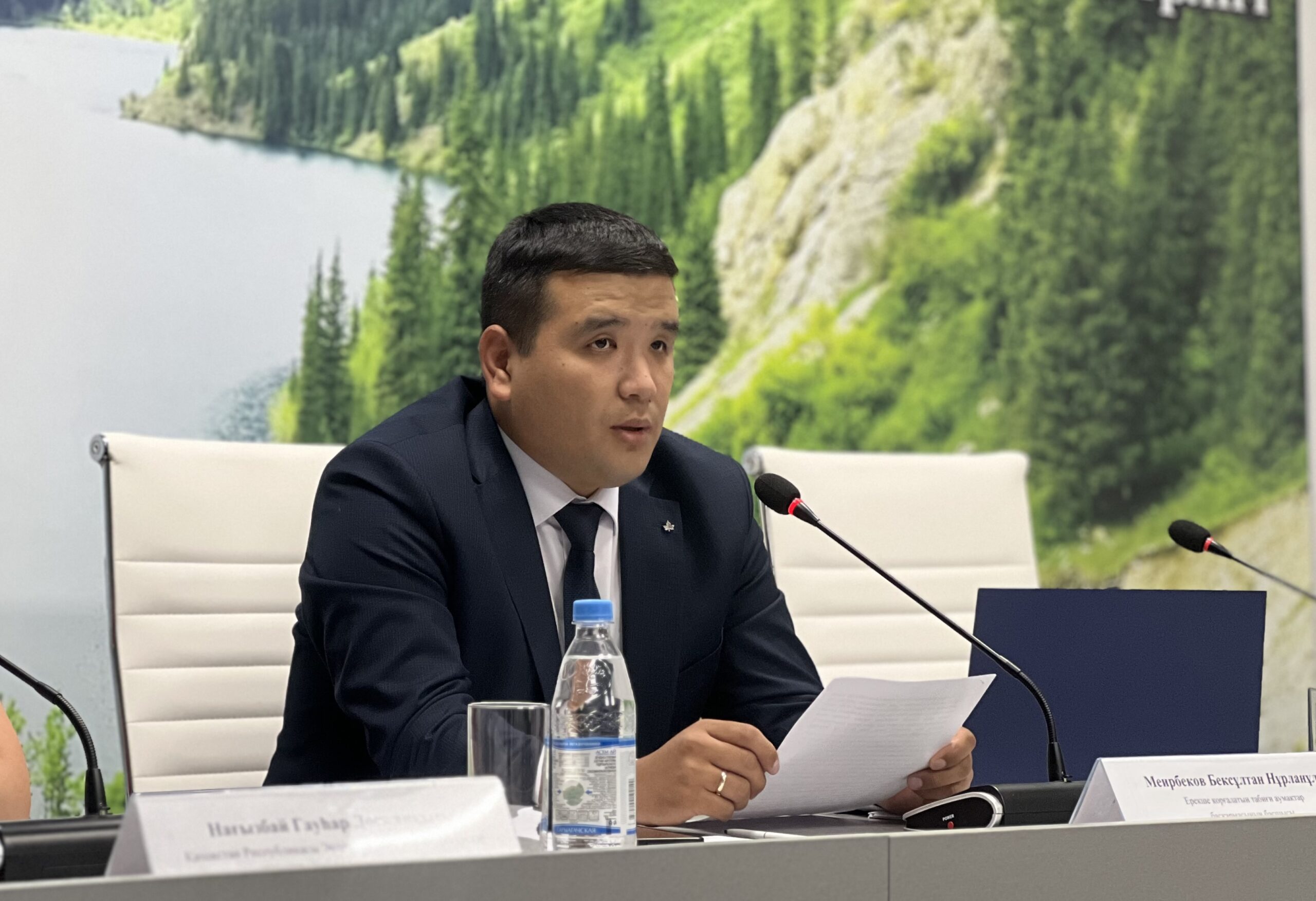
Beksultan Meirbekov, the head of the department of specially protected natural areas at the Committee for Forestry and Wildlife under the Ministry of Ecology and Natural Resources. Photo credit: Nagima Abuova / The Astana Times
The updated law on amendments and additions to certain legislative acts on forestry, specially protected natural areas and guaranteeing obligations of private business entities was initiated by Senate deputies and signed by President Kassym-Jomart Tokayev on June 26.
“The law aims to improve the effective management of forest resources, enhance ecosystem resilience, and protect biodiversity,” said Beksultan Meirbekov, head of the committee’s department of specially protected natural areas.
Key legislative changes
The law introduces reforms, including the simplification of procedures for building infrastructure at tourism sites located within national parks. Previously, these projects required a lengthy government procedure to reclassify protected land as reserve land before development could begin. Now, local authorities can use a standardized agreement to gain access without changing the land’s legal status.
“This significantly reduces the procedures and timelines for developing these areas, providing a major boost to domestic tourism by enabling the construction of essential engineering infrastructure,” said Meirbekov.
The law also allows for the construction of civil protection facilities, such as avalanche barriers, flood defenses, or other disaster-prevention structures, in mountainous areas prone to natural hazards. These can now be built more quickly within protected zones by emergency response agencies.
“Now, the Ministry for Emergency Situations can access such plots based on a model agreement, enabling rapid construction and improved safety for nearby communities,” Meirbekov added.
Enabling carbon offset projects
In line with Kazakhstan’s international commitments under the Paris Agreement, the law introduces a legal framework for carbon offset projects. These initiatives aim to reduce the amount of greenhouse gases in the atmosphere by planting trees or restoring damaged land.
The law also introduces the concept of carbon units (quantified measurements of reduced emissions), giving legal rights to use and trade these units for climate-related projects.
“As part of this agreement, we included in the law the implementation of carbon offsets and carbon units. This will be achieved by developing forest fund lands with the necessary planting materials, so that these green areas can later absorb greenhouse gases,” said Meirbekov.
Emergency coordination and worker protections
The law establishes a clear algorithm for how government agencies should respond to environmental emergencies such as floods and wildfires. It also requires maintaining reserves of aviation fuel and clearer protocols for coordination between the Ministry of Ecology and emergency services.
Additionally, the law strengthens the rights and protections of forest workers. Measures include land allotments for haymaking and livestock grazing, improved aviation-based forest monitoring, and a 25% salary increase for staff in environmental institutions.
