
ASTANA — Delegates from from more than 190 countries gathered at the United Nations headquarters in New York on April 27 for the 2026 Review Conference of the Treaty on the Non-Proliferation of Nuclear Weapons (NPT), after the previous two review cycles failed to produce consensus outcome documents amid growing geopolitical tensions and divisions over nuclear disarmament.
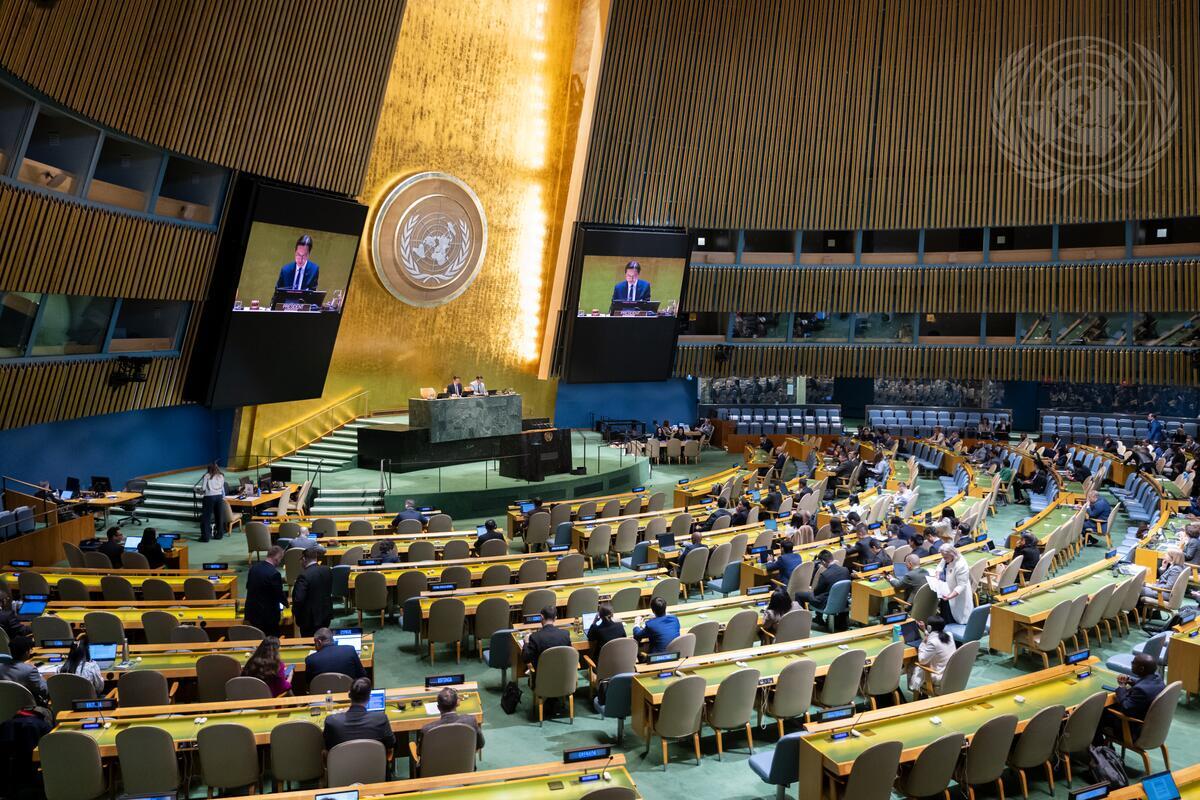
2026 Review Conference of the Parties to the Treaty on the Non-Proliferation of Nuclear Weapons (27 April-22 May 2026). Photo credit: UN Photo/Manuel Elías
As states parties enter the final stage of negotiations ahead of the conference’s May 22 conclusion, discussions have renewed attention on how the NPT system works, why the treaty still matters and where deep disagreements continue to shape the global nuclear order.
“Arms control is dying. Global military spending soared to $2.7 trillion last year – 13 times more than all development aid globally, and equivalent to the entire gross domestic product of Africa,” said UN Secretary-General António Guterres in his opening remarks on April 27.
“For the first time in decades, the number of nuclear warheads is on the rise. Nuclear testing is back on the table. Some governments are openly mulling the acquisition of these horrific weapons. Have we forgotten that a nuclear war cannot be won and must not be fought?” he said.
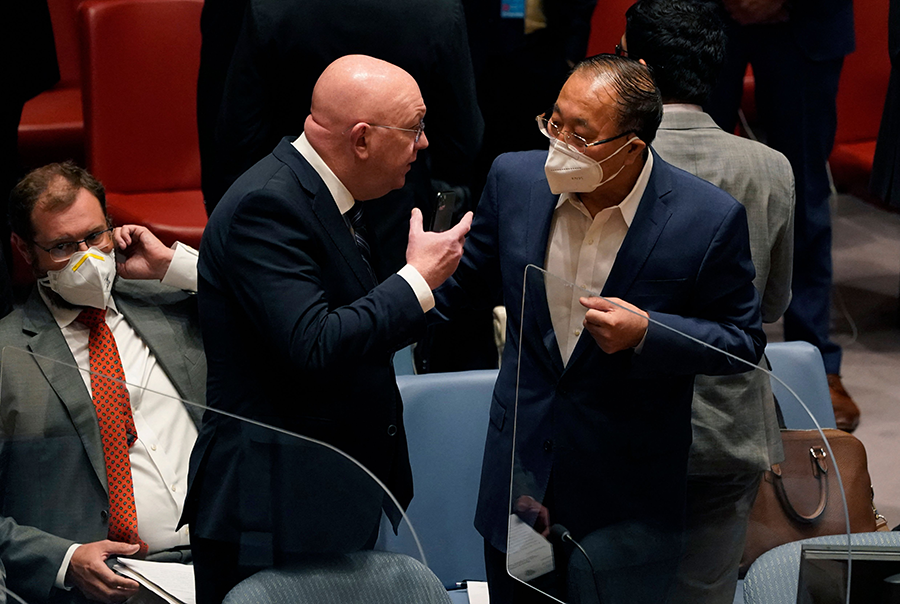
Russian and Chinese ambassadors confer during a UN Security Council meeting on Aug. 24, 2022, as disputes over the Zaporizhzhia nuclear power plant intensified during the NPT Review Conference. Photo credit: Timothy A. Clary/AFP via Getty Images.
The NPT, which entered into force in 1970, remains the foundation of the global nuclear non-proliferation system. The treaty includes the United States, Russia, China, France and the United Kingdom as nuclear-weapon states and requires all other member states not to acquire nuclear weapons. In return, states parties retain the right to develop peaceful nuclear energy under international safeguards, and commit to pursuing nuclear disarmament.
Held every five years, NPT review conferences assess implementation of the treaty’s three pillars: disarmament, non-proliferation and peaceful uses of nuclear energy. Unlike annual meetings or preparatory committee sessions, the review conference serves as the treaty’s main political stocktaking forum, where states negotiate future commitments and attempt to adopt a consensus final document.
“The NPT process remains unique. It brings together the vast majority of UN member and observer states, including all permanent members of the Security Council,” said Ambassador Do Hung Viet, UN permanent representative of Vietnam and president of the conference.
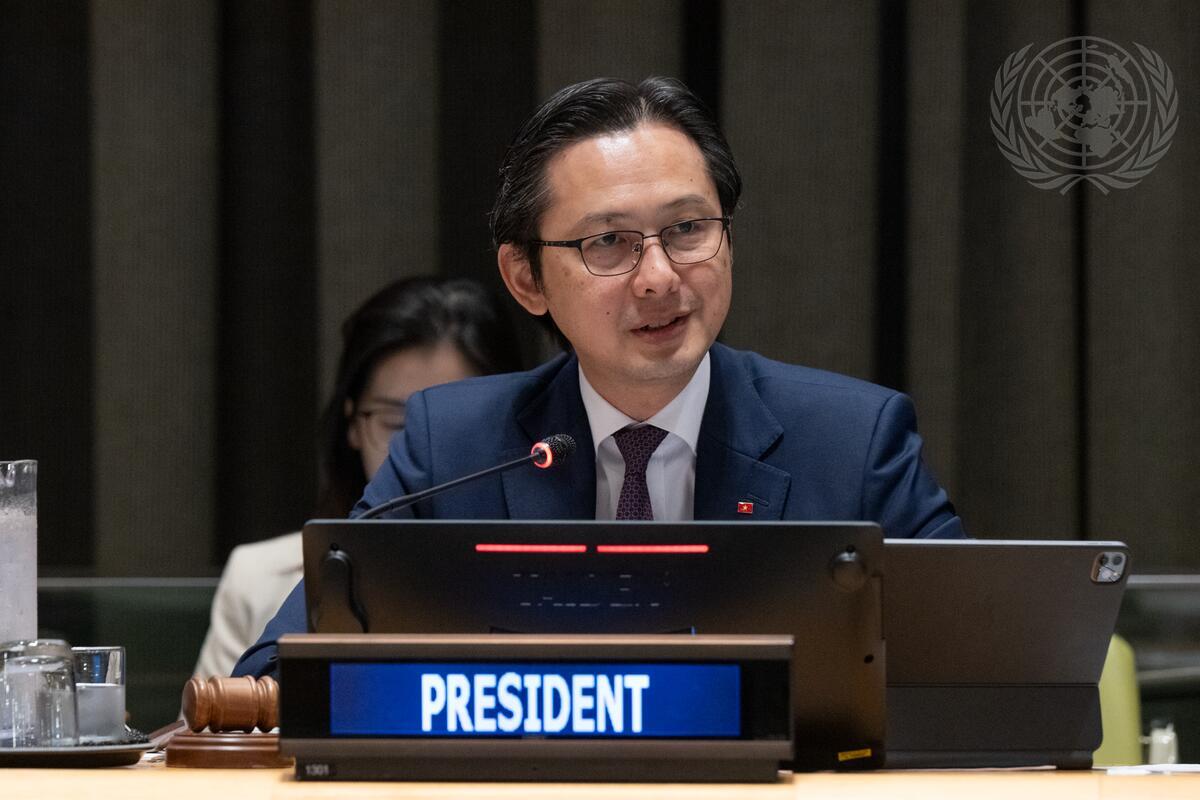
Do Hung Viet, president of the 2026 NPT Review Conference, chairs a meeting at the United Nations headquarters in New York. Photo credit: UN Photo/Eskinder Debebe.
“But legitimacy cannot rest on existence alone. Without continuous and renewed efforts, the treaty risks becoming a relic of the past – only respected at will, and no longer guiding the actions of states,” he added.
Some previous review conferences produced major political roadmaps. In 1995, states parties agreed to extend the NPT indefinitely and adopted a resolution supporting the creation of a Middle East zone free of weapons of mass destruction. In 2000, the conference adopted 13 Practical Steps toward disarmament, while the 2010 meeting approved a 64-point Action Plan covering disarmament, non-proliferation and peaceful uses of nuclear energy.
However, the 2015 and 2022 review conferences failed to adopt consensus outcome documents, reflecting growing divisions among states parties over disarmament, regional security and geopolitical tensions.
In 2022, Russia blocked the agreement over references to the Russian-occupied Zaporizhzhia nuclear power plant in Ukraine and concerns surrounding nuclear safety at the facility. The Guardian described the collapse of the talks as “the latest blow to hopes of maintaining an arms control regime and keeping a lid on a rekindled arms race.”
Kazakhstan’s message
Kazakhstan entered the conference with a message shaped by its own nuclear history. The country closed the Semipalatinsk nuclear test site 35 years ago and voluntarily renounced the world’s fourth-largest nuclear arsenal after the collapse of the Soviet Union.
Speaking during the general debate, First Deputy Foreign Minister Yerzhan Ashikbayev warned of eroding arms control frameworks, declining trust among major powers and risks associated with artificial intelligence (AI) and emerging technologies.
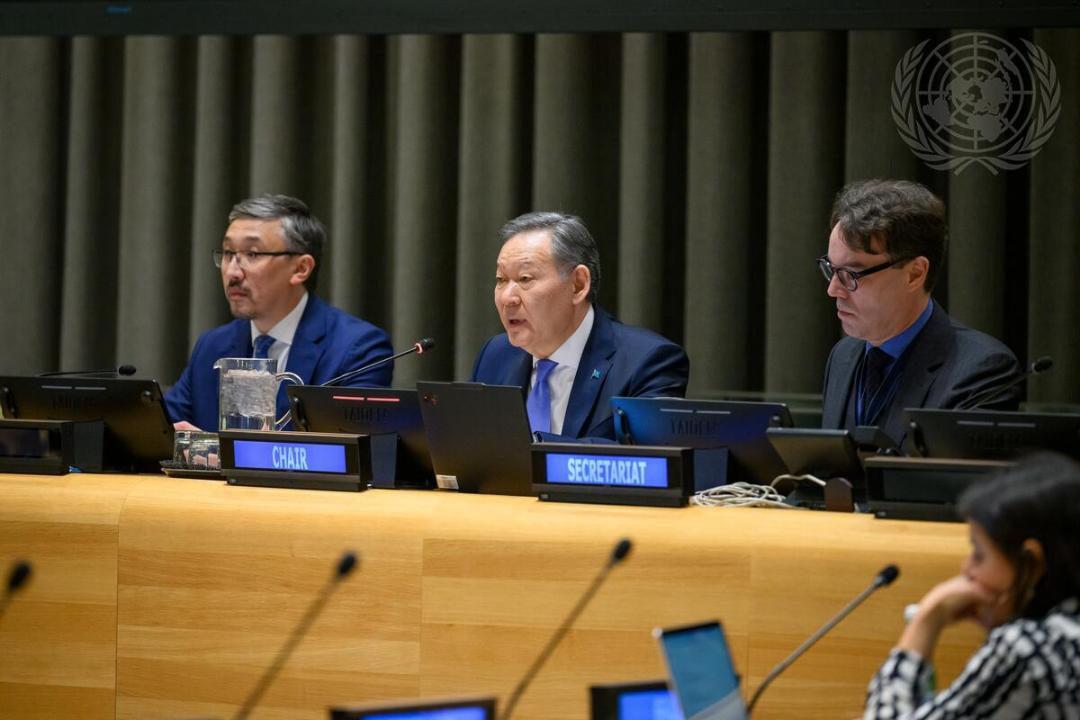
Kairat Umarov (in the middle), Kazakhstan’s permanent representative to the United Nations, chairs the committee meeting at the 2026 NPT Review Conference. Photo credit: Kazakh MFA.
“The credibility of the NPT depends on the balanced and full implementation of its three pillars. The continued lack of tangible progress under Article VI is deeply concerning. We call for the restoration of strategic dialogue among all nuclear-weapon States and development of modern arms control frameworks, including practical nuclear risk-reduction measures,” said Ashikbayev.
Kazakhstan also called for progress on the Comprehensive Nuclear-Test-Ban Treaty (CTBT), which bans nuclear explosions but has not yet entered into force because several key states have not ratified it.
“In this year, when the treaty marks 30 years, we call for the Annex 2 States to sign and ratify the treaty. The global norm and taboo against nuclear testing must be preserved under all circumstances. Any rhetoric on nuclear weapon use or testing is destabilizing and undermines the very normative foundation of the treaty,” said Ashikbayev.
Kazakhstan also highlighted its ongoing work within the Treaty on the Prohibition of Nuclear Weapons (TPNW), which fully bans nuclear weapons for its member states. Kazakhstan chaired the treaty’s third Meeting of States Parties in 2025 and has repeatedly reiterated that the TPNW complements rather than competes with the NPT.
Inside the conference halls
Among those attending the conference was Yerdaulet Rakhmatulla, a Kazakh youth disarmament advocate and alumnus of the UN Youth4Disarmament Forum, who joined the event as the only Kazakh youth representative.
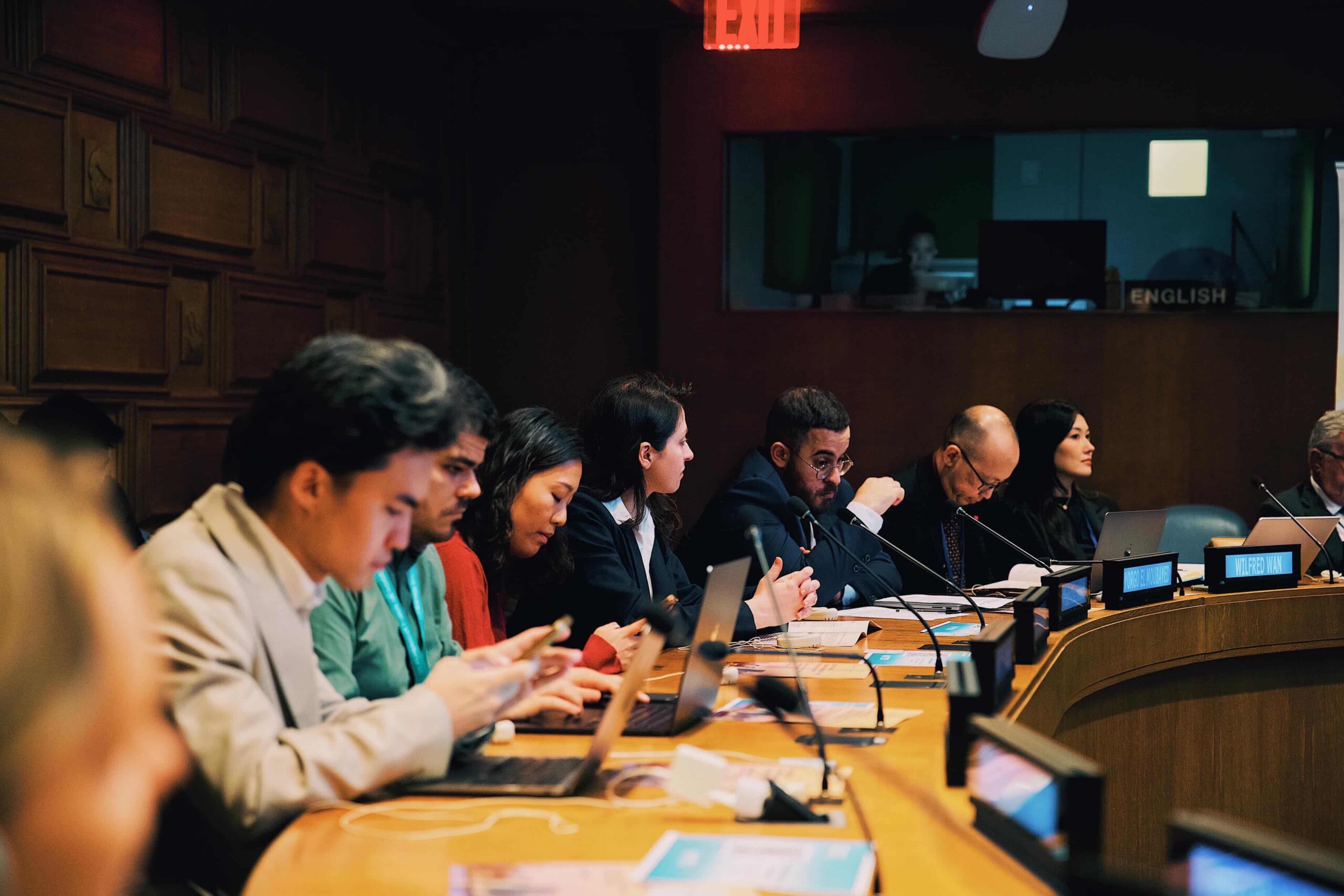
Youth4Disarmament Forum alumni attend a UNODA and Republic of Korea side event during the 2026 NPT Review Conference in New York. Photo credit: Quoc Thai Ly (Simon).
“The NPT RevCon [Review Conference] is happening for the 11th time. It is one of the oldest and most universalized treaties in nuclear affairs. Its reviews happen once every five years, and between them we have the preparatory committees, or PrepComs,” he said.
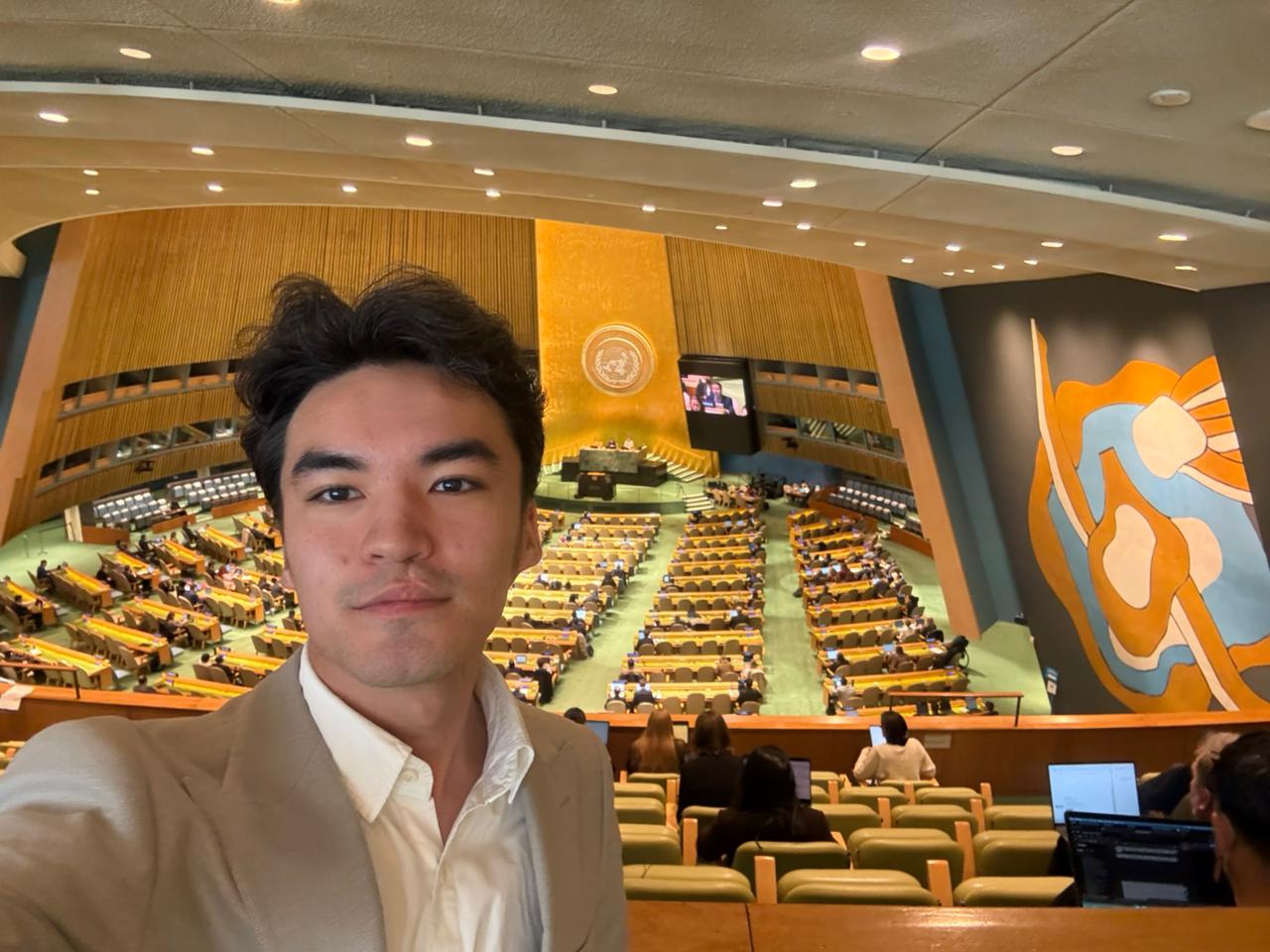
Yerdaulet Rakhmatulla, a Kazakh youth disarmament advocate and alumnus of the UN Youth4Disarmament Forum. Photo credit: personal archives
Rakhmatulla participated in youth-led side events and intergenerational discussions focused on emerging technologies, nuclear risk reduction and the future of the treaty process.
One Youth4Disarmament side event examined how AI, cyber technologies, drones and outer space technologies could affect nuclear disarmament and global security. According to Rakhmatulla, youth experts prepared five nuclear risk-reduction principles as a contribution to the 2026 review cycle.
Discussions also focused on expanding youth participation in nuclear diplomacy through youth delegate positions, advisory boards and speaking opportunities within official treaty processes. Finland supported institutionalizing youth participation mechanisms, while Mexico backed the inclusion of youth representatives in official delegations, drawing on its own youth delegate program, he said.
When asked whether the NPT remains relevant despite mounting criticism, Rakhmatulla said the treaty continues to play an important role in the global nuclear system, even as debates over its effectiveness and credibility continue.
“I stand in the middle, as NPT is still one of the most complex, needed nuclear treaties that prevented catastrophes back in the day. Yet these days, it is less credible and so becoming less relevant. It is better to have such a treaty than nothing, but NPT players should agree to compromise and adopt the outcome document based on the consensus,” he said.
Disarmament, risks and nuclear energy
Disarmament remains the conference’s most politically contentious issue. Many non-nuclear-weapon states argue that nuclear powers have failed to fulfill Article VI obligations requiring negotiations toward disarmament.
Kazakhstan’s May 5 statement highlighted that more than 12,000 nuclear warheads still exist globally, with more than 2,000 kept on high operational alert. The country called for de-alerting measures, reduced reliance on nuclear weapons in military doctrines and stronger transparency and confidence-building measures.
On the non-proliferation track, Kazakhstan warned of cyber vulnerabilities, illicit trafficking and rapidly evolving dual-use technologies. The country also stressed the importance of the International Atomic Energy Agency (IAEA) safeguards system, and the broader adoption of the IAEA Additional Protocol, which gives the agency broader inspection and verification authority over nuclear activities.
Kazakhstan emphasized the importance of nuclear-weapon-free zones, including the Central Asian Nuclear-Weapon-Free Zone established by the Treaty of Semipalatinsk, which marks its 20th anniversary this year.
The conference’s third pillar – peaceful uses of nuclear energy – has gained renewed prominence as countries seek low-carbon energy sources and greater energy security.
Kazakhstan used the conference to highlight plans to build its first nuclear power plant following last year’s national referendum. Officials also pointed to the establishment of the Agency for Atomic Energy, the development of a national nuclear cluster, and the IAEA Low-Enriched Uranium (LEU) Bank hosted in Kazakhstan as part of the country’s growing civilian nuclear energy ambitions.
As negotiations continue in New York through May 22, diplomats will be watching whether states parties can bridge deep disagreements and adopt a consensus final document – an outcome many see as a test of whether the NPT can still function as the foundation of the global nuclear order.
