
ALMATY – Kazakhstan’s Prime Minister Olzhas Bektenov met with leading global agricultural machinery manufacturers from Europe, Canada and the United States on April 27, resulting in new agreements to localize production in Kazakhstan, as the government steps up efforts to boost domestic manufacturing and reduce import dependence.
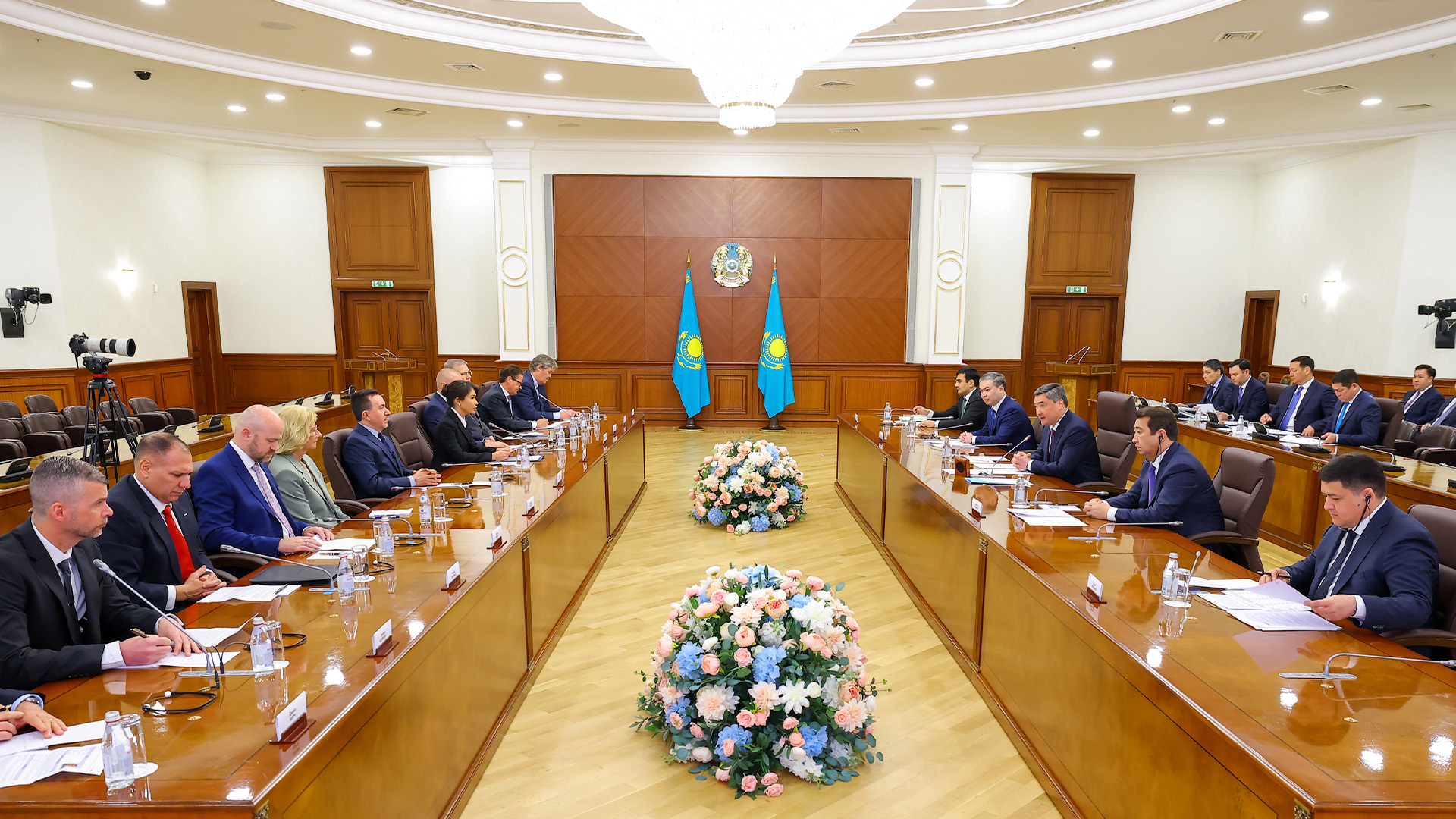
Kazakhstan’s Prime Minister Olzhas Bektenov met with leading global agricultural machinery manufacturers from Europe, Canada and the United States on April 27. Photo credit: Prime Minister’s press service.
The talks focused on expanding industrial cooperation, transferring technology and developing modern agricultural solutions based on local production facilities, the Prime Minister’s press service reported.
Global companies deepen engagement
International partners expressed strong interest in expanding localization, technology transfer and service infrastructure in Kazakhstan.
John Deere, one of the first major global players to enter the market, plans to produce around 3,000 units of machinery in the coming years under a localization agreement signed in November 2025.
“John Deere sees Kazakhstan as a key strategic partner in Central Asia. We are ready to deepen localization, increase productivity and focus on digital and sustainable agriculture,” said Vice President for the CIS region Peter Zakse.
Representatives of other global manufacturers, including Väderstad Group, Dewulf, Lindsay Corporation, Amity Technology, Frans Vervaet B.V., Kuhn Group and Brandt also confirmed plans to expand cooperation.
Growing demand drives policy focus
Bektenov emphasized that Kazakhstan’s expanding agricultural sector is creating stable demand for modern machinery. The country ranks sixth globally in agricultural land area, with around 24 million hectares under cultivation.
In 2025, gross agricultural output exceeded 9 trillion tenge (US$18.95 billion), marking growth of more than 6%. Grain harvest reached 26 million tons, while oilseed production totaled 5 million tons.
“Rising production volumes, improved yields and expanding exports are increasing the need for modern equipment. Upgrading machinery, improving accessibility and supporting domestic manufacturers are key conditions for further sector development,” Bektenov said.
He added that the government is ready to support new industrial projects at all stages, from localization to export expansion.
Domestic production gains momentum
Kazakhstan operates more than 130,000 tractors, nearly 30,000 harvesters and over 200,000 units of mounted and trailed equipment. However, the machinery renewal rate stood at 6.5% last year, below the government’s annual target of 10%.
To address this, the state offers subsidies covering up to 30% of machinery costs, concessional loans and leasing programs, as well as preferential financing at 5% for domestically produced equipment.
According to Bektenov, these measures are yielding results. Over the past two years, sales of locally produced machinery increased by 35%, from 7,700 to 10,400 units. Domestic manufacturers now account for around 90% of the local market.
Eight major enterprises are currently operating in the sector, producing more than 8,000 tractors and 1,200 combines annually.
Agro-industrial hub ambitions
Following the meeting, multilateral agreements were signed between AgromashHolding KZ, Eurasia Group AG and international partners to localize production at the Kostanai Localization Center.
The agreements are expected to strengthen Kazakhstan’s industrial capacity, improve access to high-tech machinery for farmers and enhance the country’s position in global manufacturing value chains.
