
ASTANA — Uzbekistan’s manufacturing output has doubled to nearly $60 billion as the sector shifts from raw materials to finished goods. According to experts, this growth opens the door to closer cooperation with Kazakhstan. It also underscores the urgency to deepen industrial cooperation and joint production to advance diversification and create higher-quality jobs, Halyk Finance analyst Asan Kurmanbekov writes in a Nov. 14 report.
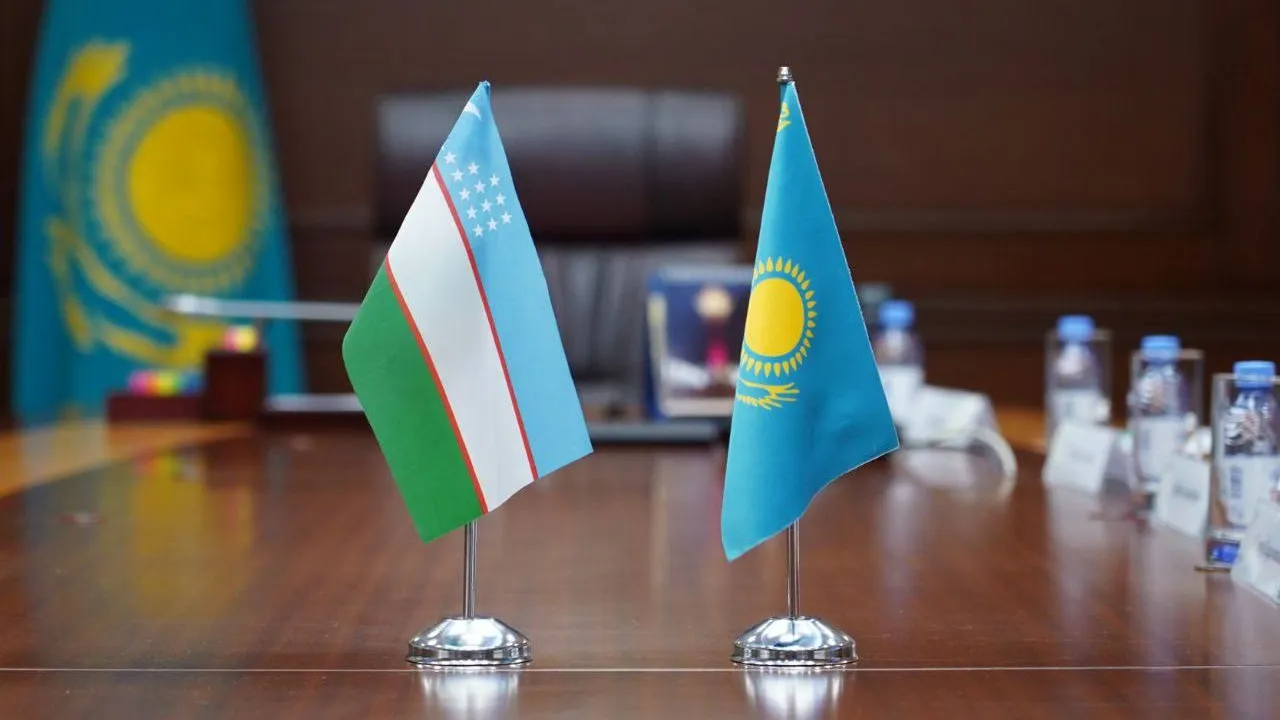
Photo credit: gov.kz
The rise of Uzbekistan’s manufacturing sector has reshaped the country’s economic structure over the past decade. Its share in gross value added increased from 12% in 2014 to 21% in 2024, reflecting the growing role of processing industries. Economic reforms introduced in 2017 added momentum despite rising inflation, currency depreciation and tighter financial conditions.
Annual gross domestic product growth of 6-8% has supported Uzbekistan’s industrial rise. Kazakhstan experienced a different trajectory, as lower global oil prices after 2015 slowed GDP growth, though recent years have brought a partial recovery. Kazakhstan’s manufacturing sector initially expanded faster than the overall economy, reaching 14% of GDP in the early 2020s before declining to approximately 12% in 2024.
Textiles drive export transformation

Asan Kurmanbekov. Photo credit: kapital.kz
A major driver of Uzbekistan’s industrial transformation has been the transition from exporting raw cotton to producing higher-value-added textiles and garments. Fabric exports grew fivefold to $450 million between 2017 and 2024, while clothing exports increased sixfold to $1.2 billion and other textile products tenfold to $350 million. The country now plans to import cotton to meet processing demand.
According to Kurmanbekov, this shift has strengthened Uzbekistan’s resilience to commodity price fluctuations and positioned the light industry as a key source of export revenue, in contrast to Kazakhstan’s continued reliance on capital-intensive sectors.
Auto industry strengthens regional links
Uzbekistan’s automotive industry has also expanded, reaching annual output levels of approximately 400,000 vehicles. Although the export of complete cars has decreased, the export of auto bodies, engines and components has grown more than fourfold since 2017 to $637 million.
This trend is reflected in cross-border cooperation, including the assembly of the Chevrolet Cobalt at the SaryarkaAvtoProm plant in Kostanai, East Kazakhstan Region, using kits supplied by UzAuto Motors.
According to the Kazakhstan Automobile Union, the Bureau of National Statistics reported that approximately 96,000 vehicles were manufactured, valued at 1.34 trillion tenge (US$2.56 billion) during the first eight months of the year. Compared to January-August 2024, production volumes increased by 17.3%. The industry’s share in the country’s mechanical engineering sector reached 40.6%.
Labor structure, productivity gap and integration prospects
Uzbekistan’s manufacturing sector operates on a significantly larger labor base, employing nearly 1.5 million people compared with approximately 626,000 in Kazakhstan. This difference results in lower output per worker in Uzbekistan, where industry is dominated by labor-intensive segments aligned with the country’s demographics and resource constraints.
Kazakhstan, by contrast, maintains higher productivity due to the predominance of capital-intensive industries such as mining and metallurgy.
“With limited resources and a large labor force, Uzbekistan has focused on developing labor-intensive, export-oriented industrial sectors. Its policies of economic liberalization and openness have encouraged active entrepreneurship and strengthened foreign trade relations,” said Kurmanbekov.
At the moment, Uzbekistan is completing negotiations to join the World Trade Organization (WTO) and is also considering potential forms of cooperation with the Eurasian Economic Union (EEU).
“Given Uzbekistan’s status as a regional industrial hub, it is clear that both countries would benefit from economic cooperation through joint projects and the development of production chains,” Kurmanbekov added.
President Kassym-Jomart Tokayev paid a state visit to Uzbekistan on Nov. 14-15 at the invitation of President Shavkat Mirziyoyev. During the Supreme Interstate Council meeting in Tashkent, the leaders reaffirmed their expanding partnership and set new priorities for cooperation in trade, industry, transport, water and energy management, digital development, and cultural exchange.
