
ASTANA – As climate change fuels increasingly intense heat waves, staying safe in extreme temperatures has become a growing concern across Kazakhstan. This summer, temperatures have climbed above 40 degrees Celsius in several regions, testing both people’s endurance and public health systems.
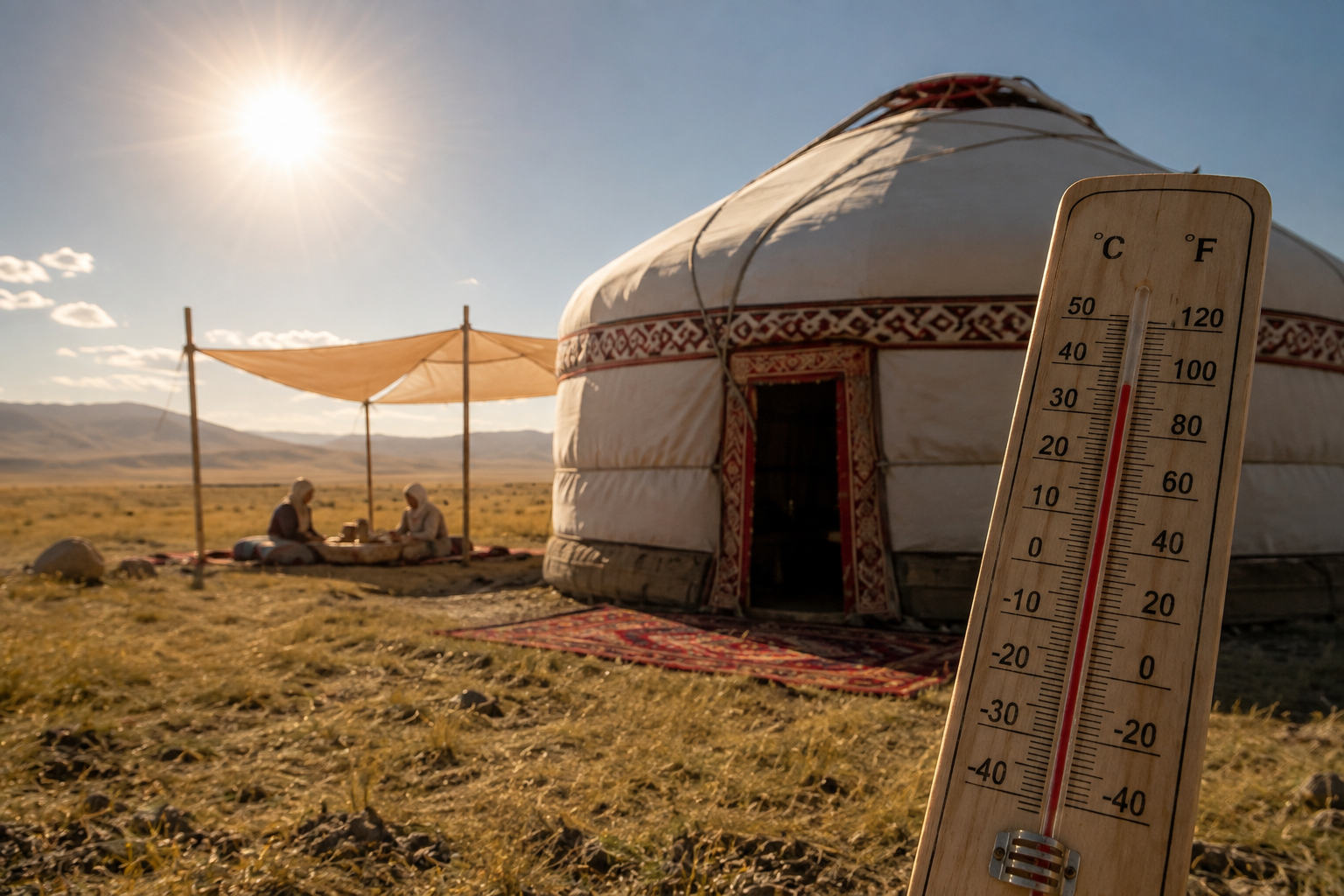
Photo credit: AI-generated image/ The Astana Times
While modern households rely on air conditioners and fans, Kazakhstan’s nomadic ancestors developed practical ways to stay cool long before electricity. According to a candidate of historical sciences Saltanat Asanova, many of these centuries-old practices remain relevant today.
“Traditional culture, livelihoods and daily life were always closely connected to the natural environment and its changes. People were prepared for both cold and heat,” Asanova told The Astana Times.

Saltanat Asanova, a candidate of historical sciences. Photo credit: Asanova’s personal archieve
For nomadic herders, extreme summer heat was rarely a major problem because they moved with the seasons.
“Nomads who migrated year-round spent summers in cooler areas, either farther north or in high mountain pastures. Moving livestock to alpine grazing lands was the primary way to escape the summer heat. Even on the hottest days, temperatures in the mountains remain significantly lower than in the steppe,” Asanova said.
Daily routines also followed the rhythm of the sun. Work began at dawn, paused during the hottest midday hours and resumed in the evening as temperatures dropped.
“Most household and pastoral work was completed after sunset, when the heat subsided,” she said.
The science behind a cooler yurt
The yurt, the traditional portable dwelling of Kazakh nomads, played a crucial role in keeping families cool.
According to Asanova, the yurt’s design created constant natural airflow. The shanyrak, the circular opening at the top of the roof, was left open during the day, allowing hot air to rise and escape while cooler air remained inside.
To maximize ventilation, yurts were carefully positioned according to prevailing winds. Although entrances traditionally faced southeast, their orientation could be adjusted depending on local wind conditions. Lifting the edges of the felt covering allowed air to circulate freely through the structure.
“When temperatures became especially high, the side felt coverings were removed entirely, leaving only the wooden lattice frame and reed mats. The small gaps between the reeds created excellent ventilation, helping maintain a comfortable indoor temperature without any additional cooling devices,” Asanova said.
Historical accounts by travelers who visited the Kazakh steppe during the summer describe yurts as being noticeably cooler than the outside air.
The felt roof continued to protect residents from direct sunlight.
“Felt has unique insulating properties. It retains warmth in winter while preventing solar heat from penetrating the dwelling during summer,” Asanova said.
Dressing for the heat
Despite the high temperatures, Kazakhs traditionally wore long, loose-fitting clothing rather than exposing their skin.
“It may seem paradoxical, but the hotter it became, the more layers people wore. Quilted robes provided better protection from the sun than lightweight clothing or bare skin. Like felt, multiple layers acted as insulation against overheating,” Asanova said.
She noted that headwear was equally essential.
“Felt hats effectively protected the head from the scorching sun while preventing excessive heat exposure,” she said.
Summer diet
Seasonal eating also helped people cope with the heat.
“During summer, meat was consumed only rarely. The diet consisted primarily of dairy products such as kymyz, airan, shubat, and milk-based kozhe, a traditional grain-and-milk soup,” Asanova said.
Drinks were stored in leather containers known as burdyuks, whose natural materials allowed air circulation while keeping liquids cool. Wooden tubs and clay vessels were also commonly used.
“Natural materials help maintain a relatively stable temperature regardless of the weather. For the same reason, water was traditionally stored in clay containers or leather bags,” she said.
Asanova noted that although tea remained an expensive imported commodity, both nomadic and settled communities embraced an unusual practice: drinking hot tea during hot weather.
“They followed one principle: the hotter the weather, the hotter the drink. People avoided cold water because they believed it disrupted the body’s natural heat regulation and made the heat feel even more intense. Instead, they drank hot green tea, which helps the body adapt to high temperatures and promotes natural cooling,” she said.
Modern medical advice
As heat waves become more frequent across Kazakhstan, general practitioner Malika Muratbekova said traditional advice on coping with extreme temperatures remains relevant, including avoiding excessive consumption of ice-cold water, especially during meals.
“Very cold liquids can slow digestion. The body has to expend extra energy warming the stomach, which can leave a person feeling even more fatigued,” Muratbekova said in an interview with The Astana Times.
She recommends drinking water in small amounts throughout the day, avoiding sugary soft drinks, and wearing loose-fitting, light-colored clothing made from natural or cooling fabrics with ultraviolet protection.
Muratbekova also advised protecting the head with a hat and cooling the body gradually.
“You can place a cooling towel or damp cloth around your neck. Portable fans are also becoming increasingly common. Taking a cool shower, using a spray bottle or damp cloth to moisten the skin can help lower body temperature. However, avoid ice-cold showers because a sudden drop in temperature can place unnecessary stress on the body,” she said.
