
ALMATY – A premiere screening of the Kazakh-Kyrgyz documentary “Alatau: Following the Disappearing Glaciers” took place on March 11 at the UN Plaza building in Almaty. The event brought together diplomats, scientists, government officials and environmental experts to discuss the growing impact of glacier loss in Central Asia.
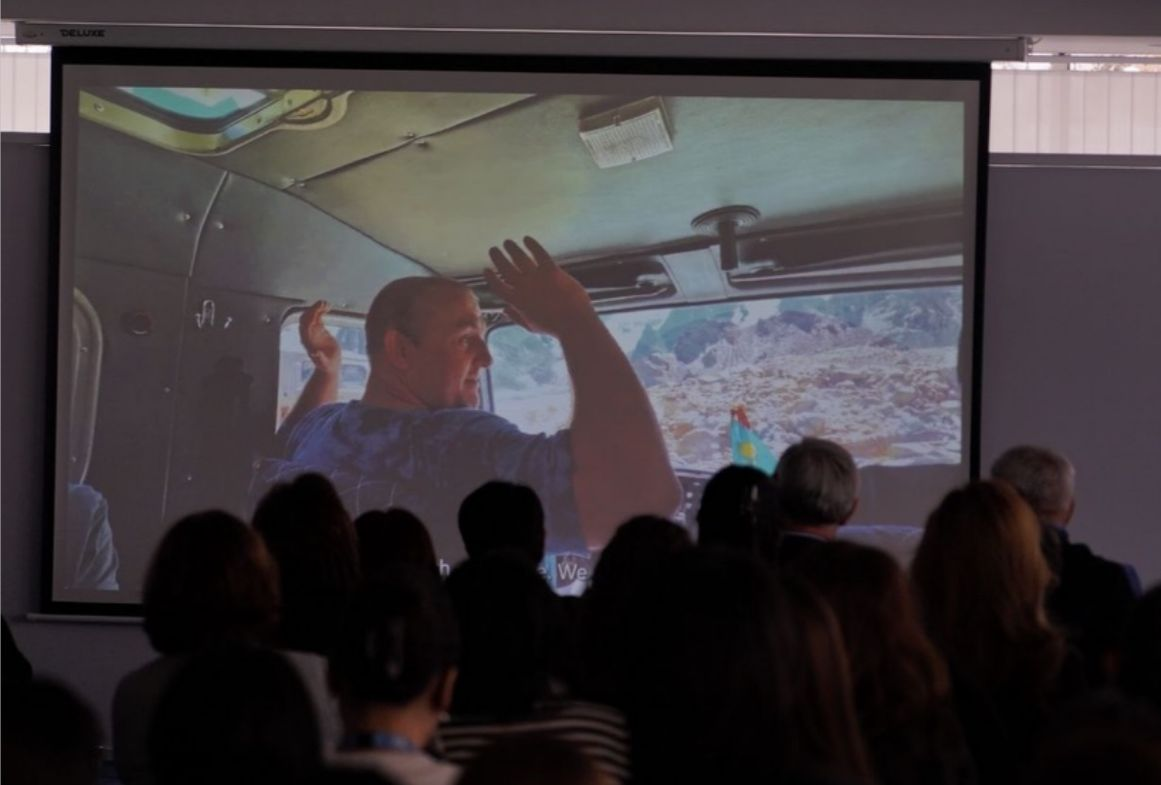
A premiere screening of the Kazakh-Kyrgyz documentary “Alatau: Following the Disappearing Glaciers” took place on March 11 at the UN Plaza building in Almaty. Photo credit: Internews.
The screening was organized by the Turan TV channel and the public association Almaty Nomad Travelers Club with the support of the local office of the United Nations (UN) Department of Global Communications, the UN Discussion Club youth movement, the Kazakh Society for Nature Conservation, and the UN Academic Impact Regional Information Center at Al-Farabi Kazakh National University.
Organizers say the event is intended to serve as a platform for climate diplomacy, fostering dialogue between policymakers, researchers and civil society on the region’s water challenges.
Investigating the rapid loss of glaciers
The film presents an in-depth journalistic investigation into the rapid degradation of glaciers in the Zailiyskiy Alatau mountain range, a key source of freshwater not only for Kazakhstan but for the wider Central Asian region.
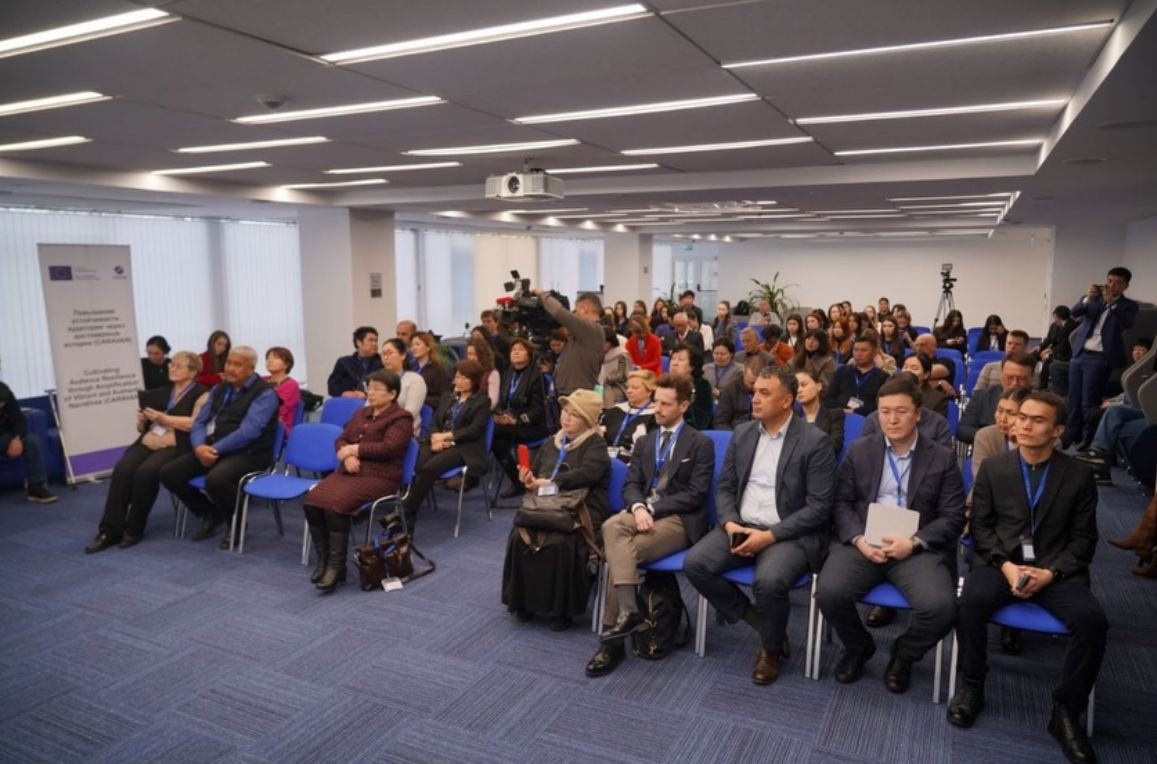
The event brought together diplomats, scientists, government officials and environmental experts to discuss the growing impact of glacier loss in Central Asia. Photo credit: Internews.
According to scientific data cited in the documentary, the Tuyuk-Su glacier, one of the most closely monitored glaciers in the region, has retreated by around 1,200 meters since 1958, losing an amount of ice each year comparable to the volume of a mountain lake. Overall, the Almaty Region has already lost about 44% of its glaciers, a significant portion of its strategic freshwater reserves.
The film, produced with financial support from the European Union under the CARAVAN project implemented by Internews, highlights the connection between glacier melting and the daily lives of millions of people. Through personal stories of glaciologists, specialists from Kazselezashchita, farmers facing drought and climate migrants forced to leave their homes due to water shortages, the filmmakers illustrate the scale of the emerging crisis.
Expert discussion on water security
The event program included the documentary premiere followed by an expert discussion featuring the filmmakers, glaciologists, environmental specialists, and representatives of UN agencies such as United Nations Development Programme, United Nations Environment Programme and UNESCO, as well as officials from Kazakhstan’s Ministry of Ecology and Natural Resources and the Ministry for Emergency Situations.
The issue highlighted in the film is transboundary, directly affecting several of the United Nations Sustainable Development Goals, including SDG 6 (clean water), SDG 13 (climate action), and SDG 11 (sustainable cities).
Scientists warn that if glacier retreat continues at its current pace, Central Asia could face growing water shortages, more frequent natural disasters such as mudflows and droughts, and rising climate-driven migration.
Water security as a strategic issue
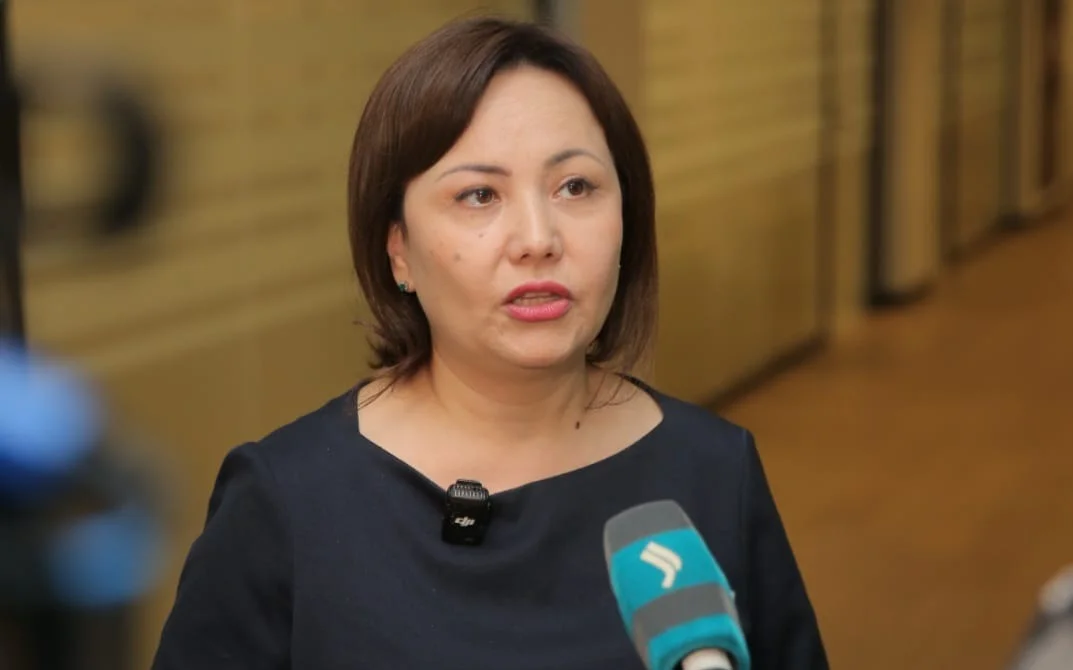
Aizhan Skakova. Photo credit: Skakova’s personal archive.
Kazakh lawmakers and environmental experts say water scarcity is already emerging as a strategic challenge.
According to ecologist Aizhan Skakova, concerns about water availability are increasingly discussed both by experts and at the political level. She noted that international assessments, including the Ecological Threat Report prepared by the Institute for Economics & Peace, place Kazakhstan in the yellow zone for risks related to access to clean drinking water and the stability of the water cycle.
“This means that water-related challenges are already becoming visible and accumulating, although they have not yet reached a critical stage,” Skakova said, adding that water security is now emerging as a key environmental and national security concern.
Role of journalism and international cooperation
Aaro Ylitalo, deputy head of the EU Delegation to Kazakhstan, said climate change is already affecting many regions worldwide, with glacier retreat among the most visible impacts in Central Asia.
He emphasized that the glaciers of the Zailiyskiy Alatau serve as a strategic freshwater reserve for millions of people, and continued melting could increase pressure on water resources while contributing to natural hazards and socio-economic challenges.
“The issue raised in this documentary is not only environmental, but also regional and cross-border. The water resources of Central Asia are closely interconnected, and the future of the glaciers will affect communities on both sides of the borders,” said Ylitalo.
