
ASTANA – Kazakhstan ranked 29th globally for air pollution in 2025, with fine particulate matter (PM2.5) levels nearly five times above World Health Organization (WHO) guidelines, highlighting persistent environmental and public health challenges.
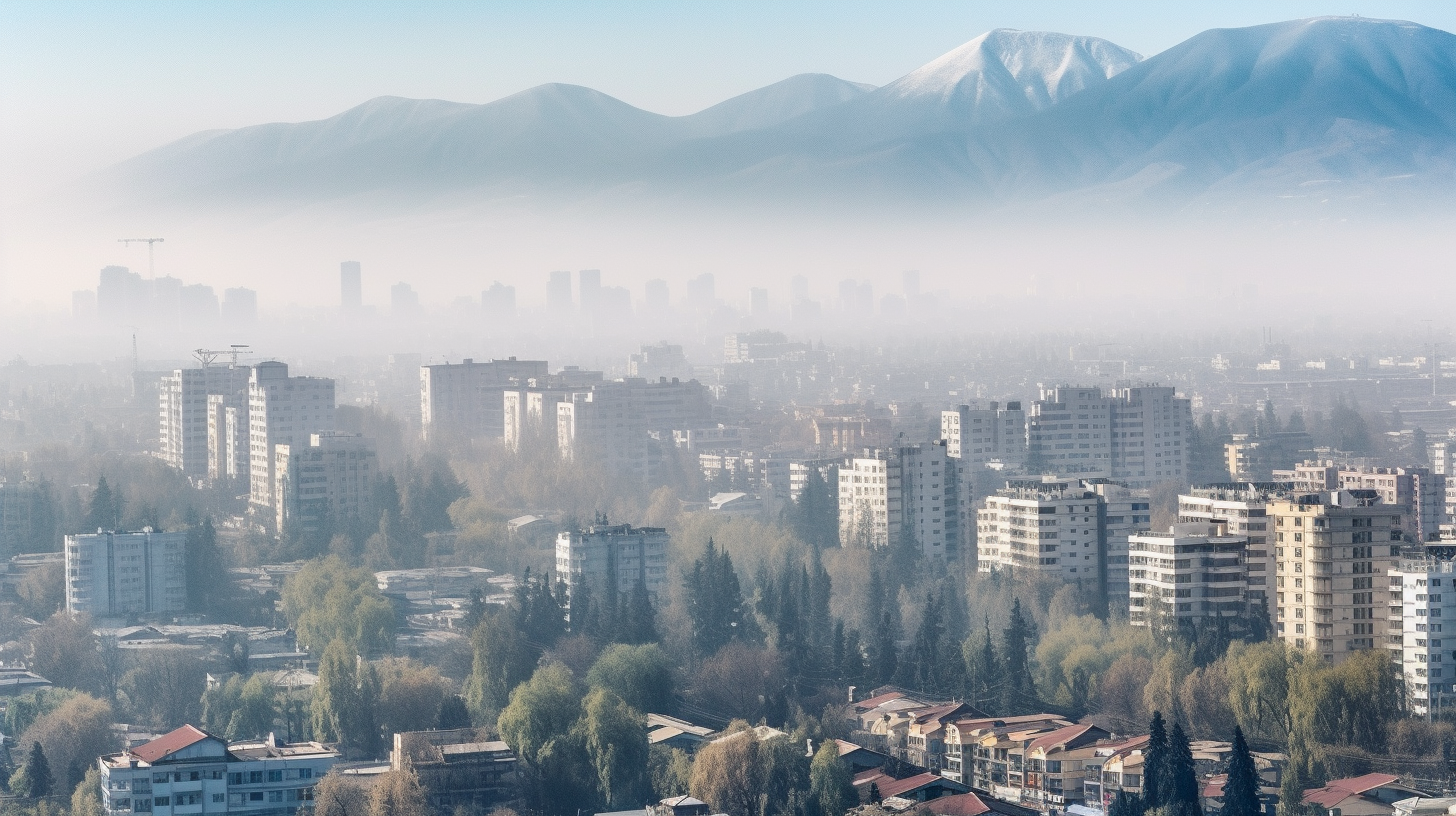
Almaty ranked sixth among the world’s most polluted major cities. Photo credit: UNDP Kazakhstan
PM2.5 refers to microscopic airborne particles that can penetrate deep into the lungs and bloodstream, increasing the risk of respiratory and cardiovascular diseases. Children, older adults and people with chronic illnesses are particularly vulnerable.
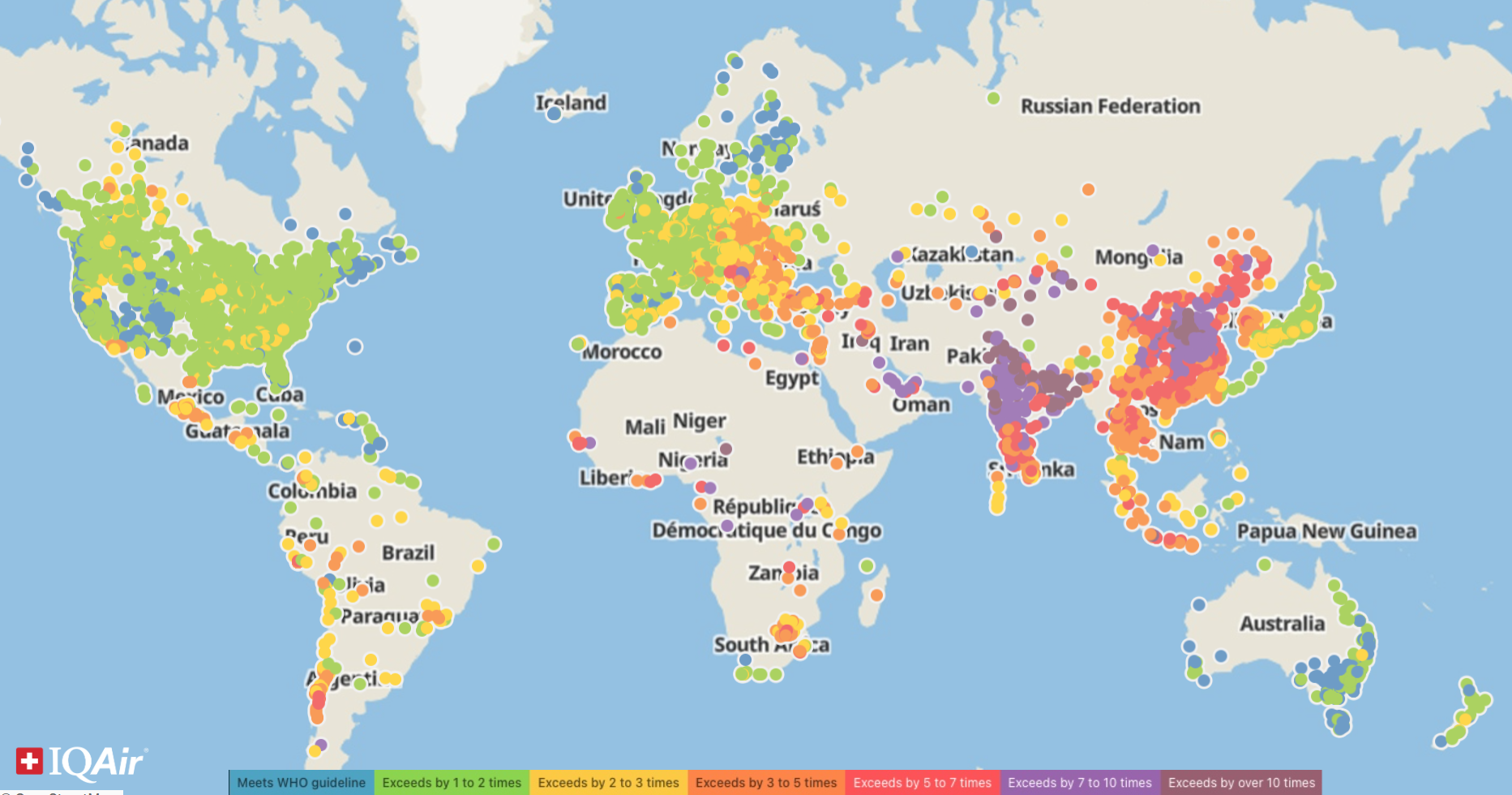
A global map showing air quality levels, where colors indicate how much PM2.5 pollution exceeds WHO guidelines. Photo credit: iqair.com
According to the eighth annual global air quality report by IQAir, the country recorded an average PM2.5 concentration of 23.4 micrograms per cubic meter, placing it alongside Bosnia and Herzegovina and Nigeria. Across Central Asia, air pollution levels remain elevated, with the Kyrgyz Republic ranking 19th, Uzbekistan 10th and Tajikistan third globally.
Almaty: a city under smog pressure
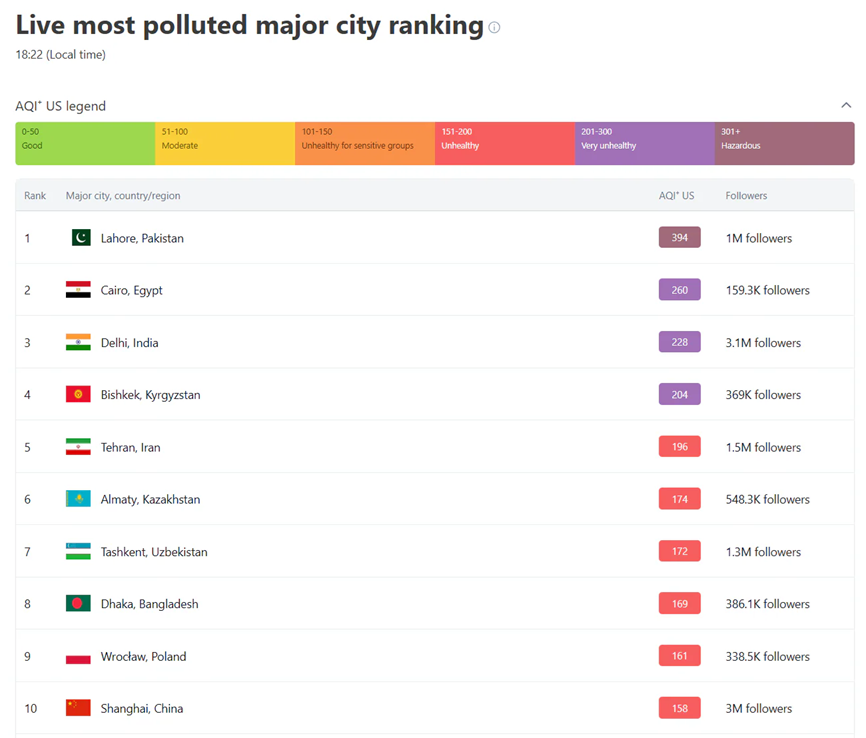
Almaty ranked sixth among the world’s most polluted major cities on Jan. 8, 2026, driven largely by vehicle emissions and coal burning. Photo credit: iqair.com
Almaty, Kazakhstan’s largest city, continues to face some of the most severe air quality challenges. While pollution levels typically range from moderate to unhealthy for sensitive groups, the city ranked sixth among the world’s most polluted major cities on Jan. 8, 2026, driven largely by vehicle emissions and coal burning.
According to an analysis by the Almaty Air Initiative, extreme pollution levels in the city are not caused by isolated emissions but by a combination of constant sources and weather conditions. During winter, Almaty frequently enters a pollution accumulation phase, when emissions increase and atmospheric dispersion worsens.
The start of the heating season marks a sharp increase in pollution levels. Data shows that PM2.5 concentrations rise significantly after early October, particularly in areas with private housing, where coal-based heating remains widespread.
In summer, pollution stems from various sources, including dust from roads and construction, vehicle emissions and secondary pollutants formed under high temperatures. Limited rainfall and weak winds allow pollutants to accumulate even without heating-related emissions.
The findings indicate that air pollution in Almaty is structural rather than episodic. Sustainable improvement will require systemic measures, including reducing emissions from heating sources, lowering transport-related pollution, expanding gasification, modernizing heat supply systems and strengthening independent air quality monitoring.
Government measures and industrial impact
According to Kazakhstan’s Bureau of National Statistics, more than 232,800 stationary pollution sources emitted 2.27 million tons of pollutants in 2024, a slight increase from the previous year. The largest contributors include the energy sector (37%), mining and metallurgy (30%) and oil production (20%).
In response, the government has introduced a range of measures to reduce emissions. The Ministry of Ecology and Natural Resoruces has approved a plan to cut emissions by 20% at 50 major industrial enterprises and is promoting the adoption of best available technologies.
Since 2021, Kazakhstan has implemented a new Environmental Code based on the principle “the polluter pays and restores.” Companies adopting cleaner technologies are exempt from emissions fees, while others will face gradually increasing charges starting in 2028.
The country is also expanding renewable energy capacity, with 148 facilities generating nearly 2,904 megawatts of power, and investing in urban greening initiatives to improve air quality.
Urban greening and the development of green belts around industrial zones are becoming key tools in improving air quality across the region. These measures help naturally filter pollutants and reduce the environmental impact of industrial activity.
At the same time, innovative technologies are playing an increasingly important role in addressing air pollution.
Researchers at Zhubanov Aktobe Regional University have recently developed a new gas purification technology to reduce harmful industrial emissions. The solution, being introduced at industrial facilities in Aktobe, Aksu and Ekibastuz, has shown substantial results. According to initial data, the technology can reduce dust and harmful substances in industrial emissions by dozens of times. At the Aktobe ferroalloy plant, emissions of particulate matter and pollutants decreased by approximately 40 times after its implementation.
The Kyrgyz Republic: investment and cleaner transport
Meanwhile, the Kyrgyz Republic, Tajikistan and Uzbekistan are implementing their own strategies, including investments in clean transport, renewable energy, reforestation and stricter environmental regulations.
The Kyrgyz Republic is strengthening its response to air pollution and climate change through institutional reforms and international partnerships. The government has updated its environmental strategy and established dedicated bodies to coordinate climate and air quality policies.
The World Bank is supporting a $50 million air quality improvement project, while Korea International Cooperation Agency (KOICA) is financing an additional $10 million initiative running through 2028.
Authorities are promoting a transition to cleaner fuels, including natural gas, and expanding the use of renewable energy. A key measure has been the gasification of residential areas previously reliant on coal heating.
In the capital Bishkek, more than 1,000 gas-powered buses were introduced in 2024, replacing older diesel minibuses and significantly reducing daily emissions. The government has also adopted legislation to encourage electric vehicle use, including incentives, green license plates and the development of charging infrastructure.
Tajikistan: reforestation and fuel transition
Tajikistan is focusing on long-term environmental measures, particularly reforestation and cleaner energy use.
The government has removed customs duties on electric vehicle imports and introduced restrictions on older vehicles as part of efforts to reduce transport emissions.
To combat dust storms, a major contributor to air pollution, Tajikistan is implementing large-scale afforestation programs. Under its forest sector development strategy for 2016-2030, authorities are expanding green coverage and restoring degraded land.
One flagship initiative includes the planting of saxaul trees across more than 300 hectares in southern regions, supported by international partners. Nurseries are cultivating hundreds of thousands of seedlings to stabilize desert areas and reduce airborne dust.
Uzbekistan: policy reform and rapid expansion of renewables
Speaking at the Regional Environmental Summit on April 23, Aziz Abdukhakimov, adviser to the president on environmental issues and chair of the National Committee on Ecology and Climate Change, said Uzbekistan is accelerating policy reforms to tackle air pollution as urbanization, industrial growth and transport emissions continue to rise.
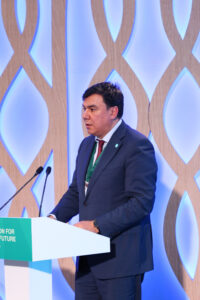
Aziz Abdukhakimov, adviser to the Uzbek President on Environment Issues, Chairperson of the National Committee on Ecology and Climate Change, at the Regional Ecological Summit on April 23. Photo credit: RES
The country has approved a national Clean Air project for 2026-2030, targeting a 10.5% reduction in toxic emissions and a decrease in the number of days with hazardous pollution levels.
Key measures include introducing “car-free days,” restricting government vehicle use, and implementing a new environmental rating system for regions. A phased “eco-transport” program will classify vehicles based on emissions and introduce environmental stickers.
Uzbekistan is also rapidly expanding its renewable energy. In 2025, the country generated approximately 16.8 billion kilowatt-hours from renewable sources, a 29% increase compared to the previous year, helping prevent millions of tons of emissions.
To mitigate pollution in urban areas, authorities are developing green belts around industrial zones and planning to plant millions of trees, including large-scale greening projects in Tashkent and surrounding regions.
Abdukhakimov highlighted the creation of the Surkhon Agro free economic zone in southern Uzbekistan, covering 1,000 hectares. Its subtropical climate allows year-round agricultural production without coal-based heating.
In waste management, Uzbekistan has launched construction of 11 waste-to-energy plants with a total capacity of 5.5 million tons and projected electricity generation of 2.2 billion kilowatt-hours. The projects, valued at $1.6 billion, are expected to be completed by 2027.
A shared regional challenge
Abdukhakimov said that despite national efforts, air pollution in Central Asia remains a transboundary challenge, as dust storms, industrial emissions and seasonal pollution often cross borders, limiting the effectiveness of isolated measures.
He stressed that the scale of the problem requires coordinated regional action.
“It is important that clean air is now discussed at the level of heads of state,” he said, noting that Uzbekistan and Kazakhstan have agreed to jointly promote the Clean Air of Central Asia initiative across border regions.
As a next step, he proposed establishing an interstate Clean Air consortium with Kazakhstan, with plans to expand it across the region.
“The consortium will serve as a practical platform for sharing monitoring data, including satellite observations, and for launching joint pilot projects, from emissions control systems at industrial facilities to greening initiatives in areas prone to dust storms,” he said.
He also called on international organizations and donors to support the initiative and invited other countries in the region to join.
In remarks at the Regional Environmental Summit, Inger Andersen, United Nations Under-Secretary-General and Executive Director of the United Nations Environment Program, outlined three priorities for Central Asian governments: reducing short-lived climate pollutants, strengthening regional cooperation and aligning national policies with global standards.
“Clean air is achievable with known, cost-effective solutions, but it requires coordinated action and investment,” she said.
