
ASTANA – As Kazakhstan modernizes its health system amid evolving global risks, its partnership with the World Health Organization continues to expand. In an interview with The Astana Times, Dr. Skender Syla, WHO Representative in Kazakhstan, reflects on the past year of cooperation with the Ministry of Health, from strengthening prevention of communicable and noncommunicable diseases to advancing pandemic preparedness and embedding international public-health standards into everyday medical practice.
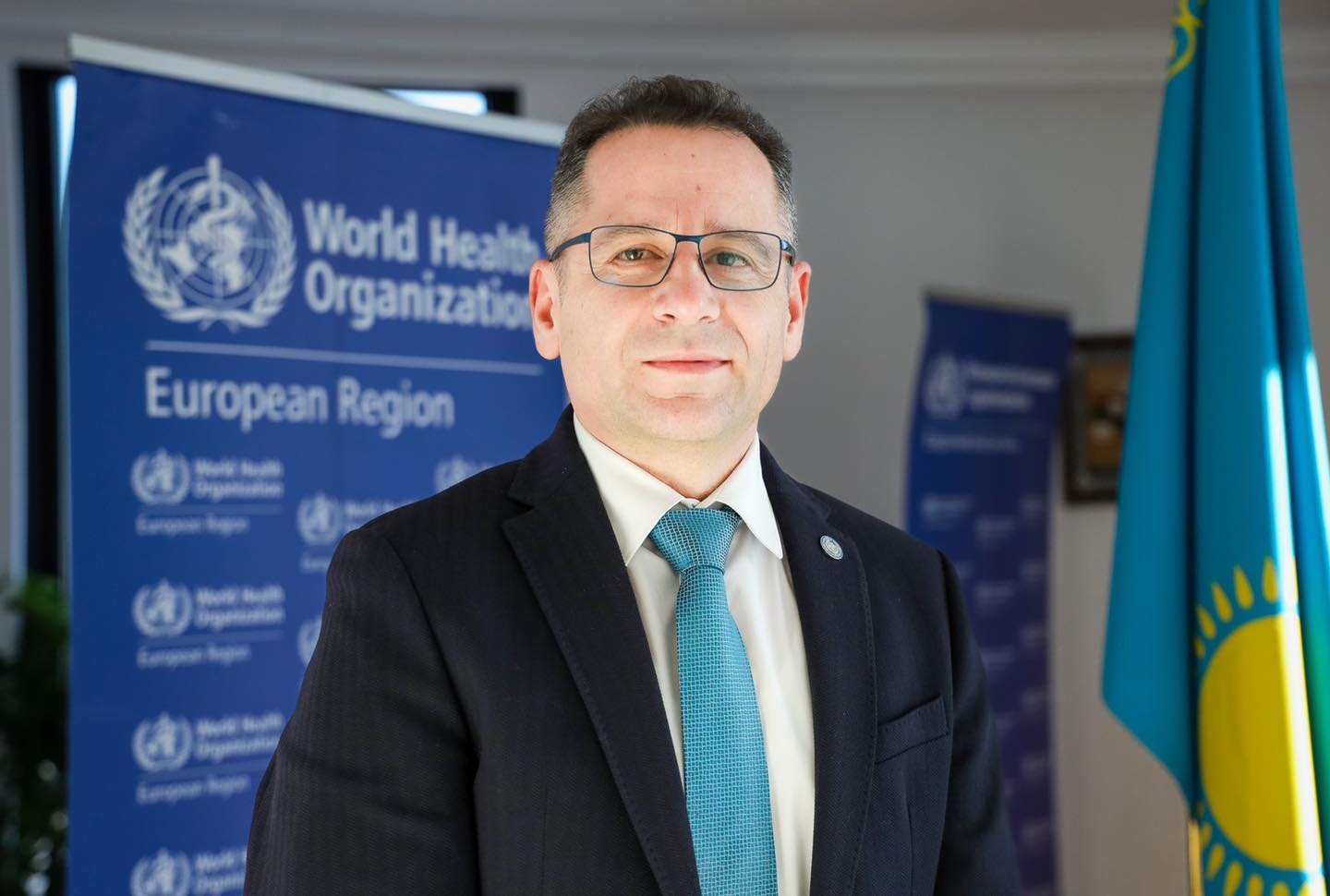
Skender Syla. Photo credit: WHO
Q: Dr. Syla, what is the main result of the cooperation between WHO and the Ministry of Health of Kazakhstan?
From L to R: WHO Regional Director for Europe Hans Kluge. Minister Akmaral Alnazarova, Skender Syla. Photo credit: WHO
The key achievement is institutional sustainability — when separate projects evolve into a unified health ecosystem. Kazakhstan is systematically translating evidence into policies and practice, which is confirmed by international assessments: in 2025, according to WHO/Europe data, the country became the first in Central Asia and entered the top ten countries of the region that achieved the target of reducing premature mortality from noncommunicable diseases (NCDs) by 25% by 2025.
Behind this number lies a combination of four elements: early detection, screening, treatment and palliative care, prevention of chronic diseases, and reduction of risk factors.
WHO serves as a technical partner: we help formulate standards, support the adoption of global best practices at the national level, and strengthen the capacity of professionals and institutions. This type of partnership translates complex reforms — from tobacco control to digital transformation — into measurable results for people.
Q: Nevertheless, NCDs remain the leading health burden worldwide. What is the foundation of Kazakhstan’s strategy in this area, and what results can already be seen?
I would highlight several key directions in Kazakhstan’s work on NCD prevention and control.
First, Kazakhstan introduced important multisectoral measures to protect the health of children and young people. Following the publication of WHO’s analytical review identifying links between consumption of sugar‑sweetened beverages and NCD prevalence, the country initiated legislative changes aimed at safeguarding youth health. As a result of joint work by the WHO Country Office and the Ministry of Health, a draft law was prepared, and in July 2024, a new law was adopted prohibiting the sale of energy drinks to individuals under 21. It entered into force in January 2025.
This landmark decision aims to reduce sugar consumption and curb the alarming rise of obesity and related complications among adolescents. Despite resistance from the beverage industry, Kazakhstan is demonstrating how strong political will, grounded in evidence, can deliver meaningful progress in public health and serve as an example for the region. Moreover, beginning in 2026, Kazakhstan introduced a phased increase of excise taxes on energy drinks to further reduce their affordability for children and young people and to strengthen comprehensive NCD prevention efforts.
Second, a major step was the revision of nutrition standards in educational institutions to align them with WHO recommendations and the best available scientific evidence. The updated standards, introduced on Sept. 1, 2025, aim to enhance the nutritional value of school meals and foster healthy dietary habits. Key changes include eliminating ultra‑processed foods and items high in salt, sugar and unhealthy fats. WHO supported the revision and implementation of these standards by providing technical guidance and evidence‑based recommendations, viewing school nutrition as a measure that simultaneously addresses micronutrient deficiencies and reduces risks of overweight and obesity.
Third, on April 19, 2024, President Kassym‑Jomart Tokayev signed a landmark decree banning the sale, marketing and distribution of vapes and other electronic nicotine delivery products. As of June 20, 2024, the legislation also introduced criminal liability for importing such products. This decisive regulation resulted from coordinated efforts by the Ministry of Health, the WHO Country Office, parliamentarians, and civil society actors.
By restricting access to vapes, Kazakhstan has reinforced its commitment to protecting public health — particularly the health of children and adolescents.
At the recent final board meeting of the Ministry of Health in Astana, noteworthy indicators were presented: smoking prevalence in Kazakhstan dropped to 17.5%, compared to 20.7% the previous year — a rapid shift achieved by very few countries within such a short timeframe.
More broadly, I would highlight Kazakhstan’s progress in advancing human capital development. The country climbed seven positions to reach 60th place among 193 states in the Human Development Index, reflecting sustained improvements in life expectancy, education, and quality of life. Life expectancy reached 75.4 years in 2024, with a projected rise to 75.8 years in 2025. Overall mortality declined by 2%, and infant mortality by 16.5%, which is one of the most sensitive international indicators of health‑system performance.
These results confirm that Kazakhstan’s investments in people’s health and well‑being are yielding tangible outcomes and laying a strong foundation for further sustainable progress.
Q: Speaking of women’s health, particularly cancer prevention, one of the key decisions was the introduction of HPV vaccination into the national immunization schedule. How did Kazakhstan integrate this program, and what results have been achieved so far?
Cervical cancer is a serious public health concern. According to WHO estimates, in 2020, 600,000 women worldwide were diagnosed with cervical cancer, and about 350,000 died from the disease.
To eliminate cervical cancer, the top priority is HPV immunization. HPV vaccination, cervical cancer screening and access to treatment are the core components of the WHO global elimination strategy. In the WHO European Region, the number of countries introducing HPV vaccination continues to grow: as of 2024, 49 out of 53 countries have incorporated HPV vaccines into routine immunization programmes. In 2025, Tajikistan and Belarus introduced HPV immunization, drawing on Kazakhstan’s experience. Delegations from these countries, during study visits to Kazakhstan, noted the high quality of preparation and strong support from the Government and local authorities.
The Ministry of Health prepared exceptionally well for the introduction of HPV vaccination into the routine immunization schedule in 2024. The country demonstrated a systematic, evidence‑based approach — from strengthening infrastructure and training health workers to engaging communities and ensuring transparent public communication.
By the end of 2025, 213,765 girls received the first dose of the HPV vaccine, and 125,533 completed the full two‑dose course. These results show the effectiveness of a coordinated approach combining high‑quality planning, workforce development, and community engagement in addressing this key public health priority.
Work in this direction will continue, and we will assess progress as the strategy unfolds. Currently, only four countries in the WHO European Region — Uzbekistan, Turkmenistan, Norway and Cyprus — have achieved 90% coverage. Overall, the region is seeing a steady increase in average coverage levels.
Q: The government of Kazakhstan is prioritizing the digital transformation of the economy, and the health sector is no exception. How is the country progressing in this area, and what key changes have already taken place?
Today, 98.5% of health‑care facilities in Kazakhstan use digital solutions instead of paper‑based records, and 87% of public health services are available online — from obtaining certificates to booking appointments. Together with the Ministry of Health, we conducted a comprehensive assessment of health information systems, identified bottlenecks, and agreed on a roadmap to improve quality and standardization.
A major breakthrough was the launch of the ICD‑11 (International Classification of Diseases, 11th Revision) in the Kazakh language and the beginning of its implementation. This is a significant milestone for the country, enhancing the accuracy, detail and interoperability of medical data. Currently, 132 countries are working on ICD‑11 implementation, and Kazakh became the 11th official language into which ICD‑11 has been translated — following English, Spanish, Russian, Uzbek and several others. I am confident this will greatly support health status analysis and strategic planning.
Another important achievement is the progress in digitalizing epidemiological surveillance and vaccine‑preventable disease control. With WHO technical assistance, Kazakhstan is successfully implementing the digital “vaccination” module. Transitioning reporting forms to an electronic format has automated newborn immunization tracking, improved transparency of vaccine distribution and enhanced the accuracy of coverage data.
Despite the significant work ahead in the short term to further refine the system, the progress achieved is undoubtedly a major milestone in strengthening the country’s health security.
Q: Speaking about the resilience of the health sector, I would also like to clarify the status of the Pandemic Fund grant awarded to Kazakhstan. At what stage is the project now, and why is it so important?
Both Pandemic Fund projects — the country‑level and the multi‑country initiatives — are currently in an active phase of implementation, and their importance cannot be overstated. Under its Country Proposal, Kazakhstan received a $19 million grant — the largest investment to date aimed at strengthening the country’s pandemic preparedness capacities. The WHO Country Office initiated the development of the proposal jointly with the Ministry of Health and serves as the implementing entity, providing technical guidance and overall coordination.
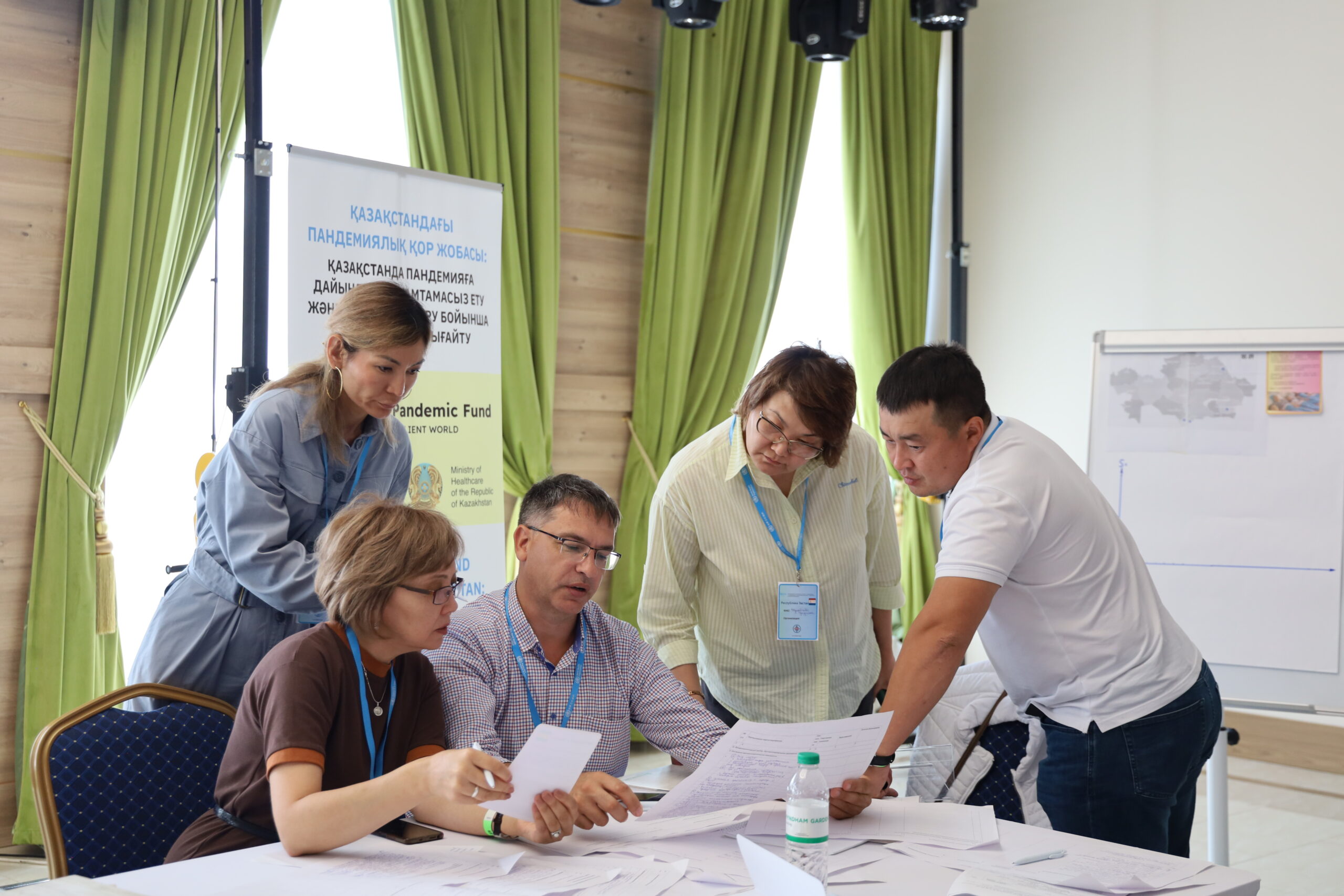
Training of the Pandemic Fund. Photo credit: WHO
The purpose of the project is not merely to close individual gaps but to strengthen national resilience to public‑health threats at the levels of workforce, infrastructure and policy.
A key element of the country grant is infrastructure development. Work has begun on modernizing the national laboratory network and procuring specialized equipment and transport for the safe transfer of biological samples. All these measures support the main outcome: Kazakhstan will be able to detect high‑risk pathogens more quickly and safely — a capability that is critical in the first hours of any epidemic threat.
At the core of emergency preparedness in health is the development of human resources and workforce capacity. Special attention is paid to training, upgrading knowledge and skills in line with WHO and international recommendations. Significant progress has already been achieved. Since 2024, Kazakhstan has launched the development of the State Information System for Biological Safety. Around 1,000 public‑health specialists have received training in key areas of preparedness. An important component is the Frontline Epidemiologist Training Programme (FETP), through which specialists from 15 regions are gaining practical competencies in surveillance and data‑quality management. In parallel, competencies in biosafety and biosecurity have been substantially strengthened: programme participants are being prepared as national trainers, creating a multiplier effect — knowledge remains within the country and is disseminated across the laboratory network.
Regarding the Multi‑Country Proposal, Kazakhstan — together with four other Central Asian countries (Kyrgyzstan, Tajikistan, Turkmenistan and Uzbekistan) — is implementing activities focused on supporting regional measures to counter existing and emerging threats to public health and food security in Central Asia using the One Health approach.
The project is implemented through a partnership across the health, finance, agriculture/veterinary, and environment/natural‑resources sectors of the participating countries, and three implementing entities: the Food and Agriculture Organization of the United Nations (FAO), WHO, and the World Bank. The total grant allocated to the region amounts to approximately $27 million.
Q: Are there any final points you would like to share about WHO’s work in Kazakhstan?
I would like to emphasize that Kazakhstan’s achievements are the result of systematic, data‑driven work, strong government leadership and open partnership. We see a country that is not afraid to take bold decisions — from banning vapes and energy drinks to introducing ICD‑11, modernizing the laboratory network and expanding preventive programmes. Kazakhstan is moving forward consistently and strategically, strengthening the health of its population at all levels — from schools and maternity hospitals to national centres and emergency‑response systems.
WHO remains a reliable partner on this path, and we are confident that our joint efforts will continue to deliver tangible results for the people, families and future generations of this country.
