
ALMATY – More than 40 environmental projects are being implemented in the Aral Sea basin, as announced at the second meeting of the Board of the International Fund for Saving the Aral Sea (IFAS), held on Oct. 10 in Astana under Kazakhstan’s chairmanship.
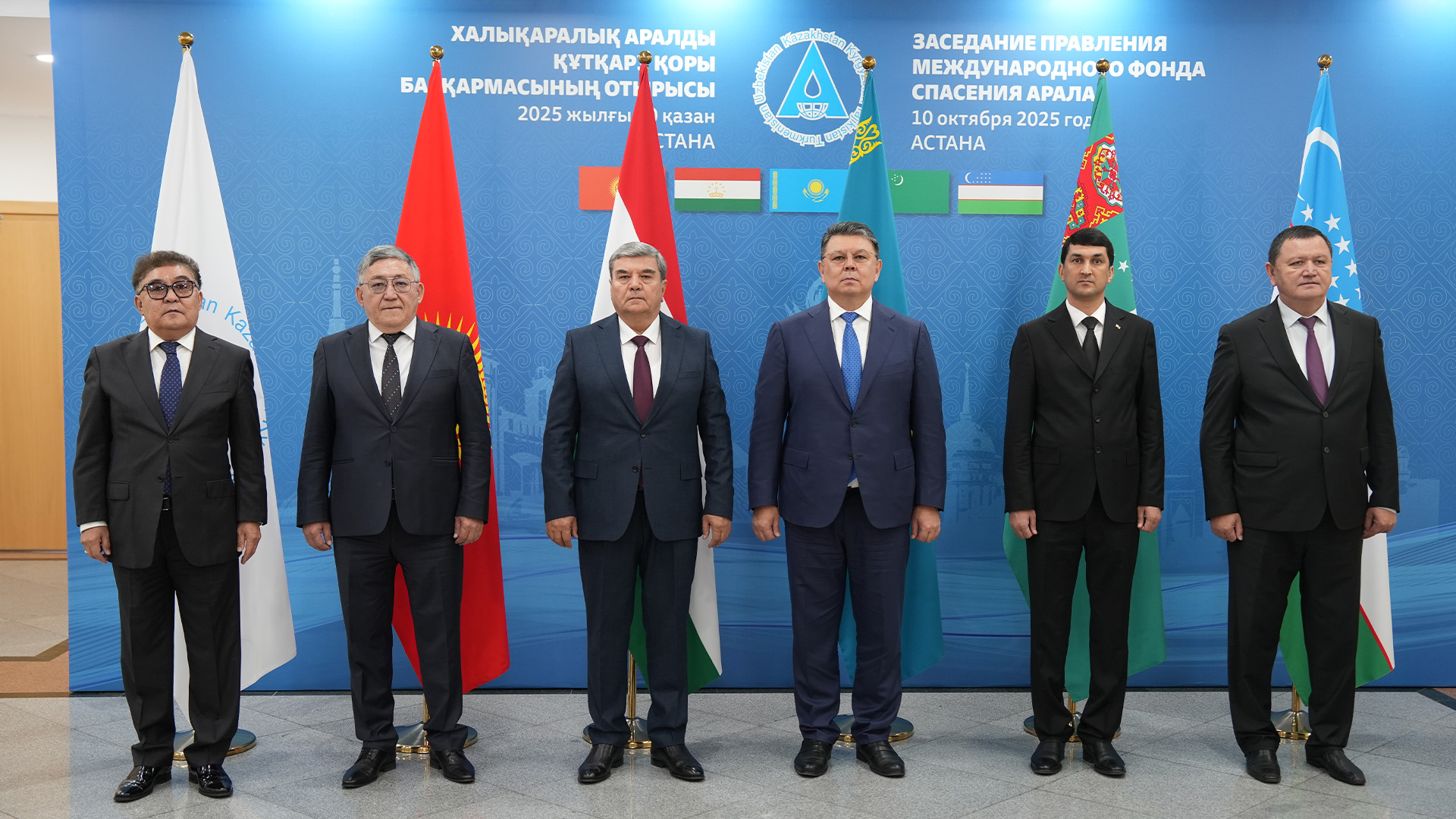
Photo credit: primeminister.kz
The meeting, chaired by Deputy Prime Minister of Kazakhstan Kanat Bozumbayev, brought together high-level representatives from Central Asian countries, according to the Prime Minister’s press service.
Action beyond declarations
In his opening remarks, Bozumbayev highlighted that the international community expects not only declarations but also actions to preserve the natural resources of the Aral Sea.
“These are part of the global environmental agenda linked to sustainable development, food and energy security, and the quality of life for tens of millions of people,” he said.
Bozumbayev noted that Kazakhstan fully shares the vision expressed by Central Asian leaders at the recent United Nations General Assembly, emphasizing trust, solidarity, and collective action to protect the environment.
Advancing regional programs and digital transformation
Participants reviewed preparations for the upcoming meeting of the IFAS Council of Heads of State, scheduled for April 2026, and discussed the implementation of the IFAS Executive Committee’s Work Plan for 2024–2026.
The agenda also included updates on the Program of Action to Assist the Countries of the Aral Sea Basin (ASBP), the Regional Environmental Program for Sustainable Development in Central Asia, and ongoing efforts to improve IFAS’s institutional framework.
In total, 42 environmental projects are underway in the basin, with two new regional grant projects under consideration for World Bank support.
Kazakhstan also proposed designating March 26 as the International Day of the Aral Sea, the Amu Darya, and the Syr Darya Rivers.
Reaffirming Kazakhstan’s commitment
Ahead of the meeting, Bektenov met with heads of delegations. He emphasized Kazakhstan’s strong support for IFAS as an effective mechanism for addressing environmental and transboundary water issues.
“The growing challenges of the current vegetation season were overcome thanks to constructive cooperation among our governments. Only through coordinated, prompt action we managed to prevent serious losses,” he said.
Concluding the discussions, Bektenov reaffirmed Kazakhstan’s commitment to the principles of openness, solidarity, and constructive regional dialogue.
