
ALMATY — The Embassy of the Kingdom of Spain in Kazakhstan and ART FUTURE, a contemporary culture development project, opened a solo exhibition by renowned Spanish artist Juan Saliquet on Sept. 5 at Esentai Gallery in Almaty.
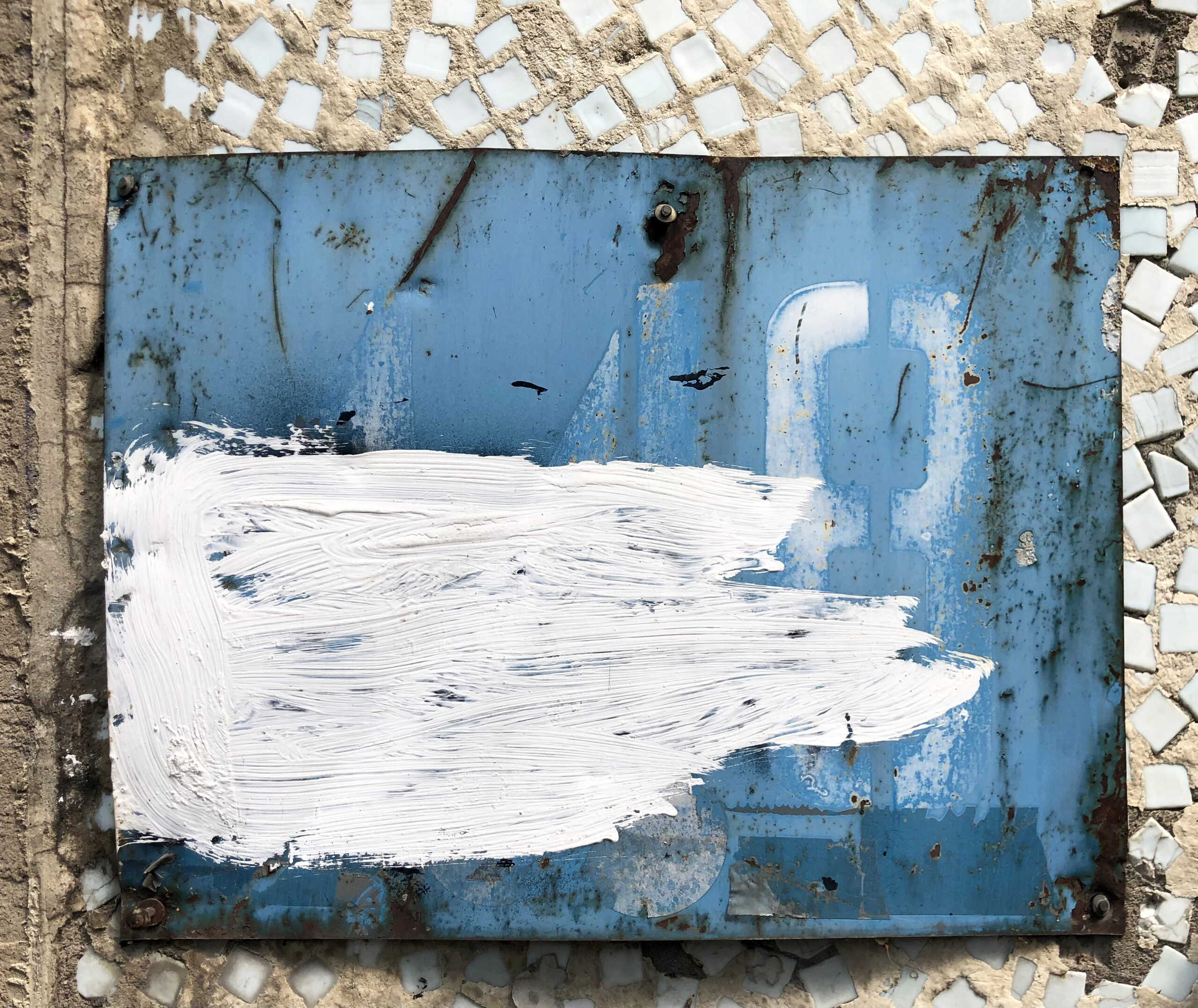
The photograph of a colored plate by Juan Saliquet reflects the artist’s search for hidden layers. Photo credit: Juan Saliquet
The exhibition, titled “Archaeology of a City: Almaty,” will run until Oct. 15.
The project marks the culmination of Saliquet’s international program in Almaty, organized in collaboration with the Spanish Agency for International Development Cooperation (AECID). The residency focuses on intercultural dialogue, artistic exchange, and the transformation of everyday spaces through visual storytelling.
A city as a living archive
The photograph of a colored plate by Juan Saliquet reflects the artist’s search for hidden layers. Photo credit: Juan Saliquet
Saliquet invites the public to see the city as a living organism, layered with memories, identities, and traces of human presence. Through photography, he captures fragments of architecture, fleeting urban details and overlooked street compositions, revealing their deeper emotional and cultural dimensions.
“For me, the city speaks on its own. The photos don’t need words — they tell their own story,” he said.
The artist explains that his fascination with Almaty began during his first visit in winter.
“I went out when it was minus 15 degrees, and there was nobody in the streets. I found myself walking alone, shocked by the architectural solutions and the incredible colors. Everything was covered in white, and the city felt like a dream. That’s when I began photographing without people for the first time,” Saliquet said.
Between painting, sculpture, and photography
Spanish Ambassador to Kazakhstan Luis Francisco Martínez Montes described Saliquet’s work as part of Spain’s rich artistic legacy.
“Spain has a glorious tradition in visual arts — from Velázquez and El Greco to Picasso and Dalí. Juan Saliquet belongs to this same illustrious genealogy, but his perspective is unique. His work exists at the intersection of painting, sculpture, and photography, and his fascination with the urban environment makes Almaty an endless source of inspiration,” he said.
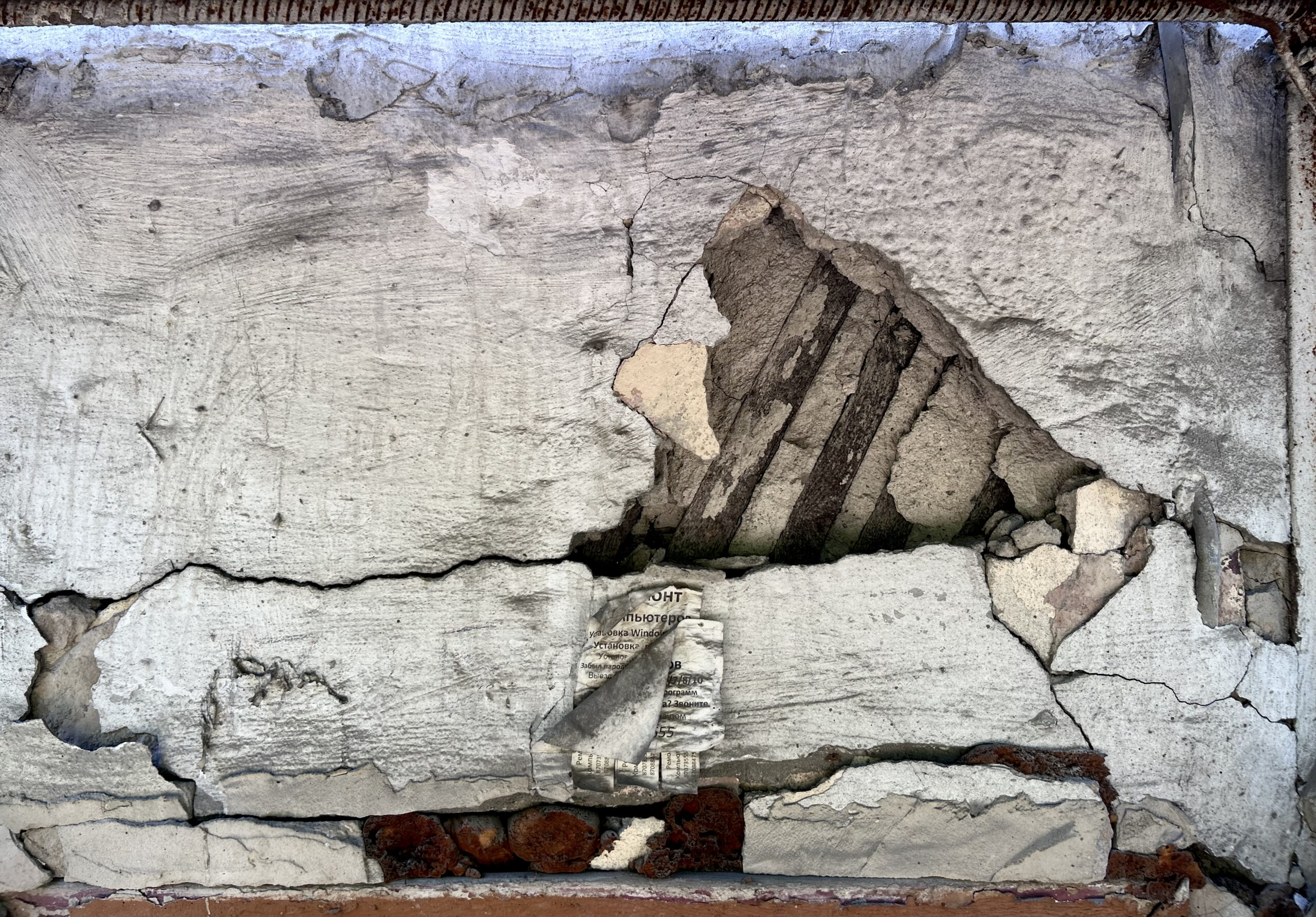
‘Operating Table,’ a photograph by Juan Saliquet. Photo credit: Juan Saliquet
Saliquet’s visual method builds on his earlier project, Correspondence, where he created visual dialogues between found urban imagery and classical or contemporary paintings. In Almaty, this approach continues with fragments of graffiti, reflections on shop windows, and torn street posters suddenly resonating with the works of Jasper Johns, Eva Hesse, Mario Schifano, Anselm Kiefer and Antoni Tàpies.
The Bohemian taste of creation
For Saliquet, art is inseparable from a bohemian spirit, something intuitive, handmade, and alive.
“It’s about merging with the materials around you. Something natural, something not over-manufactured, not cold, not dictated by conceptual rules. For me, art is about touch, texture, and freedom,” the artist explained.
This philosophy shapes his photographs, where incidental street details, such as cracked walls, layered doors, and temporary murals, become artifacts of a larger cultural story.
Almaty’s layers: memory, utopia and change
Saliquet sees Almaty as a young city, but one that carries a deep and complex history. However, he expressed concern about the rapid transformation of the city and the risk of losing its unique character.

Holding one of his photographs, Juan Saliquet explains how art uncovers the stories. Photo credit: Esentai Gallery
“If they destroy all of this, I will change cities. Almaty is like a kindergarten for me — everywhere I turn, I see colors, textures, and traces of time. My hope is that people develop awareness and conserve these treasures while still allowing the city to grow,” the artist said.
The nomadic spirit in urban space
Saliquet also sees a nomadic spirit in Kazakh art and architecture.
“For me, the real history is in these details — the way people repair things quickly, with whatever they have at hand. It’s practical, spontaneous, and deeply connected to the nomadic way of life,” he explained.
He encourages Kazakh artists to embrace this freedom of expression rather than limiting themselves to traditional symbols.
“It’s not just about yurts and horses. The true spirit lies in improvisation — in doing things naturally, with creativity, without fear of breaking the rules,” Saliquet said.
Discovering Almaty’s hidden colors
Saliquet’s photographs challenge the perception of Almaty as a gray city. While many associate its architecture with monotony, his work reveals a rich palette of unexpected colors and textures.
“Some people ask why I photograph what they call garbage. But this is my poetic vision. Others come to me and say that they didn’t know Almaty had so many colors. That’s the beauty of art — it teaches us to see,” the artist said.
This connection between visual storytelling and anthropology lies at the heart of the exhibition.
“Archaeology is also anthropology — the study of society and life, past and present, through traces left behind,” Saliquet said.
