
ALMATY — A recent survey conducted by Astana Open Dialogue between June 9-16 has revealed growing optimism about the future of regional integration in Central Asia, while highlighting challenges that need to be addressed, reported the institution’s press service on Aug. 19.
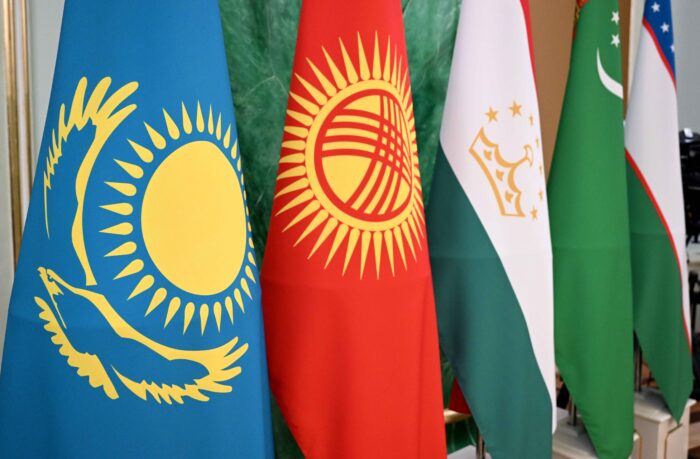
Photo credit: Akorda
The study gathered insights from more than 50 experts in politics, economics, education, infrastructure and international relations. To ensure a comprehensive perspective, the survey employed a mixed methodology that included scaled ratings, multiple-choice responses and open-ended commentary from experts.
Stable relations but complex challenges
Most experts see moderate to high prospects for Central Asian integration over the next decade. According to the findings, 56% of respondents described relations among Central Asian states as stable but competitive, while 2% noted that their views on integration are subject to frequent fluctuations, reflecting a degree of uncertainty regarding long-term regional dynamics. At the same time, 2% considered them fragile and vulnerable to external influence.
Experts identified several factors slowing integration, with disputes over water and energy resources cited by 52% of participants. Concerns about growing external influence and competition for regional transport corridors were mentioned by 40%, while 32% highlighted the lack of institutional mechanisms to manage cross-border projects effectively.
Economic cooperation as the primary driver
The majority of respondents agreed that regional integration will primarily evolve around pragmatic economic interests. Experts believe that the most realistic avenues for economic integration in Central Asia over the next five to ten years lie in developing unified transport corridors (52%) and strengthening energy cooperation (48%). Significant support was also expressed for agro-industrial partnerships (32%) and trade liberalization, including the creation of free trade zones (20%).
Meanwhile, financial integration through common settlement systems (14%) and joint investment funds (12%) received comparatively less attention. Education (22%) and technology (18%) were also mentioned as potential areas of collaboration, while metallurgy accounted for only 2% of responses, suggesting limited regional capacity for integration in this sector.
External frameworks and regional dynamics
The role of external actors in the regional integration process is perceived ambiguously among experts. According to the survey, 43.5% of respondents believe that international platforms largely contribute to regional stability and connectivity.
At the same time, 23.5% argue that such involvement diverts resources and distorts priorities, while another 23% emphasize the restraining effect of certain alliances, particularly the Eurasian Economic Union (EAEU) and the Collective Security Treaty Organization (CSTO). Meanwhile, 10% of experts view the influence of external players as either neutral or inconsistent.
When asked which international blocs compete with the idea of autonomous regional integration, 50% of respondents pointed to EAEU as the primary factor. Other structures mentioned as limiting the development of an independent Central Asian agenda include CSTO (30%) and the Organization of Turkic States (18%). Some experts also referred to the Shanghai Cooperation Organization (SCO), the Commonwealth of Independent States (CIS), China’s Belt and Road Initiative, and even the European Union as additional players influencing the process.
According to the survey, these findings suggest that Kazakhstan is already deeply embedded in a dense network of external political commitments. Many respondents believe that these existing alliances often divert both political and institutional attention needed to build an independent integration framework within Central Asia.
Humanitarian cooperation and cultural ties
Expert opinions highlight a clear understanding of the importance of the humanitarian dimension in advancing regional integration. Almost all respondents (90%) agree that joint educational programs and exchanges represent the most effective tools for fostering closer ties, reflecting a high level of trust in educational diplomacy as a mechanism for building shared values and stronger connections among younger generations.
Recognition of diplomas and professional qualifications was the second most frequently cited factor, mentioned by 66.7% of respondents, underscoring the need to reduce administrative barriers and enhance professional mobility within the region. Additionally, half of the participants emphasized the importance of creating a common information space to strengthen mutual understanding and collaboration.
Although less frequently mentioned, respondents also highlighted the potential of a shared cultural calendar, regional festivals, and youth leadership programs, viewing them as valuable tools for deepening humanitarian ties and supporting long-term integration.
Kazakhstan’s strategic role
Kazakhstan’s position within the integration process emerged as a recurring theme. According to the survey, 86.7% of respondents believe that Kazakhstan has the potential to act as a leading moderator in advancing regional integration, provided there is sufficient political will and mutual trust among partner countries.
The remaining 13.3% suggested that Kazakhstan could assume such a role partially, focusing primarily on the economic and logistics sectors, where the country already has significant institutional capacity and infrastructure.
Outlook for 2035
The survey results indicate that experts tend to view the near future of Central Asia through the lens of pragmatism and shared regional interests rather than ideological models. According to respondents, the most likely scenario involves economic-driven integration, with 50% of experts believing that over the next decade, cooperation among Central Asian countries will primarily be shaped by trade, transport, logistics, natural resources and other economic factors, rather than deep political integration.
The second most popular scenario, supported by 33.3% of respondents, envisions alliances based on common interests without a unified governing body. This approach assumes the absence of a central decision-making institution but allows for flexible and temporary formats of cooperation, depending on the evolving priorities of the countries in the region.
Meanwhile, 10% of experts predict a scenario of competition and regional fragmentation, while 6.7% foresee a potential return to dominance by external players. Although the risk of external dependency and geopolitical turbulence is acknowledged, the majority of respondents remain confident that the region is likely to pursue greater autonomy and adopt a pragmatic, interest-based approach to integration.
Experts believe Central Asian integration will most likely prioritize economic cooperation over political unification, with progress driven by common interests, adaptable frameworks and practical considerations rather than the creation of rigid supranational institutions by 2035.
