
ASTANA — United Nations Under-Secretary-General for Economic and Social Affairs Li Junhua delivered a stark warning on April 22 in his remarks to the Regional Ecological Summit in Astana, saying the world is falling dangerously short of its 2030 sustainable development targets, with more than 700 million people still living in extreme poverty and over two billion lacking safe drinking water.
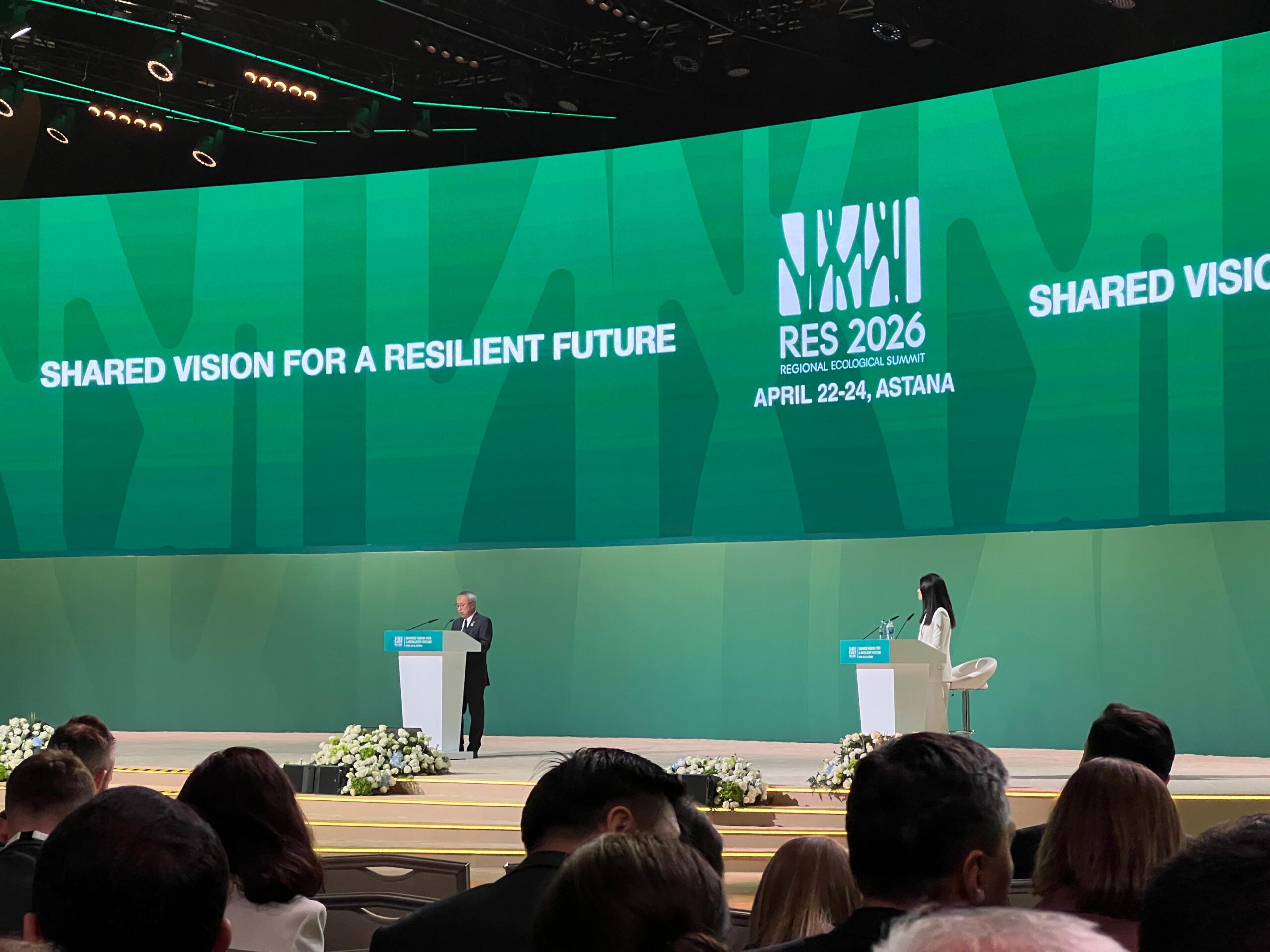
Li Junhua. Photo credit: Aida Dosbergenova/ The Astana Times
“Kazakhstan has long stood at the edge of the crossroads of the continents, bridging cultures and ideas, advancing progress, and championing new principles of unity, solidarity, and shared purpose. This summit reflects our shared commitment to cooperation over division in pursuit of a resilient future,” Li said, addressing the summit delegates.
He pointed to Central Asia as both a climate front line where rising temperatures and retreating glaciers threaten livelihoods and an emerging hub of solutions.
“Central Asia is not merely a region of vulnerability. It is a region of leadership. Through sustainable Cooperation, you have proven that long-term commitment can restore the ecosystem and rebuild livelihoods,” he said.
Li urged robust investment, expanded climate financing and stronger regional cooperation to close what remains a widening global gap.
“It also demands equitable access to green and frontier technologies through partnerships, and crucially, equipping people with the skills to turn those innovations into lasting impact,” he added.
Li also expressed optimism about the UN Regional Center for Sustainable Development Goals for Central Asia and Afghanistan in Almaty, which, he noted, would play a “transformative role.”
“The United Nations is fully committed to supporting it as a premier hub for regional cooperation, knowledge sharing, and accelerated SDG implementations,” he said.
Li also supported Kazakhstan’s initiative to establish a water-focused organization under the auspices of the UN.
“Water defines borders, and our solutions must do the same. Central Asia’s experience and leadership will be indispensable in shaping the global water agenda. In this regard, I welcome President Tokayev’s visionary call for a dedicated international organization on water,” he said.
“The United Nations looks forward to the further deliberations among member states on this important initiative,” he added.
Central Asia not standing still
Inger Andersen, UN Under-Secretary-General and United Nations Environment Programme Executive Director, also commended the robust cooperation in Central Asia on environmental issues. She emphasized that Central Asia is not standing still, pointing to a growing record of concrete action across the region. These efforts range from high-level dialogue at the three-day summit to binding regional frameworks such as the Tehran Convention on the protection of the Caspian Sea.
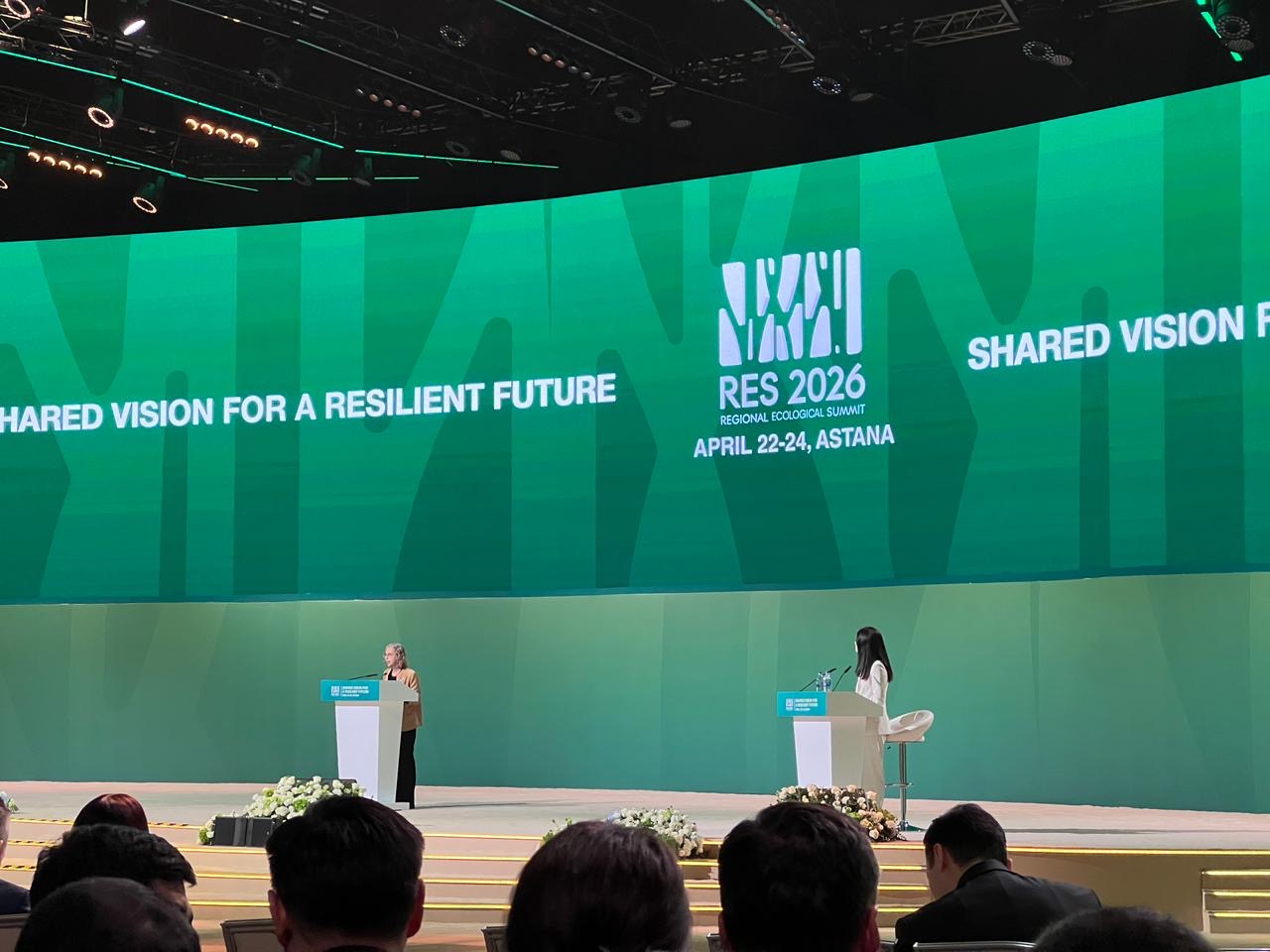
Inger Andersen. Photo credit: Aida Dosbergenova/ The Astana Times
The countries in the region are also taking on a more visible global role by hosting major environmental conferences, including those under the Convention on Migratory Species, and stepping up leadership within key international platforms such as the Rio Conventions and the United Nations Environment Assembly.
“I am very pleased that this summit is considering new regional networks and initiatives aimed at driving progress, including on science, finance and circular economy. In particular, the proposed partnership on circular economy marks a golden opportunity to form regional partnership in Central Asia. My deep thanks to Kazakhstan for the leadership in advancing this framework and to all five Central Asian nations for taking this important step in advancing their economies towards circularity,” she said.
Andersen said UNEP is ready to deepen cooperation with Central Asian countries, particularly through its sub-regional office in Almaty, as the region steps up its environmental agenda. She also urged governments to accelerate work on a regional air quality framework aligned with the Convention on Long-Range Transboundary Air Pollution.
“Air pollution does not respect borders. One breath out in one nation is one breath in another. We are interdependent on the same air,” she said.
Convergence of environmental pressures
United Nations Economic Commission for Europe Executive Secretary Tatiana Molcean also stressed the critical urgency of a collective action. She noted Central Asia is confronting a convergence of environmental pressures from climate change and land degradation to biodiversity loss and mounting water scarcity, warning that these challenges are inherently transboundary and demand collective action.
“One important example is the environmental performance review process. These reviews are not just technical exercises, they align directly with the ambitions of the Sustainable Development Goals, particularly those that speak to clean water, climate action, life on land and strong institutions. These are not just distant global targets, they are deeply rooted local realities shaping the lives of millions across this region. Engagement in this process is remarkable,” said Molcean.
All five Central Asian states have now undergone multiple review cycles, with Turkmenistan, Kazakhstan and the Kyrgyz Republic completing three rounds, while Tajikistan and Uzbekistan are launching their fourth this year.
“We are introducing a regional environmental performance review for the entire region of Central Asia, aiming exactly at this – strengthening accountability, aligning efforts and advancing coordinated action on environmental challenges,” she said.
Molcean pointed to Kazakhstan as a standout in regional cooperation, noting it is the only country in Central Asia to have fully implemented a suite of multilateral environmental agreements covering clean air, transboundary water management, industrial safety, public access to environmental information and impact assessments.
“This is not just a legal achievement, it is a political choice and a powerful signal of trust in collective solution,” she added.
Molcean framed the summit as more than just environmental. “It is about leadership in a time of uncertainty. It is about recognizing that ecological resilience is inseparable from economic stability, from human security and peace,” she said.
RES kicked off in Astana on April 22 with a plenary session and will continue through April 24. President Kassym-Jomart Tokayev addressed the delegates urging that environmental cooperation should serve as a “reliable instrument of unity and should not divide us.”
“It should be based on partnership, trust and shared responsibility – with no naming, no shaming and no blaming,” Tokayev said.
“We gather in Astana to reaffirm our shared responsibility to protect our planet. It means the states of our region clearly understand the urgency and extreme significance of having a shared vision for a resilient future,” he said.
An exhibition is also taking place on the sidelines of the summit, expecting around 20,000 participants and highlighting green technologies and national achievements.
