
ASTANA — Kazakhstan has attracted more than $480 billion in foreign direct investment (FDI) since independence, Deputy Foreign Minister Alibek Kuantyrov said during a United States (US)-Kazakhstan roundtable at Astana Mining and Metallurgy (AMM) 2026 on June 11, highlighting opportunities in critical minerals, renewable energy, logistics and technology.
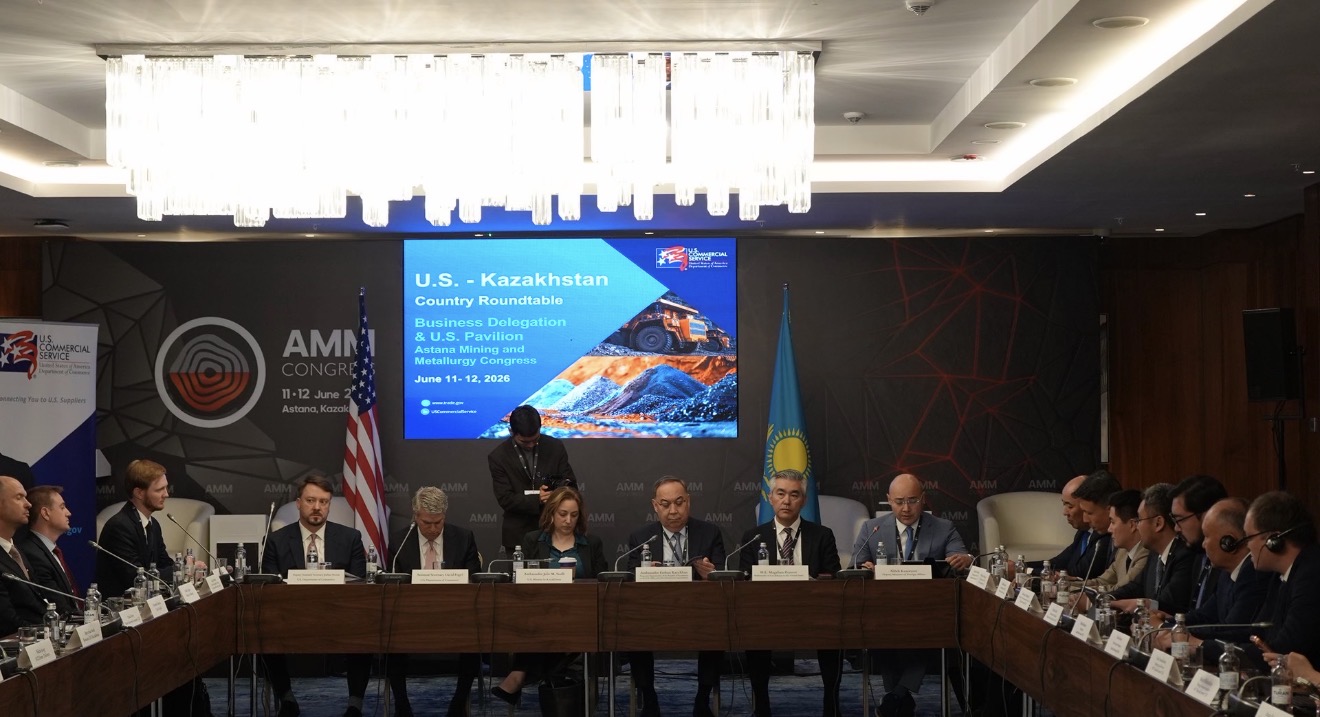
According to Kuantyrov, gross FDI inflows reached $20.5 billion in 2024, while investors from more than 120 countries are currently active in Kazakhstan. Photo credit: MFA
The roundtable brought together government officials and business representatives from Kazakhstan and the United States, including U.S. Ambassador to Kazakhstan Julie Stufft and Assistant Secretary of Commerce David Vogel, to discuss trade, investment and industrial cooperation.
According to Kuantyrov, gross FDI inflows reached $20.5 billion in 2024, while investors from more than 120 countries are currently active in Kazakhstan. Addressing participants, he outlined several sectors the government considers priorities for future investment. Among them are critical minerals and green technologies, where Kazakhstan is seeking to capitalize on growing global demand driven by the energy transition and advances in artificial intelligence.
Kazakhstan currently accounts for approximately 45% of global uranium production and possesses significant reserves of lithium, cobalt and nickel, minerals used in battery manufacturing and renewable energy technologies.
Kuantyrov also highlighted opportunities in renewable energy, citing Kazakhstan’s wind and solar potential and ongoing efforts to develop a green hydrogen industry.
In logistics, he noted that Kazakhstan has invested more than $35 billion in transport and transit infrastructure over the past 15 years. The country serves as a key transit corridor between Asia and Europe, with around 80% of rail cargo traveling between China and Europe passing through Kazakhstan.
The Deputy Minister also pointed to opportunities in agribusiness and food processing, manufacturing, petrochemicals, and the digital economy. He highlighted the role of the Astana International Financial Centre as a regional financial hub and noted that Kazakhstan’s innovation ecosystem includes more than 400 active research and development organizations.
To attract investment, Kazakhstan offers a range of incentives through government investment contracts and agreements, including customs duty exemptions, VAT relief on imported inputs, state grants and tax preferences. Large-scale projects may also qualify for legislative stability guarantees of up to 25 years.
Among the major international companies operating in Kazakhstan are Chevron, ExxonMobil, Shell, TotalEnergies, Rio Tinto, Glencore, Samsung, LG, Hyundai, Amazon Web Services, Microsoft, Cargill and Louis Dreyfus.
The roundtable was held as part of AMM 2026, which this year has brought together approximately 1,500 delegates from 16 countries to discuss developments in mining, metallurgy and industrial production.
