
ASTANA — Large groups of saiga antelopes have migrated into the Aral district of the Kyzylorda Region since late December, drawing public attention. Wildlife officials say the movement is a natural winter migration driven by snow depth and food availability.
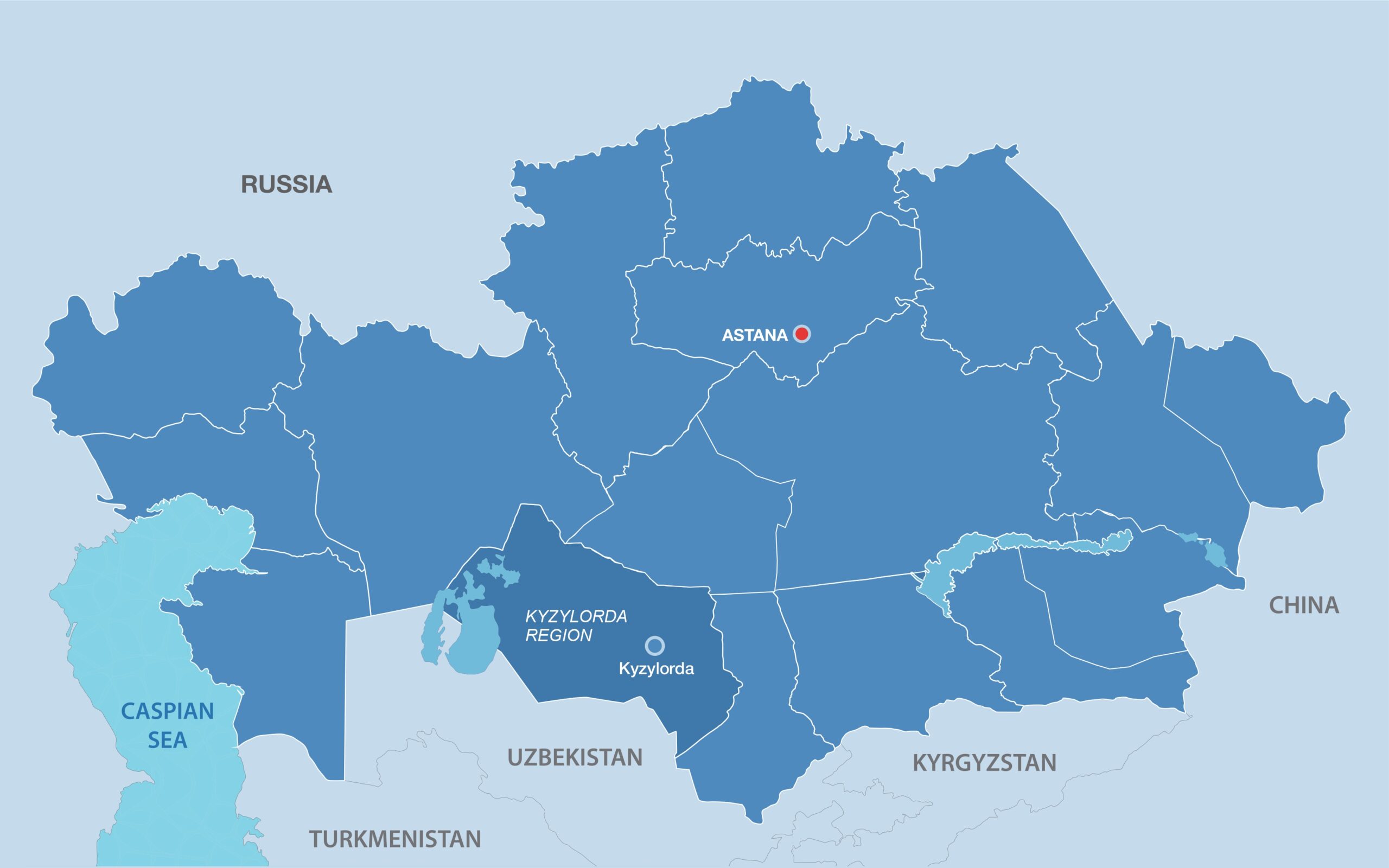
Photo credit: Forestry and Wildlife Committee of Kazakhstan. Click to see the map in full size. The map is designed by The Astana Times.
Inspectors of the Kyzylorda regional branch of the state enterprise Okhotzooprom confirmed that since Dec. 24, saigas have been moving in large numbers from the Koskol rural district of the Ulytau Region across several stations of the Beineu-Zhezkazgan railway. The animals have concentrated in the Aral, Kazaly, Karmakshy, Zhalagash and Syrdarya districts of the Kyzylorda Region.
The branch’s protected territory covers parts of the Kyzylorda, Turkistan, and Ulytau regions. Its primary responsibilities include protecting steppe wildlife, detecting violations of environmental legislation and preventing poaching.
According to Rasul Makhanov, head of the Okhotzooprom’s regional branch, only a small portion of saigas permanently winter in the Kyzylorda Region.
“Among the saigas and antelopes living in the Kyzylorda Region, very few remain here permanently in winter. Those who live in the Kostanai, Aktobe and Ulytau regions come here when deep snow falls and it becomes difficult to find food. They come in search of pasture. This is a natural process,” Makhanov told Kazinform.
Three populations, nearly four million animals
Kazakhstan is home to three distinct saiga populations of 3,978,000 animals, according to last year’s census conducted in April-May during the calving season.

Rasul Makhanov. Forestry and Wildlife Committee of Kazakhstan.
The Ural population accounts for 2,300,000 animals, the Betpak-Dala population for 1,600,000, and the Ustyurt population for 78,000. Over the past decade, the total saiga population has grown by 40.4%.
Makhanov said there are currently approximately 60,000 to 65,000 saigas in the Syrdarya area. More than 30,000 of them are concentrated in the Aral district.
“Saiga is a species with very variable numbers. The population can grow rapidly and also decline rapidly. In 1992, during a severe winter with deep snow, a large number of saigas died, and according to some data, their numbers decreased to 15,000. For more than 20 years, there was a tendency toward population growth,” said Makhanov.
“However, in 2013, a mass die-off occurred in the north of the country due to disease. After that, the numbers began to increase again,” he added.
Population regulation and agricultural concerns
Rapid population growth has also led to tensions with farmers. From July to December last year, population regulation measures were carried out in the West Kazakhstan, Kostanai, Akmola, Karaganda and Ulytau regions.
Specialists link the need for regulation to the expanding saiga population and crop damage in agricultural areas.
“With the onset of spring, saigas trample crops. Farm representatives complain that they crush the seedlings and destroy everything that was sown. The inventory was conducted based on such statements. Hunters were involved in the capture of saigas under the supervision of Okhotzooprom employees,” said Makhanov.
Last year, 196,210 saigas were removed from the wild as part of regulation efforts. The meat was sent to processing plants, while the horns were transferred to the Okhotzooprom branch in Almaty for storage. Each horn was assigned a serial number and is stored under special temperature conditions. The government is working on the potential use of horns for pharmaceutical purposes.
Legal status and anti-poaching measures
The saiga antelope, once classified as endangered, was removed from that list in 2023 following significant population growth. However, illegal hunting remains a criminal offense in Kazakhstan.
Last year, inspectors of the Kyzylorda branch identified 17 criminal violations related to poaching. This year, two poachers have already been detained.
The article was originally published in Kazinform.
