
ASTANA – Today marks the International Day of Women and Girls in Science, established by the UN General Assembly to highlight the importance of equal opportunities in science and to inspire a new generation of girls to pursue careers in research. To mark the occasion, the Kazakh Ministry of Science and Higher Education released updated statistics highlighting the significant role of women in the country’s scientific community.
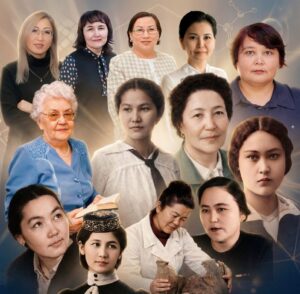
Photo credit: gov.kz
“Women play a key role in shaping Kazakhstan’s scientific potential. The country has 120,896 individuals with postgraduate education – including master’s degrees, PhDs, doctorates in relevant fields, candidates of science, and doctors of science. More than half of them – 62,433, or 51.6% – are women, reflecting their strong presence in scientific education,” reads the statement.
Women also hold a significant share of leadership and academic positions in higher education, representing 65.7% of faculty members. Among them, 72.5% hold master’s degrees, 62.8% hold PhDs, 46.9% hold doctorates in relevant fields, 49.4% hold doctor of science degrees, and 65.1% hold candidate of science degrees. These figures demonstrate the high level of professionalism and scientific expertise of female scholars, reported the ministry’s press service on Feb. 11.
In Kazakhstan, 12,893 women are engaged in scientific research, accounting for 56% of total scientific staff. Overall, women make up 55.7% of all researchers and are actively involved across a broad range of disciplines – from fundamental research to applied and interdisciplinary projects.
The largest number of women researchers work in the natural sciences – 3,625 (28%). Women also make significant contributions to engineering and technology – 2,625 (20%), and the humanities – 2,471 (19%). In terms of overall representation by field, women are most strongly represented in the humanities (66%) and social sciences (65%).
The high level of women’s scientific qualifications deserves special attention. The largest share of women hold a candidate of science degrees (60%), followed by doctorate and master’s degrees (58%), and PhD degrees (54%). In the medical and humanities fields, women hold 72% of candidates for science degrees, demonstrating their strong academic and professional potential.
