
ASTANA – Kazakhstan’s clearly defined higher education strategy makes it a compelling partner for international universities, Heriot-Watt University Vice-Chancellor Richard A. Williams said in an interview with The Astana Times.
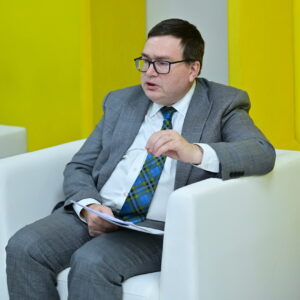
Heriot-Watt University Vice-Chancellor Richard A. Williams visited Aktobe in December 2025. Photo credit: Zhubanov Aktobe Regional University
“The country’s commitment to internationalisation, English-medium provision, research-led education, and stronger links between universities, industry and innovation creates a powerful foundation for long-term collaboration. From our perspective, this alignment is critical,” said Williams.
Heriot-Watt University partnered with Zhubanov Aktobe Regional University to establish a campus under an agreement signed between Kazakhstan and the university in February 2023. The partnership is part of Kazakhstan’s broader push spearheaded by President Kassym-Jomart Tokayev to bring foreign partners into its higher education system, strengthening quality, resilience and alignment with international standards.
Williams explained Heriot-Watt’s strategy through 2035 focuses on nurturing what they deem future shapers, graduates and researchers who tackle real-world challenges “through applied learning, strong employability outcomes and mission-led research.”
“Kazakhstan’s ambitions to become a regional academic and innovation hub resonate very strongly with that purpose,” he added.
Williams said growth is strongest where national priorities align with global demand, particularly in digital technologies, engineering, energy transition, geoscience, critical minerals and sustainable infrastructure.
“These are precisely the domains where Kazakhstan has strategic economic interests and where Heriot-Watt brings globally recognised expertise. Over time, we also see strong potential for growth in postgraduate education, doctoral training and industry-embedded research,” he said.
Partnership with Aktobe
Besides Kazakhstan, Heriot-Watt operates campuses in Malaysia and the United Arab Emirates. Explaining the rationale behind the decision to establish a campus in Aktobe, Williams said it was a “mission-led decision, not simply a geographic one.”
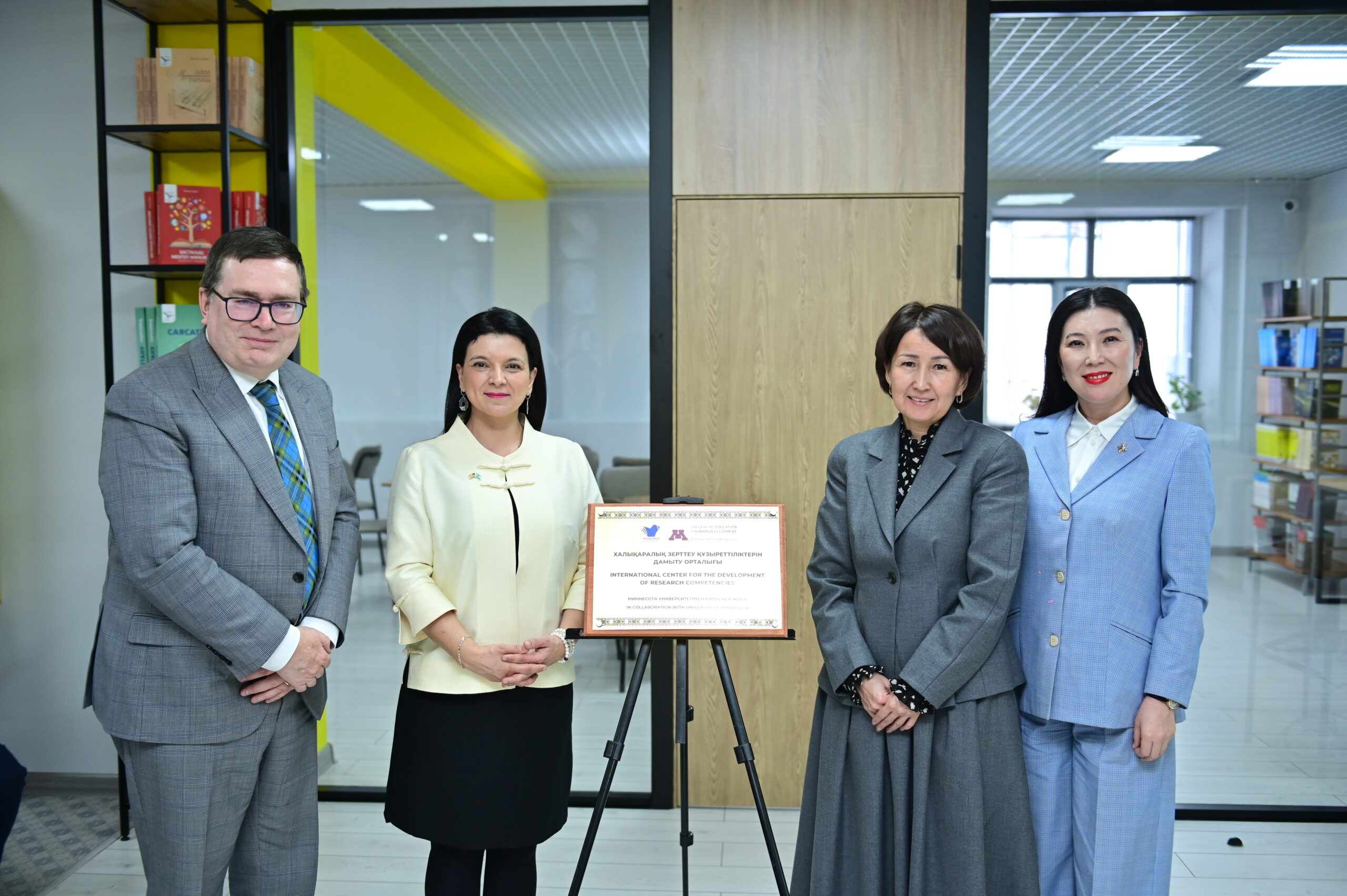
From L to R: Richard Williams, Director of the Department of International Initiatives at the University of Minnesota Marina Aleisho, Vice Minister of Science and Higher Education of Kazakhstan Gulzat Kobenova and Chair of the Board — Rector of Zhubanov Aktobe Regional University Laura Karabassova. Photo credit: Zhubanov Aktobe Regional University
“We chose Kazakhstan because of the alignment between national ambition and our founding purpose to make modern, industry-relevant education accessible for societal benefit. We chose Aktobe and Zhubanov University because of the region’s strategic economic role and the exceptional quality of local leadership,” he said.
He highlighted Aktobe’s vital role as Kazakhstan’s industrial and energy region, where demand for engineers, computer scientists, and energy specialists is high.
“That creates a direct pathway from education to employment and regional economic development,” he added.
Williams also commended the university’s leadership, saying their clear vision, openness to deep integration and long-term commitment to international standards were critical to making the partnership possible.
Delivering U.K. standards in Kazakhstan
“At Heriot-Watt, we operate as one global, fully integrated university. That means one degree, one set of academic standards, one quality framework, and one shared culture regardless of whether a student studies in the U.K., at our campuses in Dubai and Malaysia, or in Kazakhstan. This ‘One Heriot-Watt’ model is foundational to our reputation and is absolutely central to the Aktobe partnership,” Williams explained.
In practical terms, programs in Aktobe mirror those in the United Kingdom, following the same curricula, learning outcomes and assessment standards, with teaching fully integrated into Heriot-Watt’s global academic teams.
Heriot-Watt, supported by external examiners, designs and moderates all summative assessments. Students are also embedded in the university’s global learning environment, with access to its digital platforms, research materials and academic communities. They can also move between Heriot-Watt campuses worldwide.
“This approach aligns directly with Strategy 2035’s commitment to exceptional student experience, employability, global connectivity and real-world learning, no matter where students are located.
Employability is built in from the outset through industry-aligned curricula and projects, ensuring graduates are not only academically strong but immediately relevant to the labour market,” he said.
Rolling out the partnership in phases
He highlighted three ways the Aktobe campus is expected to contribute: human capital development, innovation and research capacity and international visibility.
“Our collaboration is deliberately structured in phases, beginning with undergraduate delivery and progressing into research and postgraduate development,” said Williams.
In the initial phase, he said the partnership’s priorities include launching three fully integrated undergraduate programs in computer science, electrical and electronic engineering, and energy-related engineering. This goes alongside the rollout of Heriot-Watt’s full academic infrastructure, from learning platforms and assessment frameworks to staff development systems. He added that the first delivery cycle is expected to produce thousands of globally trained graduates.
“As the partnership matures, we fully expect to see joint research centers and thematic research clusters, collaborative PhD programming, and the potential for industry-embedded research platforms aligned to national priorities,” he explained.
Kazakhstan’s higher education development
Williams noted Kazakhstan’s “remarkable progress” in bringing its higher education system in line with global standards, pointing to progress in governance reforms, international accreditation, English-medium instruction and greater institutional autonomy. He also emphasized a clear ambition to attract international students and integrate research into teaching more closely.
Williams said the next major opportunities lie in launching structured student and community enterprise initiatives, including enterprise centers that foster entrepreneurial thinking, new business creation and innovation within existing regional industries.
He also pointed to the need to scale research intensity, particularly through international, industry-linked doctoral programs, while embedding challenge-based and applied learning more systematically across disciplines and strengthening ties between universities, employers and national innovation systems.
“What is particularly encouraging is that institutions like Zhubanov University are not waiting for reform to be complete – they are actively shaping it. Their leadership’s willingness to embed international quality systems, external examining and global academic culture speaks to a genuine commitment to transformation,” he said.
Partnership between Kazakhstan and the U.K.
Williams noted substantial opportunities for cooperation between Kazakhstan and the U.K.
“Kazakhstan sits at the heart of some of the most important global transitions now underway – critical minerals, energy security, decarbonisation and clean technology,” he said.
“In my view, the single biggest opportunity is for the nation to play a leading part in demonstrating recovery of minerals using sustainable mineral processing techniques and adoption of integrated energy systems, including long-term energy storage systems such as liquid air storage. There is an opportunity to develop research and educational programmes in this domain both for primary processing and secondary [recycling] processes,” said Williams, who has a background in mineral engineering, energy storage and environmental technologies.
He added that there is strong demand for the deployment and testing of energy transition technologies, including integrated energy systems, storage solutions and smart grids, alongside carbon capture, utilization and storage, particularly for emissions-intensive industrial sectors. He also highlighted opportunities in environmental remediation and sustainable resource management, which bring together engineering and environmental science.
“Heriot-Watt’s research culture is deeply focused on mission-driven, real-world impact, and Kazakhstan offers both the scale and the ambition to turn joint research into globally significant outcomes,” Williams said.
The emphasis on education echoes recent comments by the U.K. Ambassador to Kazakhstan, who spoke with The Astana Times’ Aida Haidar and said that higher education remains a key pillar of bilateral cooperation.
