
ASTANA — Kazakhstan’s delegation concluded its participation in the 43rd session of the United Nations Educational, Scientific and Cultural Organization (UNESCO) General Conference on Oct. 30 – Nov. 13 in Samarkand, advancing initiatives on AI ethics, cultural diplomacy and national commissions.
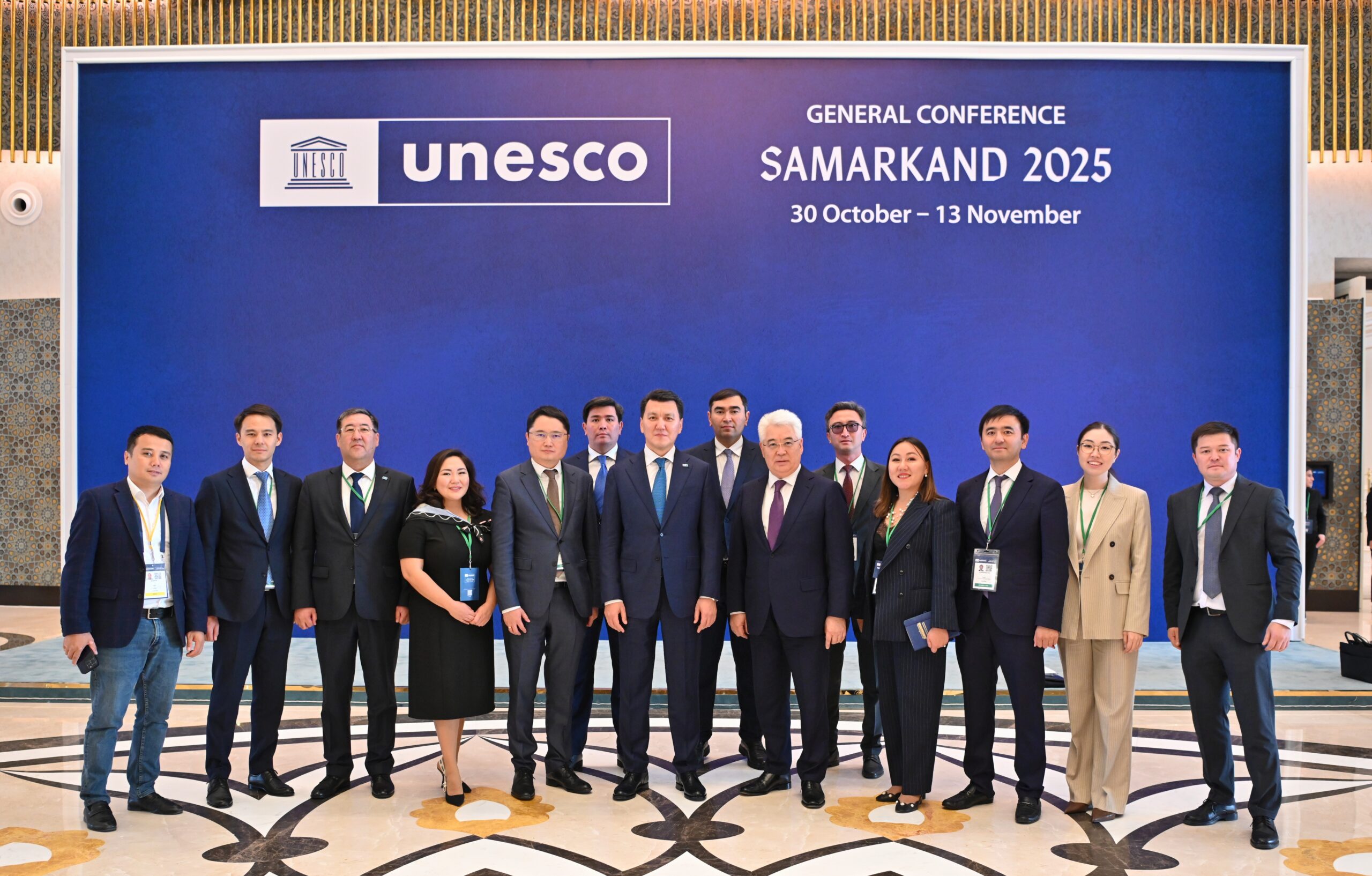
Kazakhstan’s delegation concluded its work at UNESCO’s 43rd General Conference, advancing AI, culture and National Commissions initiatives. Photo credit: Permanent Delegation of Kazakhstan to UNESCO
The session gathered more than 4,500 representatives from nearly 180 member states, making it one of UNESCO’s largest meetings. Over two weeks, delegates set cooperation priorities in education, science, culture, communication and information.
Speaking to The Astana Times, Kazakh officials said these priorities guided the country’s engagement throughout the first Central Asian-hosted session.
“Hosting this milestone session in Samarkand stands as a strong recognition of the increasing role of Central Asian countries in promoting the values of peace, dialogue, and sustainable development championed by UNESCO,” Ambassador and Permanent Delegate of Kazakhstan to UNESCO Askar Abdrakhmanov told The Astana Times.
“Kazakhstan’s active participation in the 43rd UNESCO General Conference, the first in history to be held in Central Asia, highlights both the country’s and the region’s growing importance within the organization,” he added.
Kazakhstan’s delegation focuses on AI ethics and national commissions
Kazakhstan’s delegation was led by State Counsellor and Chairperson of the National Commission of Kazakhstan to UNESCO and the Islamic World Educational, Scientific and Cultural Organization (ICESCO) Erlan Karin. It included representatives of the National Commission, the Permanent Delegation to UNESCO, and the Ministry of Science and Higher Education.
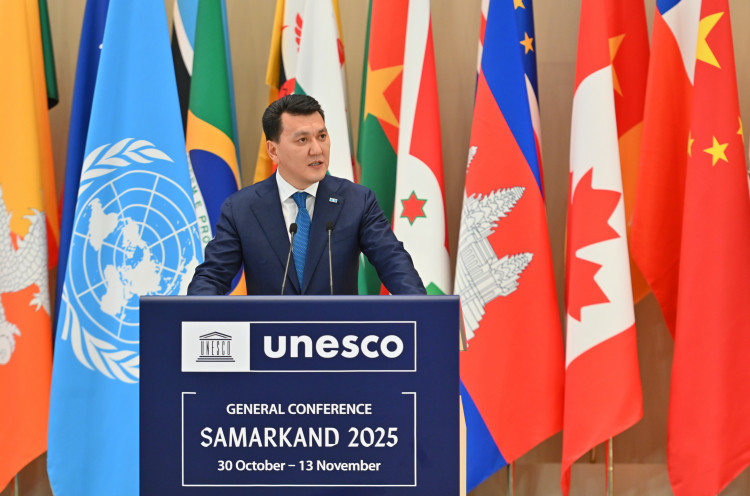
State Counsellor Erlan Karin leads Kazakhstan’s UNESCO-ICESCO delegation. Photo credit: Permanent Delegation of Kazakhstan to UNESCO
A key achievement was the adoption of Kazakhstan’s resolution to strengthen cooperation among national commissions for UNESCO, co-sponsored by 70 countries. The resolution emphasizes the role of national commissions in translating UNESCO’s mandates into national policies and international partnerships.
Karin linked this work to Kazakhstan’s broader digital transformation agenda. He highlighted responsible AI governance and Kazakhstan’s national study conducted using UNESCO’s Readiness Assessment Methodology (RAM), calling it an essential step toward aligning domestic legislation and institutional capacities with global ethical standards.
Cultural diplomacy: Turkic heritage and nomadic heritage
Cultural diplomacy was another focus of Kazakhstan’s engagement with UNESCO. The General Conference approved Kazakhstan-coauthored resolutions establishing World Turkic Language Family Day on Dec. 15, marking the deciphering of the Orkhon inscriptions, the earliest known Turkic written record, and the International Day of Nomadic Heritage on Sept. 22, dedicated to the harmony between people and nature in nomadic civilizations.
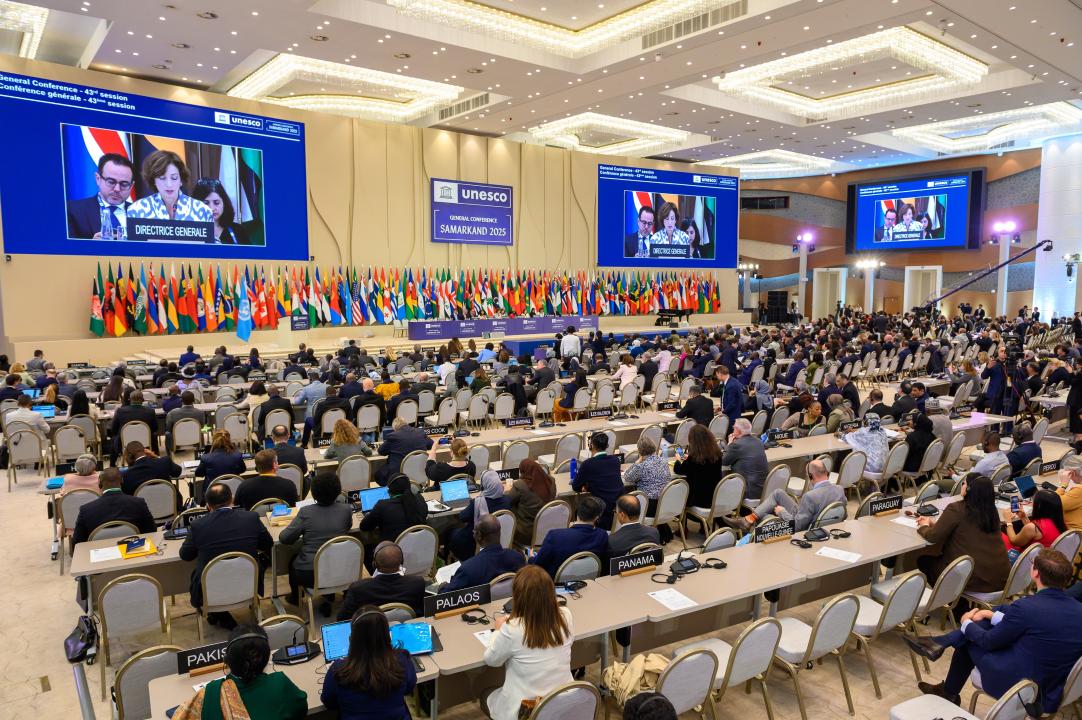
UNESCO General Conference held Oct. 30-Nov. 13 in Samarkand. Photo credit: Kazakh Ministry of Foreign Affairs
At a side event, the Turkic Culture and Heritage Foundation presented the Catalogue of Turkic Heritage and a five-volume Anthology of Turkic Folklore.
The conference also added the centennials of opera singer Yermek Serkebayev and film director Abdolla Karsakbayev to UNESCO’s list of anniversaries for 2026-2027, recognizing their contributions to global cultural and artistic heritage.
Expanding role in UNESCO bodies
Kazakhstan also solidified its institutional presence. The nation was elected vice president of the General Conference, re-elected to the Intergovernmental Hydrological Program Council for 2025-2029, and elected to the Bureau of the 25th General Assembly of States Parties to the World Heritage Convention. The country continues to serve on the World Heritage Committee for 2023-2027.
“For Kazakhstan, this moment represents an opportunity to further strengthen its position as a bridge between East and West and as a driving force for regional cooperation in education, science, culture, and environmental protection,” said Abdrakhmanov.
“Kazakhstan will continue to advance cooperation with regional and international partners under UNESCO’s umbrella, from the protection of transboundary water resources and shared Silk Road heritage to the ethical use of AI and youth empowerment across Central Asia,” he added.
Implementing resolutions and measuring progress
Abdrakhmanov said Kazakhstan will now focus on implementing the resolutions it initiated, including those aimed at reinforcing cooperation among national commissions and promoting newly proclaimed international days.
“These actions will serve as practical instruments to strengthen national and regional engagement with UNESCO. Progress will be assessed through measurable outcomes — expanded partnerships, new cultural and scientific projects, and active involvement in UNESCO’s intergovernmental bodies,” he said.
Abdrakhmanov noted that the national AI ethics RAM study will evaluate Kazakhstan’s legal frameworks, institutional capacity and human resources, helping shape future policy on digital transformation.
According to the delegation’s official comment to The Astana Times, Kazakhstan’s continued work in the World Heritage Committee and the Hydrological Program Council, as well as cooperation with UNESCO’s new leadership, will help ensure continuity and results-driven collaboration.
Bilateral meetings in Samarkand
Karin also held several bilateral meetings on the sidelines of the conference.
In a meeting with Saida Mirziyoyeva, head of Uzbekistan’s Presidential Administration, they discussed expanding cultural and humanitarian cooperation, including within UNESCO, and also agreed to continue coordination on regional projects, including joint nominations to the World Heritage and Intangible Heritage lists.
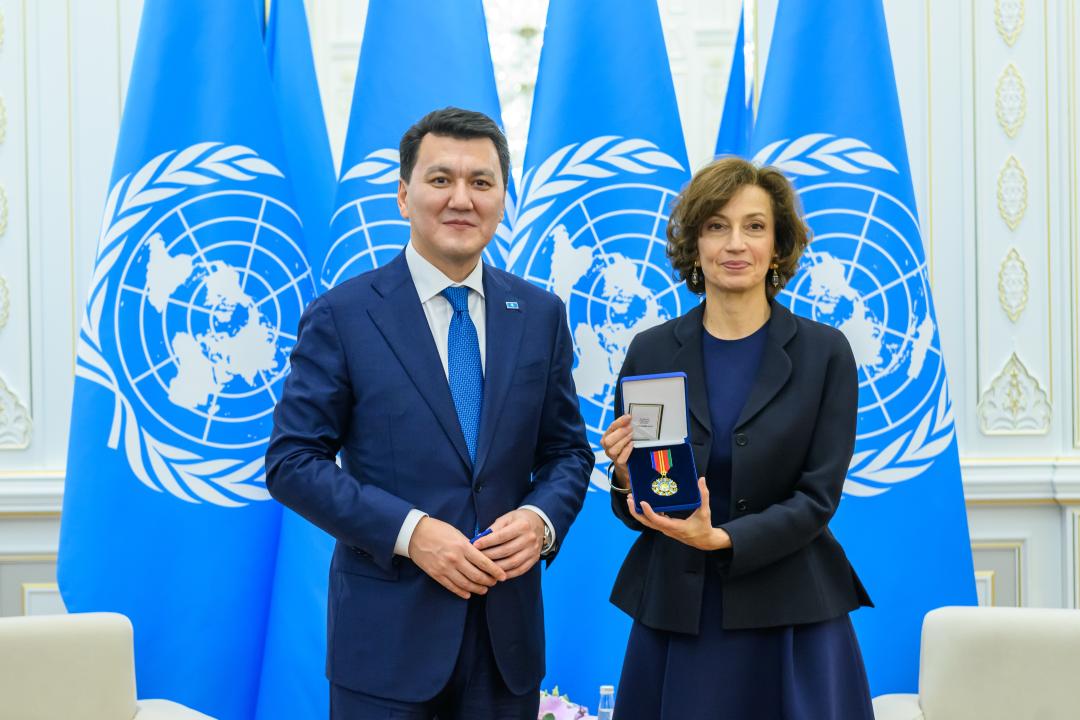
Karin presents outgoing UNESCO Director-General Audrey Azoulay with the Order of Dostyk, second degree, on behalf of President Kassym-Jomart Tokayev. Photo credit: Kazakh Ministry of Foreign Affairs
In a meeting with outgoing UNESCO Director-General Audrey Azoulay, Karin noted that several Kazakh nominations, including the Turan Deserts natural site, the traditional wedding rite betashar, and the genealogical tradition Khandar-Shezhire, had recently been added to UNESCO’s heritage lists.
He also said that the anniversaries of writer Berdibek Sokpakbaev and composer Nurgisa Tlendiyev were included in UNESCO’s commemorative calendar for 2024-2025, and highlighted that the Central Asian Regional Glaciological Center in Almaty would continue its work for the next eight-year cycle with UNESCO’s support.
