
From Nevada’s Black Rock Desert to rural Somerset, festivals have long shown how a temporary event can place an overlooked destination on the global map. A recent trip to Katon-Karagai convinced me Kazakhstan is beginning to experience the same effect.
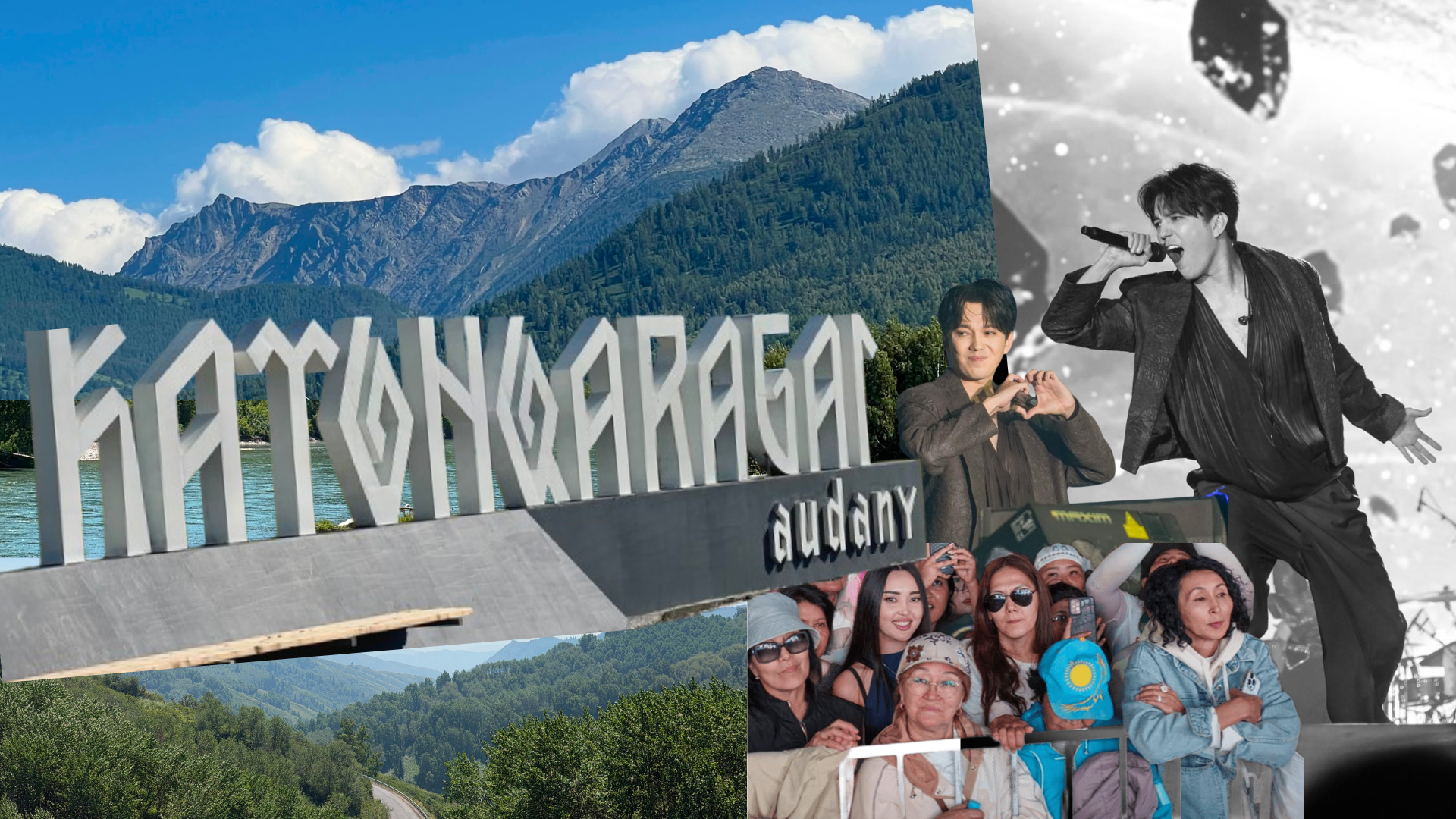
The Altai Mountains came alive with Dimash Qudaibergen’s performance during the Altai – Golden Cradle of the Turkic World festival on July 10-11. Photo credit: Nagima Abuova, The East Kazakhstan Region’s communication service / Collage is created by The Astana Times
Burning Man brings tens of thousands of people into the Nevada desert. Glastonbury transforms farmland in southwest England into a global cultural landmark, while Coachella has made the name of a California valley recognizable far beyond the United States. People do not travel to these places solely because they are easily accessible or well-equipped. They go because something is happening there. That is the power of event tourism. It gives people a reason to stop postponing a journey.
I began thinking about this after attending the Altai – Golden Cradle of the Turkic World festival in Katon-Karagai, East Kazakhstan Region. The festival brought an estimated 50,000 people to a remote part of the country for traditional sports, regional culture and a concert headlined by Dimash Qudaibergen.
More than a festival ground
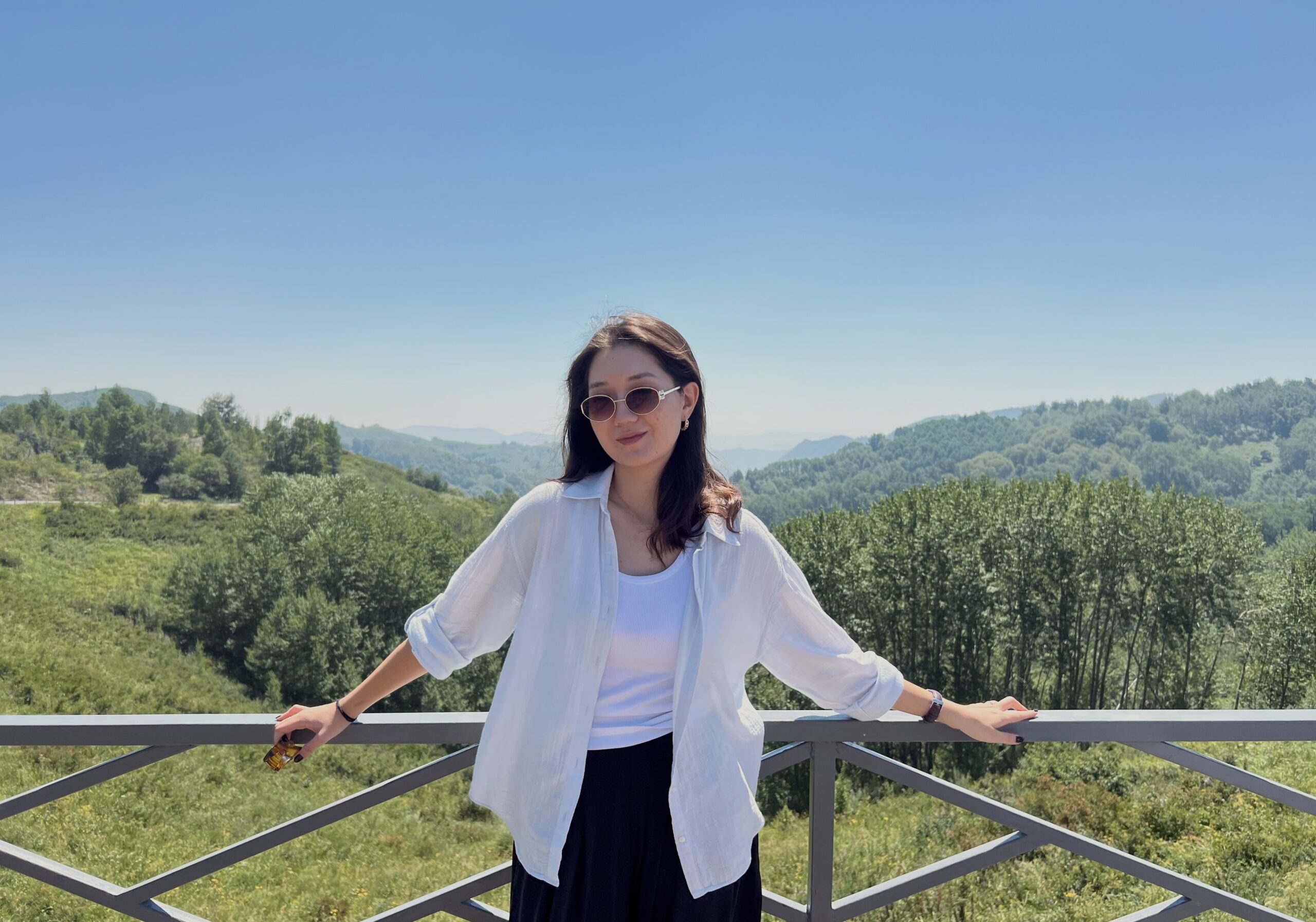
The Astana Times journalist Nagima Abuova in the East Kazakhstan Region. Photo credit: personal archives
My colleague and I flew from Astana to Oskemen and then spent approximately six hours traveling by car. When we received the address of our accommodation, we expected something closer to a conventional guesthouse. Instead, we arrived at a local family home, where we shared it with about 15 journalists from regional media.
It took us a moment to adjust. This was not a hotel, a modern apartment or a purpose-built hostel. It was someone’s actual home. Yet it became one of the most memorable parts of the trip. We shared rooms and meals, discussed the next day’s assignments late into the evening and gradually became a temporary family, although many of us had met only hours earlier.
Other visitors stayed in tents at a designated camping site or near a small spring close to the festival grounds. The conditions were simple, but they were not neglected. The organizers provided essential facilities, including Starlink internet access, which was particularly important for journalists sending stories, photographs and videos from a remote location.
There were inconveniences, of course. This was a gathering of tens of thousands in a village, not an international conference in a capital city. Still, the experience did not feel like a poorly prepared destination. It felt like a destination learning how to receive a crowd of an entirely new scale.
I looked at the experience not only as a visitor. As a tourism and hospitality management graduate now pursuing a master’s degree in development and international cooperation, I naturally found myself looking beyond the stage. Where did people sleep? Who transported them? Where did they eat? Most importantly, how much of the festival’s activity benefited the region and its residents?
Giving people a reason to go
For years, almost every discussion about tourism development in Kazakhstan seemed to receive the same response: “First build decent toilets along the roads, and then we can talk about tourism.” It was a fair criticism. Spectacular landscapes cannot compensate for the absence of clean rest stops, safe roads, clear information and reliable accommodation.
But after traveling through East Kazakhstan, I would no longer say the country is standing still. There is still a great deal to improve, and progress is uneven. Yet it is visible. Roads are being repaired, guesthouses are appearing, basic facilities are becoming more common and remote areas are gaining better connectivity. Katon-Karagai is also preparing for a future airport, which could substantially reduce the effort required to reach the district.
We may not yet be where we want to be, but we are no longer where we started.
The more difficult question is what will create enough demand to sustain further investment. A guesthouse cannot survive without guests. A regular transfer service cannot operate without passengers. Cafes, shops and other small businesses expand when customers arrive consistently rather than once by accident.
This is where events can provide the necessary impulse.
That does not mean destinations should wait for crowds before providing basic services. Infrastructure and demand need to grow together. But in a region already rich in attractions, including Mount Muztau, Lake Ravnovesiye, Rakhmanov Springs, the Bukhtarma Reservoir, Lake Zaysan and the Sibinskiye Lakes, an event can turn a long-discussed trip into an actual journey.
During the festival, residents rented out rooms and houses. Drivers transported visitors from Oskemen. Local cafes, shops, food stalls and fuel stations received more customers. Craftspeople presented their work to people from other regions and countries. The economic effect did not begin at the festival entrance; it extended across the entire route.
Without the festival, I do not know when I would have traveled to Katon-Karagai. I had heard about the region and seen photographs, but Kazakhstan is vast. A destination can remain on a travel list for years when reaching it requires a flight, a long drive and careful planning.
The festival gave me a specific reason to go. Once there, I realized how little of East Kazakhstan I could see during a work trip. I left wanting to return for the lakes, mountains and places I had only heard about from residents and fellow travelers.
Perhaps that is the clearest measure of successful event tourism: A performer, festival or football match can win the first visit, but the destination must win the second.
Making domestic travel feel possible
This matters particularly for domestic tourism. Many people I know have traveled widely across Europe but have never visited some of Kazakhstan’s most scenic regions.
I am sure that it does not necessarily reflect a lack of interest in their own country. Sometimes, an international trip is simply easier to organize. Routes, schedules, hotel reviews and prices can be found on familiar platforms within minutes.
Travel abroad can sometimes be easier to organize. Routes, hotel reviews, schedules and prices are available in one place. In Kazakhstan, reaching a remote destination may require several phone calls, local contacts and information gathered from different sources. Events remove some of that uncertainty. They create a common date, a visible flow of travelers and a sense that the journey is possible because thousands of other people are making it too.
The effect is now visible beyond regional festivals. Kazakhstan’s expanding calendar of international concerts and sporting events is bringing visitors to Astana and Almaty, filling hotels, restaurants and aircraft. Meanwhile, events outside the major cities are introducing audiences to places that rarely receive national attention.
There is a familiar Kazakh joke about a father who leaves home repairs unfinished for years, but suddenly completes them all when his daughter announces she is getting married.
Cities and countries sometimes behave in much the same way. Before a major event, roads are repaired, signs appear, public spaces are cleaned, and transport systems are reconsidered. The comparison is humorous because it is recognizable, but it also carries a serious lesson: Events create deadlines, and deadlines force coordination.
The challenge is making sure those improvements remain after the guests leave. A repaired road continues serving residents. Better internet helps local businesses. Experience gained by accommodating a major festival can improve future hospitality services. A family that rents out a room for one weekend may eventually turn it into a guesthouse if visitors continue arriving.
Of course, events are no substitute for sound tourism policy, reliable infrastructure or environmental protection, but they can be a powerful catalyst for all three.
What should remain after the crowd leaves
More visitors also create pressure on roads, water supplies, waste systems and natural areas. Growth must therefore be accompanied by sanitation, environmental safeguards and a stronger culture of responsible travel. Visitors should not leave trash, disturb wildlife or treat a village as temporary scenery. They are entering someone’s home, just as my colleagues and I entered the home of the family that hosted us. That sense of respect should grow alongside demand.
Katon-Karagai did not become beautiful because 50,000 people arrived. It was already beautiful. The festival simply gave thousands of people a reason to experience it for themselves.
That is what event tourism can offer Kazakhstan. It can create the initial demand that supports new services, encourages investment and turns distant names on a map into places connected with personal memories. The crowd may come for a headliner, but the real success begins when people leave wanting to return for the region itself.
