
KATON-KARAGAI — Thundering hooves, improvised verse and Dimash Qudaibergen’s voice carried across the Altai mountains as the Altai – Golden Cradle of the Turkic World festival drew an estimated 50,000 people to East Kazakhstan’s Katon-Karagai on July 10-11.
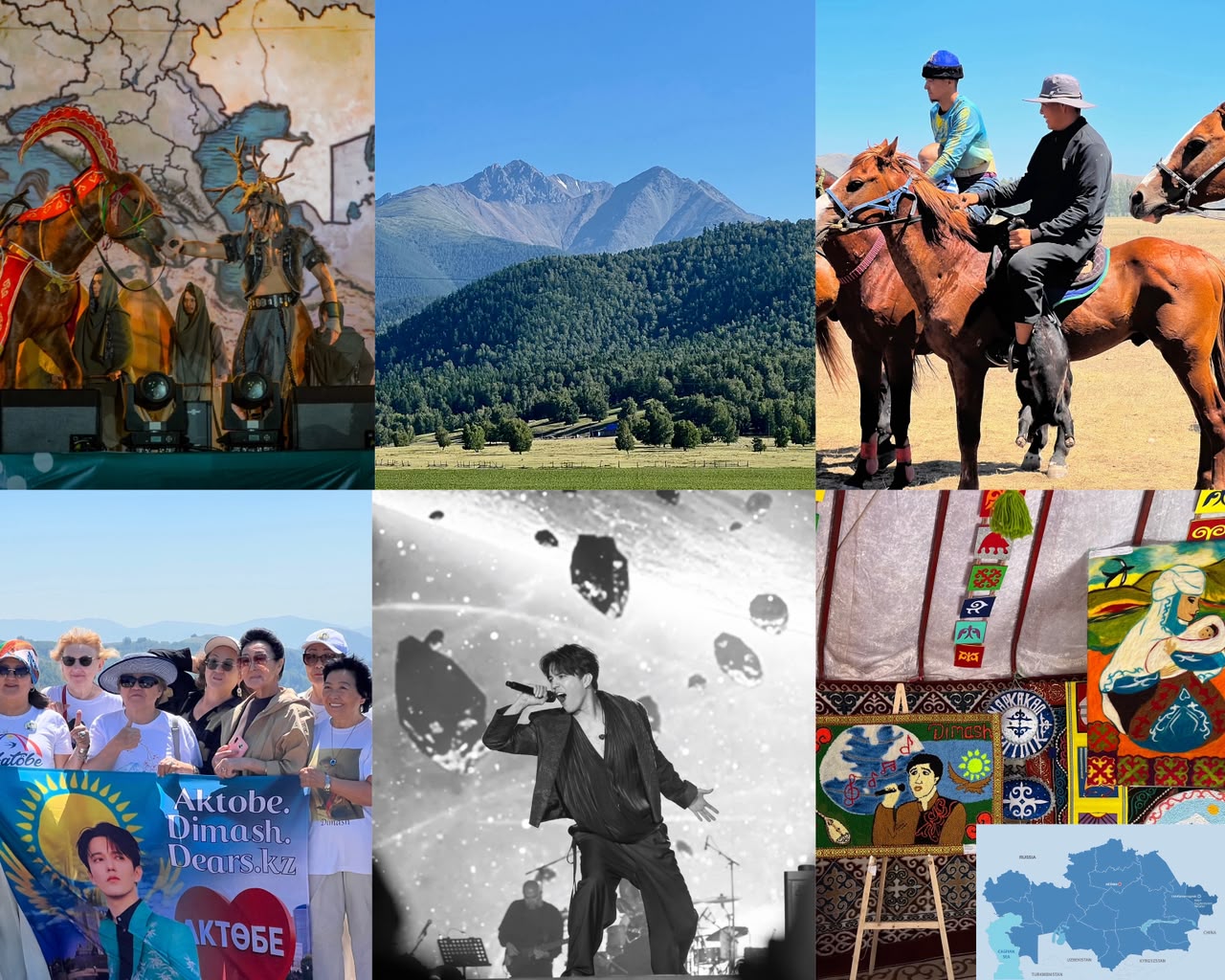
Click to see the map in full size. The map is designed by The Astana Times. Photo credit: The East Kazakhstan Region’s communication service, The Astana Times / Nagima Abuova
Across two days, the festival brought together poetry, national sports, crafts, regional music and international visitors in one of Kazakhstan’s most remote mountain districts.
Poetry and horsepower open the festival
The program began on July 10 at Berel’s Valley of the Kings, known for burial mounds that have revealed the lives and craftsmanship of ancient nomadic communities in the Altai.
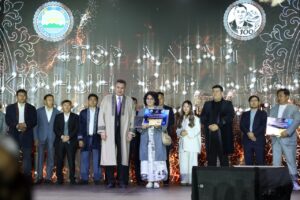
Poets gather at Berel’s Valley of the Kings to mark the 100th anniversary of Kazakh poet Aktan Nurbayev. Photo credit: The East Kazakhstan Region’s communication service
The opening event, Tör Altai Aqtanyn Zhyrlaydy (Sacred Altai Sings of Aktan), marked the 100th anniversary of Kazakh poet Aktan Nurbayev. Sixteen poets from across Kazakhstan presented works dedicated to Nurbayev, the Altai and Kazakh literary traditions.
“Today, we have gathered to mark at the national level the 100th anniversary of the outstanding poet Aktan Nurbayev, who was born in these lands. For us, this anniversary is a celebration of Kazakh poetry, the pride of Altai and a festival of the national spirit,” said Nurymbet Saktaganov, the East Kazakhstan Region akim (governor).
The literary program continued on July 11 with the national aitys “Aqtanymyn Altaidyn” (I Am Aktan of Altai), where improvisational poets exchanged dombra-accompanied verses on history, identity and public life.
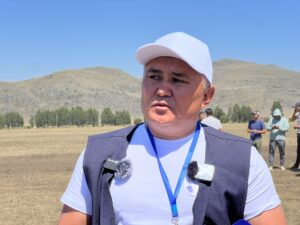
Talap Sadybayev, director of the children’s and youth national sports school. Photo credit: Aida Dosbergenova / The Astana Times
On the racing grounds, kokpar and several forms of baige brought together riders and teams from across East Kazakhstan. Talap Sadybayev, director of the children’s and youth national sports school, served as chief judge for the equestrian competitions held as part of the 24th East Kazakhstan Regional games and the festival.
“We held kokpar, zhamby atu, tenge ilu, audaryspak and horse races. The athletes’ preparation and the level of kokpar and equestrian sports are gradually improving from year to year. Representatives arrived from every district, and the competitions, especially kokpar, were intense,” said Sadybayev.
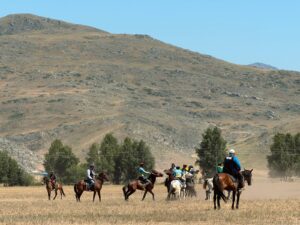
Riders compete in kokpar during the Altai – Golden Cradle of the Turkic World festival. Photo credit: Nagima Abuova / The Astana Times
The alaman baige, a long-distance race, became one of the day’s main contests. Eleven-year-old Manap Abumansur of the Abai Region won on a horse named Tolagai and received the main prize, a Hyundai Tucson, which, according to Sadybayev, had been provided for the competition by Katon-Karagai residents.
Heritage inside the yurts
Beyond the stages and racing grounds, rows of yurts represented districts from across East Kazakhstan. They offered regional dishes and displayed carpets, embroidery, clothing, wooden household items and museum exhibits, allowing visitors to speak directly with artisans and museum employees.
In one yurt, Kulzhan Kaidarova, head of the local history museum branch in Ulken Naryn village, presented an alasha, a flat-woven wool rug made by village resident Khaineke Nurkanova.
“The wool is first teased, then washed, dyed and prepared before it is woven. We brought this piece to demonstrate the tradition and revive for the younger generation something that had remained in the past,” Kaidarova told The Astana Times.
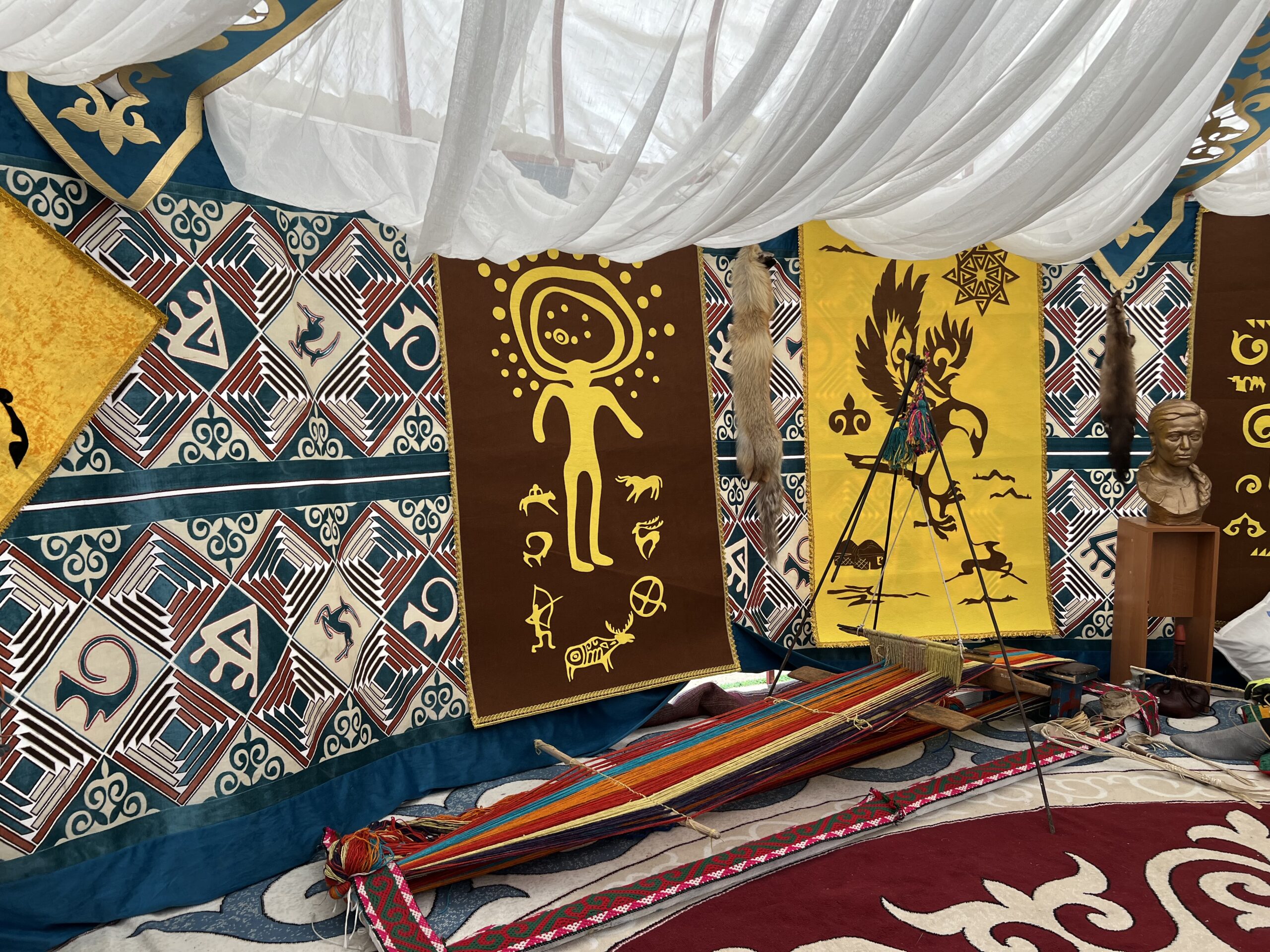
Traditional alasha rug inside a yurt at the festival. Photo credit: Nagima Abuova / The Astana Times
The exhibit, initiated by the Ulken Naryn District Museum, showed the work behind the finished rug, from preparing raw wool to creating its patterns. For international visitors, this and many other yurts offered a close view of the everyday traditions behind the festival’s large-scale performances.
Visitors cross continents for Katon-Karagai
Among them was Miana Arys, who traveled from Jakarta, Indonesia, to attend the festival and see Qudaibergen perform.

Nani Nellor, chair of an Indonesian fan club for Dimash Qudaibergen. Photo credit: Nagima Abuova / The Astana Times
“We decided to come here especially for Altai Fest because of Dimash, of course. It was a long flight, more than 15 hours by plane. I wish Dimash could come to Indonesia for a festival or a solo concert,” she told The Astana Times.
Nani Nellor, chair of an Indonesian fan club for Dimash Qudaibergen, was visiting Kazakhstan for the third time but Katon-Karagai for the first.
“I came to the Altai Festival because of Dimash, but I also like the culture. Kazakh culture is really beautiful, and I am learning to play the dombra because I love it. This is my third time in Kazakhstan, so Kazakhstan is like my second home,” Nellor said.
Anya Pechine, a digital nomad from Paris, also came to East Kazakhstan for the first time to see her favorite musician. International fan groups carried flags, banners and gifts, adding a global dimension to the mountain festival.
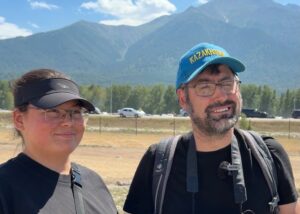
Balzhan and Axel Monse. Photo credit: Aida Dosbergenova / The Astana Times
The event also attracted media creators documenting the region. Balzhan and Axel Monse, founders of InfoShymkent and the German-language platform Entdecke Kasachstan, attended the festival during a month-long trip through East Kazakhstan. Axel Monse said his first impression of Kazakhstan had been shaped by some stereotypes.
“I thought it was just steppe, and that was it. Later, we recognized that Kazakhstan still faces many stereotypes, including the stereotype I had before I came. We wanted to bring more information about Kazakhstan to the world and show its beauty,” he said.
“Kazakhstan has so much beautiful nature and so many different landscapes, not only the steppe described by common stereotypes,” Balzhan Monse added.
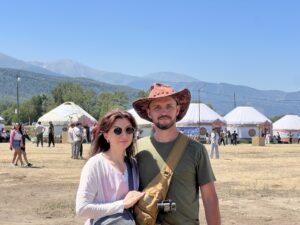
Travel blogger Anton Morilov (on the right). Photo credit: Nagima Abuova / The Astana Times
Travel blogger Anton Morilov from Altai told The Astana Times that he came to film the event for his online audience after learning about it on social media.
“We heard that it took place last year and decided to visit this time. We learned about it around a month and a half ago, when posts began appearing on social media. (…) People should also pay attention to the mountains here, because they are stunning and impossible to overlook,” said Morilov.
A winged horse opens the gala
As daylight faded behind the mountains, attention shifted to the main stage. The gala opened with a theatrical production dedicated to Pyrak, a mythical white-winged horse in Turkic tradition. Through choreography, music and visual effects, the performance traced the horse’s role in nomadic life and connected the day’s races with its symbolic place in history and folklore.
Addressing the audience, Saktaganov described the Altai as a place where historical and spiritual heritage continues to connect communities across modern borders.
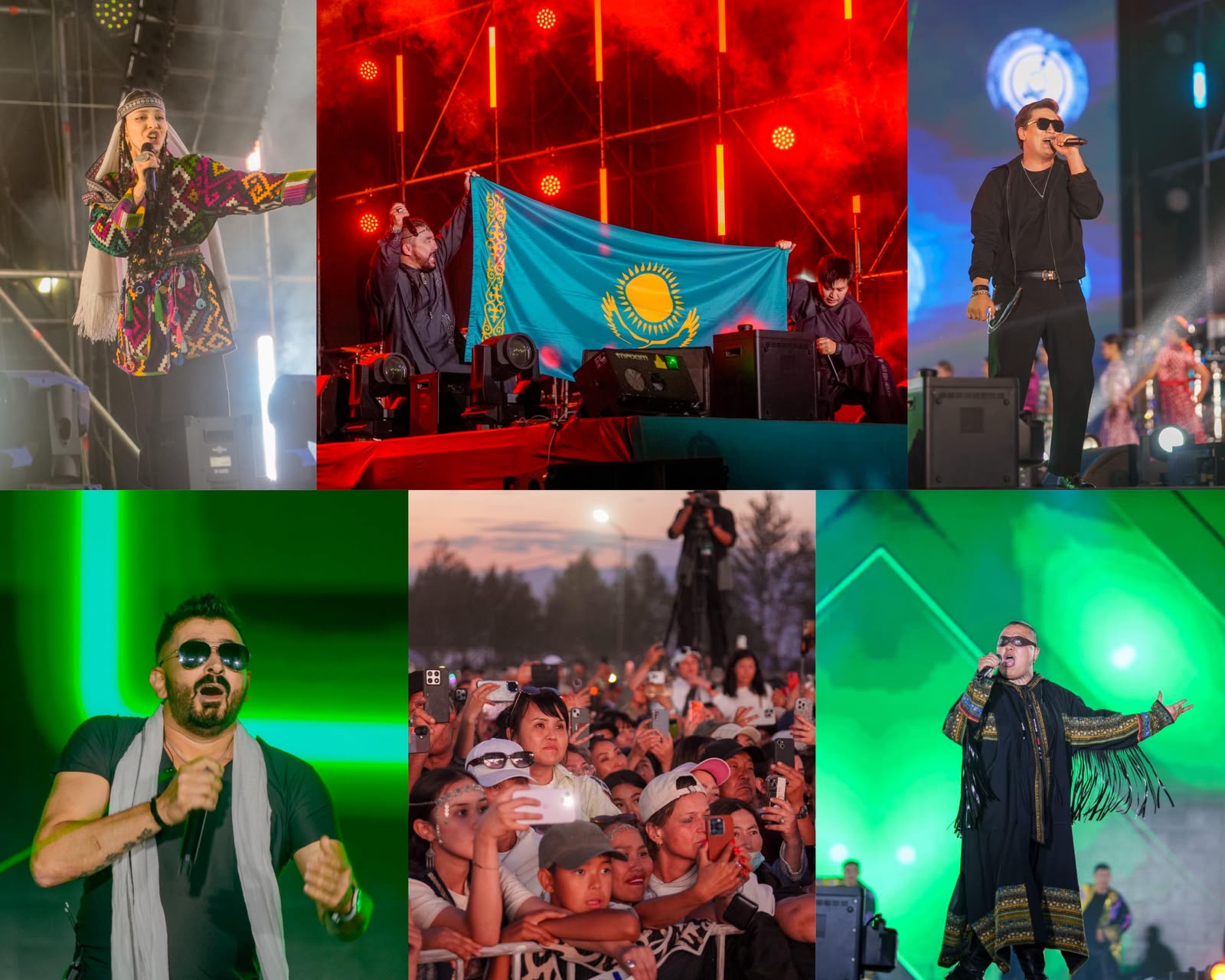
Artists from 10 countries and regions perform at the festival’s international gala concert. Photo credit: The East Kazakhstan Region’s communication service. The collage is designed by The Astana Times
“This sacred land carries the living echoes of millennia, bridging the past and the present. For us, Altai is not only a priceless legacy of the past, but also a spiritual center that continues to bring together the peoples of the Turkic world around shared values and aspirations,” he said.
The concert then moved from ancient symbolism to contemporary interpretations of regional music, bringing together Kazakhstan’s Sarmat and Alatau Serileri, Bashkortostan’s Khazina, Mongolian vocalist Subedey Samdyn, Tuvan throat singer Aizana, Azerbaijani singer Efendi, Hungary’s Nox, Uzbekistan’s Sevarakhon Tulanova, JAX of the Kyrgyz Republic, Türkiye’s Murat Yaprak and Karakalpakstan’s Alisher Bayniyazov. Alatau Serileri performed “Türkiler Urany” (Anthem of the Turks) before the final act.

Dimash Qudaibergen performs at the Altai – Golden Cradle of the Turkic World festival. Photo credit: Nagima Abuova / The Astana Times
Dimash beneath the Altai Sky
Then the lights shifted, phones rose above the crowd, and Qudaibergen appeared on stage to prolonged applause. Flags and banners held by international fan groups could be seen across the grounds as thousands recorded the opening moments. For two hours, Qudaibergen performed songs from his Kazakh and international repertoire before an estimated 50,000 people, according to the regional communications service, as spectators sang along, called his name between compositions and remained until the end of the concert.
