
ASTANA – Kazakh Deputy Foreign Minister Arman Issetov participated in a high-level ministerial meeting on June 23 in Brussels, marking the launch of the Connectivity Agenda Platform, an initiative aimed at facilitating the coordination of investments and policy action across Central Asia, the South Caucasus, the Black Sea region and the European Union.
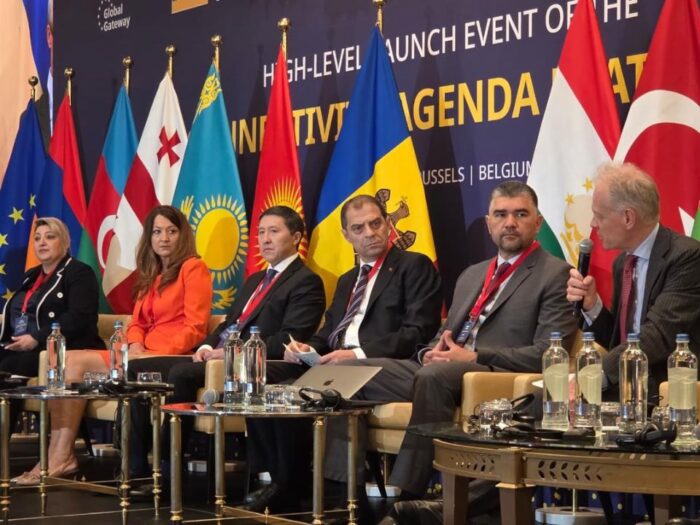
Photo credit: gov.kz
The platform will span transport, energy, digital connectivity and trade sectors. The launch of the platform comes as the European Commission concluded agreements with international financial institutions that could mobilize up to two billion euros (US$2.3 billion) for strategic connectivity investments.
Issetov pointed to Kazakhstan’s role as a vital link between Europe and Asia, while highlighting ongoing projects to develop transport, energy and digital infrastructure, reported the Foreign Ministry’s press service.
The Kazakh official welcomed the launch of the platform as a practical outcome of agreements reached during the ministerial meeting on strengthening connectivity in Luxembourg in October.
He said the new platform is intended to complement existing cooperation mechanisms and will operate in coordination with the Coordination Platform for the Development of the Trans-Caspian International Transport Route between Central Asia and the EU.
The high-level meeting was also attended by Commissioner for Enlargement Marta Kos, Commissioner for International Partnerships Jozef Síkela, and Commissioner for Sustainable Transport Apostolos Tzitzikostas, alongside ministers of transport and senior representatives from EU member states, Armenia, Kazakhstan, the Kyrgyz Republic, the Republic of Moldova, Tajikistan, Turkmenistan, Türkiye, Ukraine and Uzbekistan.
“At a time of growing conflict, it is great to see so many countries come together around a shared project. We need reliable trade routes, and the Trans-Caspian Transport Corridor has emerged as exactly that,” said Marta Kos, as quoted by the European Commission press office.
“Trade along the route could increase fivefold over the next 15 years. To make this happen, we need to bring our efforts together. Many projects and initiatives are already under way. The platform will connect them, fill the remaining infrastructure gaps and link the route from end to end,” she added.
This is not only about transport, said Jozef Síkela, who visited Kazakhstan in March 2025.
“It is about competitiveness, energy security and giving citizens and companies the confidence that trade and mobility can continue even in times of geopolitical pressure,” said Síkela.
