
ASTANA – Ask Americans what they know about Kazakhstan and many may struggle to answer. The Smithsonian hopes to change that, not through politics or economics, but through culture.
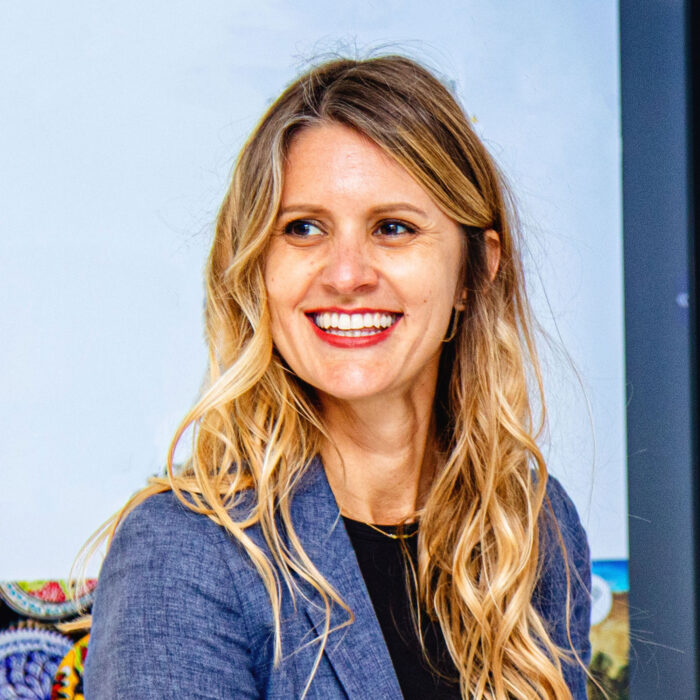
Halle Butvin. Photo credit: personal archive
In an interview with The Astana Times, Halle Butvin, director of strategic initiatives and external affairs at the Smithsonian Center for Folklife and Cultural Heritage, discussed growing engagement with Kazakhstan.
“The Smithsonian Institution is the world’s largest museum, research, and education complex. Our center is one part of it, and we are the part that handles intangible cultural heritage – music, dance, food, storytelling,” she said.
In May 2025, the center launched the Kazakhstan Cultural Heritage Fund with the support from Chevron aimed at facilitating the study, documentation, and presentation of the nation’s cultural heritage. Through the fund, they wanted to create space for additional donors to support the initiative and for other parts of the Smithsonian to become involved.
The first initiative supported through the fund, the Kazakhstan Artisan Initiative, expanded the center’s ongoing collaboration with the Union of Artisans of Kazakhstan, one of its longest-standing partners in the country.
Partnership gains momentum
“We started out small, with a lot of exchanges taking place during the pandemic, and then started to do some more in-person engagements. Recently, we were really excited that this kind of long-term work was recognized and appreciated,” said Butvin, who has been with the Smithsonian for more than a decade.
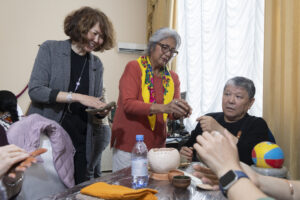
Tohono O’odham potter, Kathleen Vance (center) demonstrates a pinch pot technique with interpreter Dana Zhaksylykova (left) and retreat participant Bolatbek Beissbekov (right) at the Almaty Artisan Retreat. Photo credit Roman Liberchuk, courtesy of Chevron.
She met with President Kassym-Jomart Tokayev during his visit to the U.S. in September 2025, when he pledged additional support for the partnership through Kazakhstan’s Samruk Kazyna sovereign wealth fund.
In October 2025, American artisans traveled to Kazakhstan to meet local artists and take part in the ALA CRAFT International Crafts Festival.
In March, the center launched Heritage in Motion, a professional development initiative created in partnership with Music Unbound, an Almaty-based public cultural organization, and supported by Kazakhstan’s Samruk Kazyna. The program is designed to strengthen skills and expand professional networks among practitioners of intangible cultural heritage in Almaty and Tucson, Arizona.
“I am happy to say that it is getting a lot of momentum. I am really excited about how it has grown over the last couple of years,” Butvin added.
When asked why Kazakhstan has become a focus of the Smithsonian’s engagement, she said it became clear from the institution’s earliest interactions with the Union of Artisans.
“Our mission at the center is about connecting cultures and people and Kazakhstan sits at the crossroads of culture and history and traditions that have connected communities across Central Asia for centuries,” said Butvin. “At the same time, it is clear, having spent time in Kazakhstan now, that it is a globally engaged country that is investing heavily in cultural preservation, education, and also in international exchange.”
What has been particularly striking, according to Butvin, is the extent to which traditional knowledge continues to shape contemporary life. Through music, craftsmanship, storytelling and food traditions, cultural practices remain vibrant and evolving rather than confined to the past, she said.
Drawing on the Smithsonian’s work in Kazakhstan, she praised the dedication of cultural organizations, artists and community leaders working to ensure that these traditions endure and remain meaningful for future generations.
Butvin said the ultimate goal is to bring Kazakhstan to the Smithsonian’s famous Folklife Festival, but any commitment will depend on securing sufficient funding. According to her, the timing for having Kazakhstan represented at the festival feels right not only to showcase the nation’s cultural heritage but also to highlight the growing exchange between Kazakhstan and the United States.
Butvin is optimistic about the growing partnership between Smithsonian and Kazakhstan. In May, Chase Robinson, director of the Smithsonian’s National Museum of Asian Art , was on his first official visit to Kazakhstan, generating promising new connections and opportunities for future cooperation.
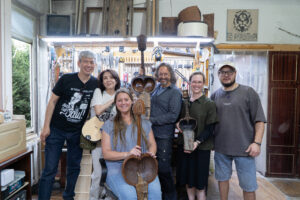
The Music Unbound team (Beybars and Raushan Jumaniyazova, left), Southwest Folklife Alliance team member Bryan Falcon (center, standing), Smithsonian Center for Folklife and Cultural Heritage team members Rebecca Fenton (right) and Sloane Keller (center, seated) visit the workshop of master craftsman, Quanysh (right, standing). Photo credit Orken Tokmagambetov.
The center has worked closely with the museum on public programs. and one featured a small Kazakhstan-focused showcase at the Smithsonian Folklife Festival through the Soul of Tengri program in 2023, bringing eight artisans to Washington.
“We had a fashion show at the Museum of Asian Art that was totally sold out. It was standing room only, it was so well received,” Butvin said.
Intangible cultural heritage resonating with international audiences
When asked what aspects of Kazakh culture resonate most with American audiences, Butvin pointed first to the country’s rich musical traditions. Instruments such as the kobyz, with their distinctive sounds and deep connections to spiritual practice, have sparked curiosity wherever they have been presented.
“It is so unusual and so interesting, and has such a rich context to it of spiritual practice and sound,” she added. “I think that is part of the reason we are just so excited about bringing music into this program.”
She also highlighted Kazakhstan’s craftsmanship traditions, particularly weaving and felt making, rooted in the country’s nomadic heritage. These traditions can look different at first, but also create unexpected connections as they are grounded in values and experiences that transcend cultural boundaries.
“We have done the exchange with some of the Native American artists from Tucson that came over, even in pottery, they are finding symbols in common. They are talking about what those things mean. I think that is also a really beautiful way of seeing the way traditional artists look at the connection to the land, the environment, the landscapes, and how that shows up in the craft,” Butvin explained.
Butvin also spoke with interest about what she called a “gastronomy renaissance” happening in Kazakhstan.
“I’ve been hearing a lot about a gastronomy renaissance happening in Kazakhstan, where chefs, cooks and restaurants are starting to draw on more traditional cuisine. I think that is super exciting, because food is usually a really easy first entry point for people to learn about new cultures, and foodways in Kazakhstan are so unique,” Butvin said.
“I am really excited for American audiences to have the chance to learn and exchange about that as well,” she added.
Butvin recalled a memorable meal during his first trip to Kazakhstan in the country’s west. Hosted by an artisan who still practiced the traditional craft of producing felt for yurts, the meal brought together Smithsonian staff, representatives of the Union of Artisans and members of the artisan’s family. She remembers trying horse meat, various dried and fermented dairy products, and fermented camel’s milk.
“It was a beautiful opportunity to get to try the different dishes,” she added.
Long-lasting impact
For Butvin, one way of the partnership’s impact is about artist-to-artist engagement and expanding visibility for artists.
While they introduce audiences to different and sometimes unfamiliar traditions, they can also have a profound effect on the artists and culture bearers themselves. Butvin explained when people from other cultures show genuine curiosity and appreciation, practitioners often gain a renewed awareness of the value of traditions that have long been woven into their daily lives.
“It fires a recommitment in the artist to keep the practice going and pass it on to the next generation, and like in any field, if you have peers from around the world, it is really inspiring,” said Butvin.
She said cultural exchanges often produce lasting connections that extend well beyond a single event. Artists meet, remain in contact, collaborate on new projects and develop new opportunities to reach international audiences and markets.
“We will have artists at the Tucson Meet Yourself Festival this October as part of our Heritage in Motion exchange, and I think all of those things open up doors. They are all planting seeds for relationships,” she said.
Butvin emphasized Smithsonian’s belief in reciprocity of the exchange. While the Smithsonian seeks to share its own experience and expertise, it is equally interested in learning from Kazakhstan’s efforts to preserve and promote cultural heritage.
Kazakhstan has made significant investments in safeguarding cultural traditions, creating opportunities for dialogue on issues ranging from documentation and public engagement to exhibition development and educational programming.
“But to me, the biggest measure of impact is seeing the strength of the relationships and collaborations that I know will continue years after the fund has done its work,” she added.
Evolving traditions
Butvin believes traditions will continue to evolve as they are passed from one generation to the next, adapting to changing lifestyles and social realities.
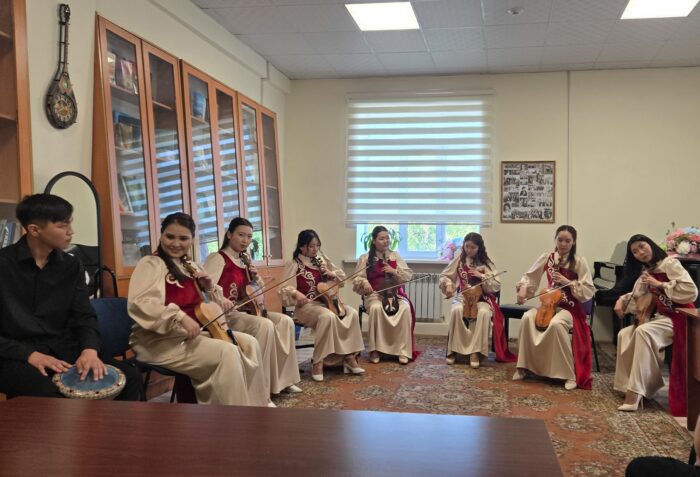
Prima Kobyz students at the National Conservatory play a sampling of their work. Photo credit Sloane Keller, courtesy of Smithsonian Institution.
In Kazakhstan, an example brought by Butvin, while traditional nomadic ways of life have largely given way to urban living, cultural practices continue to provide a link to the values, experiences and sense of belonging associated with that heritage.
“Culture has to continually be interpreted by the next generation and made relevant and changed,” she added.
She recalled a recent Smithsonian research trip to Kazakhstan that illustrated this dynamic. During the day, researchers observed how traditional musical knowledge is transmitted through academic institutions and formal training. At night, they attended performances where young musicians blended traditional sounds with electronic music, creating new forms of cultural expression but remaining connected to their roots.
Despite many concerns people have about language loss, migration and cultural disconnection, Butvin sees firsthand the growing interest among younger generations in reconnecting with their cultural heritage. That renewed interest, she said, places a responsibility on institutions, including the Smithsonian, to provide support through education, visibility, professional opportunities and cultural exchange.
“Cultural heritage is only as relevant as long as it makes sense to the community and matters to the community,” she said.
