
ASTANA – Would you spend nearly two weeks following one of the slowest creatures on Earth? British director Saxon Bosworth did exactly that, traveling to the Ustyurt Plateau in western Kazakhstan to capture the life of the Central Asian tortoise, a creature whose entire visible world unfolds in just a few months each year.
The film, called “TASBAQA,” which means a tortoise in Kazakh, follows a Central Asian tortoise, a species endemic to the region, as it emerges from months of brumation on the Ustyurt Plateau. Through close, patient observation, it traces the animal’s brief active season, when feeding, mating and survival must all unfold within a matter of weeks.
Bosworth spend 12 days in isolation with the team and four days completely alone. That experience, he noted, allowed him to find a “new sense of peace.”
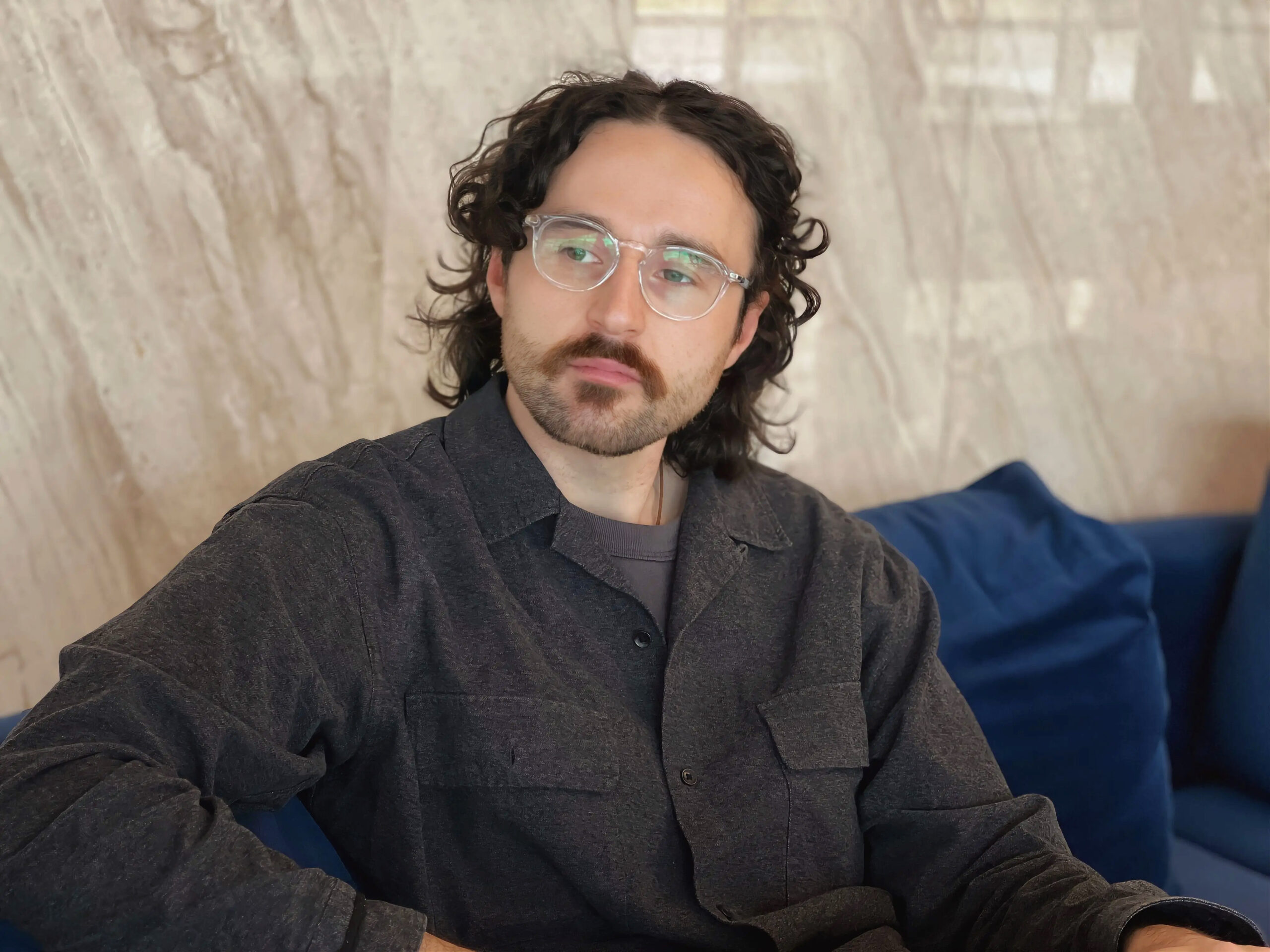
British director Saxon Bosworth . Photo credit: The Astana Times
“There is a multitude of things that start to happen to your brain when you are disconnected from your phone, disconnected from anybody that you know,” Bosworth said, sitting in a hotel lobby in Astana and speaking to The Astana Times.
“Of those 12 days, four days were spent following what became the main character: one specific tortoise. On those days, I spent quite a lot of that time completely alone, just me and that one tortoise,” he added.
“Those four days in particular allowed me to connect to the tempo of the tortoise’s life,” he said. “I would say that it did allow me to find a new sense of peace.”
Despite carrying tents, Bosworth rarely used them. One night, he chose instead to sleep under the open sky on the Ustyurt Plateau. Despite middle of March, when temperatures get quite low, Bosworth said it was “charming.”
“As I was falling asleep, I could just feel the wind playing with my hair a little bit. Then I wake up and it is maybe two or three in the morning. The wind, because the Ustyurt is famous for its wind, it was just battering us,” he recalls. “That felt less cozy, but still a great experience.”
Most nights, the team stayed in simple ranger stations: a small house at one station, and portable trailers at others, largely empty during the expedition.
Symbol of resilience
What he witnessed on the Ustyurt Plateau left a lasting impression. When Bosworth describes the tortoise as a symbol of resilience, he is referring to a life shaped by extremes. Summers where temperatures reach 50 degrees Celsius, winters dropping to minus 40, and a landscape with no permanent freshwater sources. In such conditions, survival depends on adaptation.
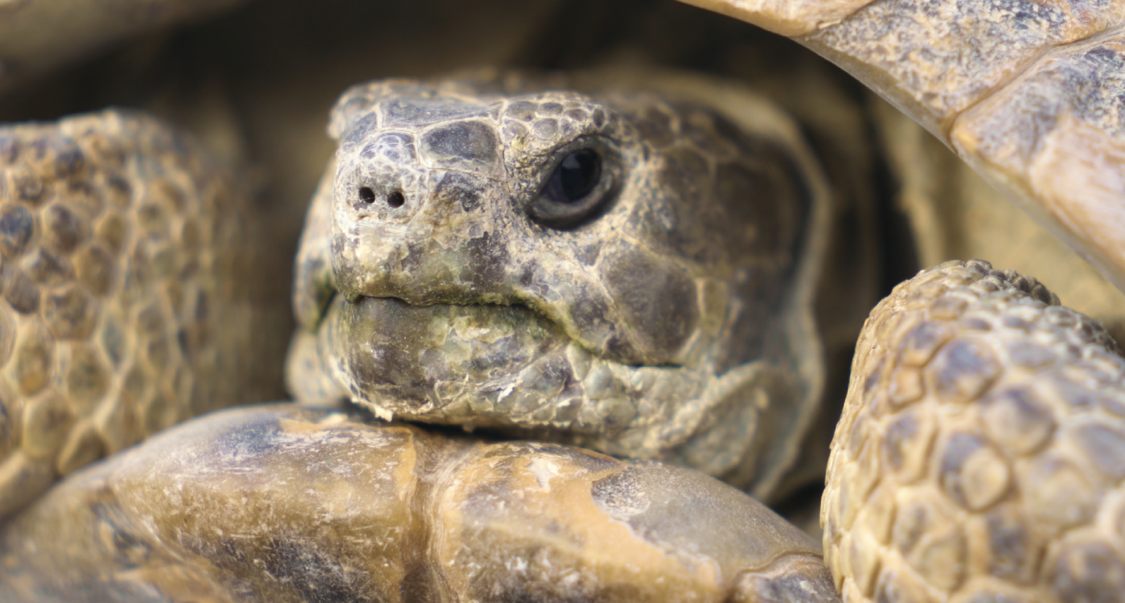
Central Asian tortoise. Photo credit: decouvrirlavie.com
“Tortoises are hibernating for three, five, and six months, that is quite a long time, right. But these tortoises, 9-10 months. In the research I did, I didn’t find other tortoises that were brumating for that long. That’s not by accident. That’s because it needs to find a way to survive in this unique ecosystem,” he said.
As he speaks about the tortoise, Bosworth, who is now pursuing a master’s degree in evolution and ecology, frames his observations as those of a filmmaker learning in the field, rather than a scientist.
“I never pretend to be an expert ecologist or herpetologist,” he said. “Things that I would say about the species are just a product of my experience in the filming process.”
The origins of the project
Bosworth is driven by an interest to chase what remains unseen. He sees his main goal is “exploring and communicating the untold stories of the natural world.”
“I think that there is a sense of mystery that really piques my curiosity and gives me the electricity to do these kind of projects,” he said.
That sense first took shape in 2020, when he encountered the vast Ustyurt Plateau while traveling through Karakalpakstan in western Uzbekistan on his way to the Aral Sea. The Ustyurt Plateau is an ancient geological formation spanning more than 200,000 square kilometers across Uzbekistan, Kazakhstan and Turkmenistan. The plateau itself is a vast, flat semi-desert, but its edges are marked by dramatic cliffs rising up to 100 meters high, walls of limestone and chalk formed from layers compressed over millions of years on the floor of an ancient sea.
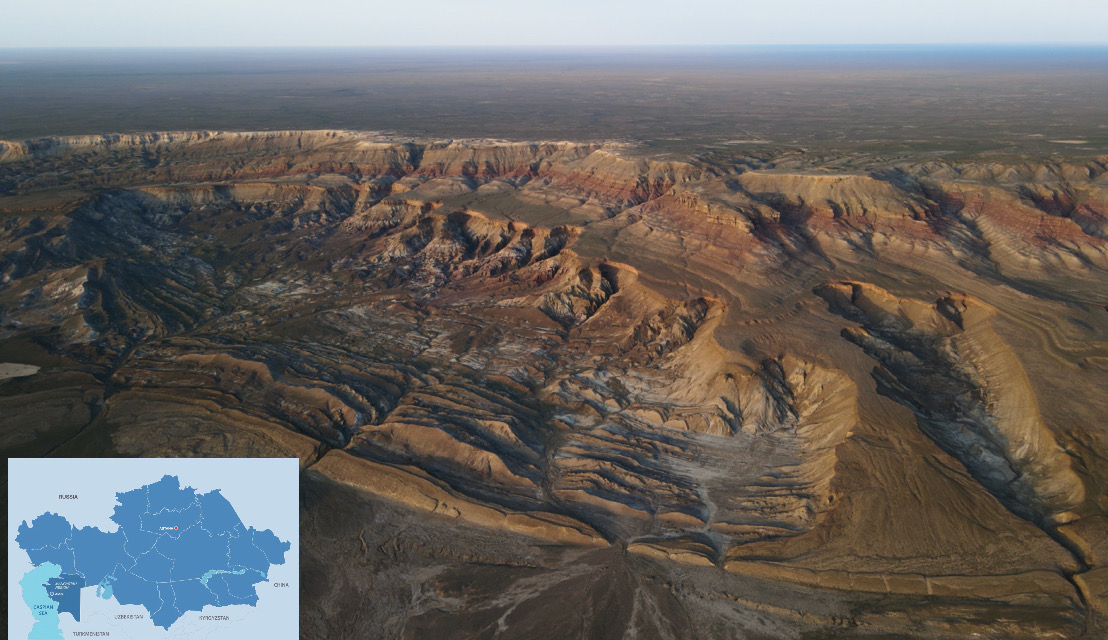
The vast Ustyurt Plateau. Photo credit: decouvrirlavie.com Click to see the map in full size. The map is designed by The Astana Times.
From conversations with local researchers, he then realized how little of it had been documented on film.
“I was just amazed that I’d never heard of this place and started to speak to some of the local researchers. They were telling me things that they found very curious, but nobody had ever studied before,” he said. “Over time, I was considering how I could approach this quite magical ecosystem for a project of mine and perhaps a short film.”
In 2023, he met with local researchers, including Vladimir Terentyev, to explore how best to capture the ecosystem on film. Early ideas ranged across multiple species, each representing a fragment of the plateau’s fragile balance. But the story, he realized, demanded focus and that’s when the team decided to focus on the Central Asian tortoise.
“It is an age-old relationship, a symbol of resilience. It spends 9-10 months or more in brumation, hibernating, and then it comes out in spring to do everything it needs to do. I became very fascinated by the life of the tortoise and how it interacts with its ecosystem,” he said.
Connecting later with the Tasbaqa Fund, which works to protect the species, he said the film became part of a broader effort to safeguard tortoise habitats across Kazakhstan.
Story of collaboration
The film, he noted, is as much a story of collaboration as it is of observation. By his estimate, around 80% of those involved in the project were Kazakh, from scientists to field specialists who knew where, and when to look. Among them was researcher Vladimir Terentyev, whom Bosworth described as central to shaping the project, and local biologists from the Ustyurt Nature Reserve who brought decades of field experience.
Assel Satubaldina and Saxon Bosworth during their conversation in Astana. Photo credit: Aida Dosbergenova/ The Astana Times
“This film just absolutely is not even remotely possible without the Kazakh collaboration. It is the thing that is not just important, it is completely essential,” he said.
Spotting the species in a landscape as vast as the Ustyurt is no small task and local expertise was imperative. “We were able to go to the right places at the right time,” he added.
Peaceful feeling
The film’s slow tempo may initially feel at odds with viewers accustomed to faster-paced storytelling. Bosworth resists the fast-paced rhythm of modern viewing habits, with many having what he describes as “high-octane” energy. Instead, he hopes the film offers something quieter.
“Even when you watch a Netflix or a film, it is retention. YouTube, it is retention, it is energy, it is high octane. I like the idea that somebody could watch a project of mine and perhaps there would be an educational element, there would be some kind of inspirational element,” he said. “But also perhaps feel a little bit peaceful at the end of watching.”
Creating a spark
The film has been screened at the Royal Geographical Society, UCL and most recently, at the British Embassy in Astana.
Bosworth is also hoping the film could be screened in schools and universities across Kazakhstan, sparking in young viewers the same curiosity his grandmother once inspired in him to “appreciate and study wildlife.”
“Not just study, but to look and think, what is this? She used to take me out for bike rides for the whole day with just a banana. She’d be pointing out this bird and that tree,” he said.
Bosworth acknowledged if the film can pass on even a fraction of that curiosity, a sense that wildlife exists not somewhere far away, but at home, he said it will have done its job.
Work far from finished
The project also was a turning point in his work. Unlike his earlier films, which focused on conservationists, “Tasbaqa” was his first as a purely wildlife narrative.
“This film was a real challenge because although it is a short film, it is completely wildlife,” he said.
Visually, he sought to capture a contrast: the close-up life of a single tortoise set against aerial shots of the plateau itself. That contrast becomes apparent almost immediately.
For Bosworth, the project is far from finished. What he captured on the Ustyurt Plateau is only one version of the tortoise’s life. He now hopes to expand it.
“I would like to see what their life looks like in different regions of Kazakhstan versus how it looks in the Ustyurt,” he said.
His next project, developed with the same team, might focus on a far rarer presence in the region, the Persian leopard. The film follows a single water source used by one leopard now being tracked on the plateau.
“It tells the story of the first Persian leopard [the first live Persian leopard captured on camera trap in Kazakhstan] that died a few years ago and the Persian leopard that is being tracked now in the Ustyurt Plateau. This one spring that it uses and how water is uniting all of the species of this region. We’ve got camera trap footage of 15 species coming and using the same spring,” he said.
