
ASTANA – Kazakhstan presented its national pavilion at the 61st International Art Exhibition of La Biennale di Venezia on May 9 with the exhibition project “Qoñyr: Archive of Silence,” exploring themes of memory, silence, cultural continuity and the inner sound of history through contemporary art.
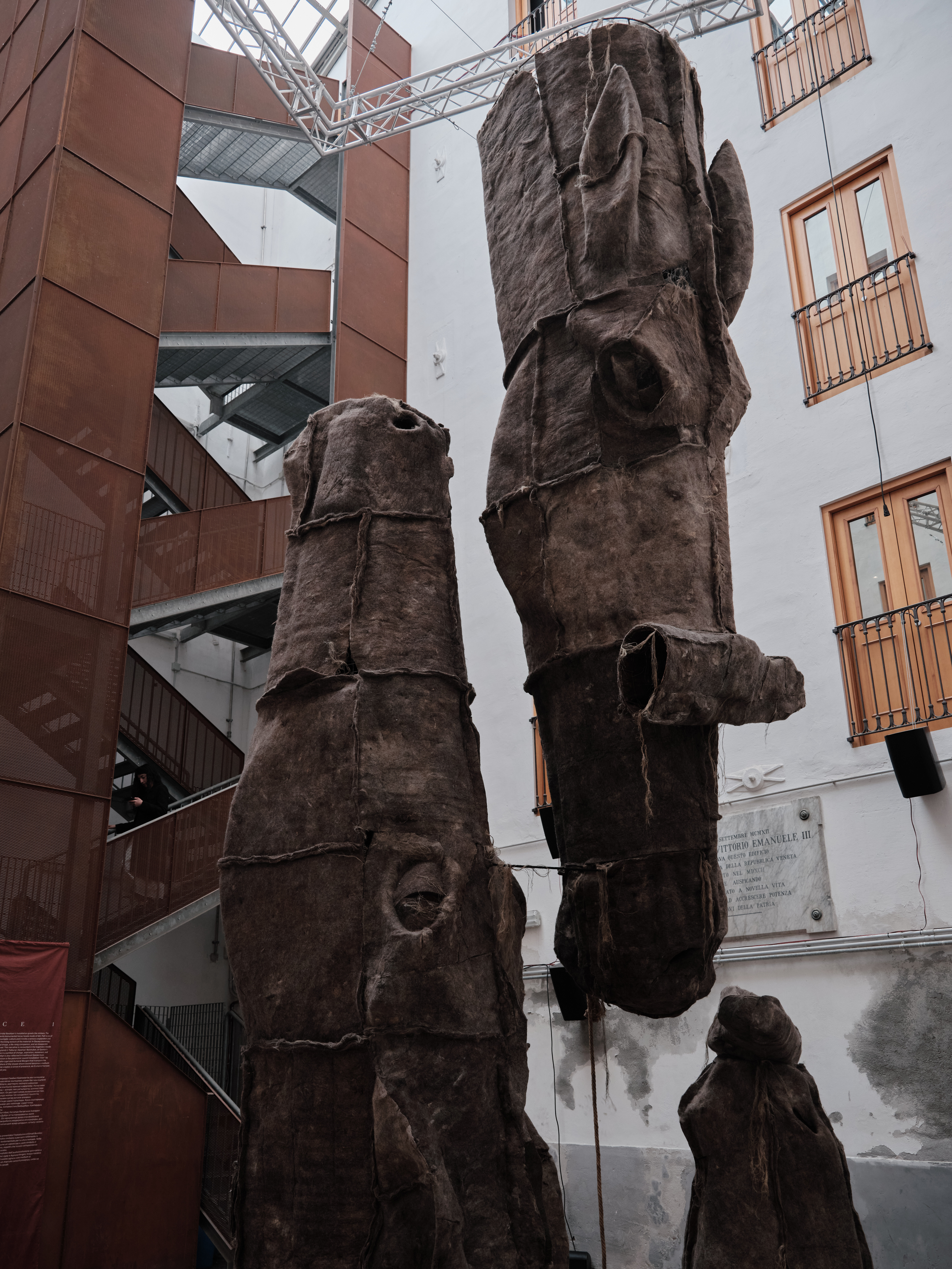
“Steppe Architectonics” installation. Photo credit: Bauyrzhan Bismildin
The country is participating in the official program of the Venice Biennale for the third time. Ten artists working across installation, sound art, video, drawing and digital media are presenting their works under the curatorship of Syrlybek Bekbota.
This year’s Biennale theme, “In Minor Keys,” focuses on quiet, personal and often overlooked voices. Kazakhstan’s exhibition reflects the broader theme through the concept of “qonyr” (brown), a Kazakh term associated with earthy tones and symbolic references to memory, inner sound and cultural experience.
According to Bekbota, the national pavilion offers a way to explore subjects that cannot always be explained directly but can instead be experienced through sound, movement, material and bodily memory.
“After becoming familiar with the concept, I realized it was close to my artistic practice. The idea of minor here works not through grand narratives, but through smaller themes connected to global processes,” Bekbota said.
One of the central elements of the exhibition is the kui of Abiken Khasenov, which connects the exhibition’s themes through memory, sound and sensory experience.
Vice Minister of Culture and Information Aibek Sydykov described the Venice Biennale as one of the world’s leading cultural platforms, fostering dialogue between cultures.
“For Kazakhstan, participation in the Biennale is an opportunity to contribute its own voice to the global cultural dialogue. Contemporary Kazakh art is developing at the intersection of tradition and innovation, where the historical heritage and cultural identity of the steppe are reinterpreted through modern artistic practices,” he said during the opening ceremony.
The video installation “Adaptive Surface” is structured as a dialogue between two artists shaped by different experiences. Photo credit: Bauyrzhan Bismildin
The pavilion unfolds as a sequential journey through six halls. Visitors enter through a sound-based installation before moving into a monumental felt installation centered on the horse image, a sacred symbol in nomadic culture.
The installation “Steppe Architectonics” by artists Smail Bayaliyev, Akmaral Mergen, Gulmaral Tatibai and Natalia Ligai combines monumental horse figures, hoof sounds and steppe grass to transform the exhibition space into an immersive landscape.
Bekbota said that felt, traditionally associated with everyday nomadic life and yurts, takes on a monumental artistic scale in the exhibition.
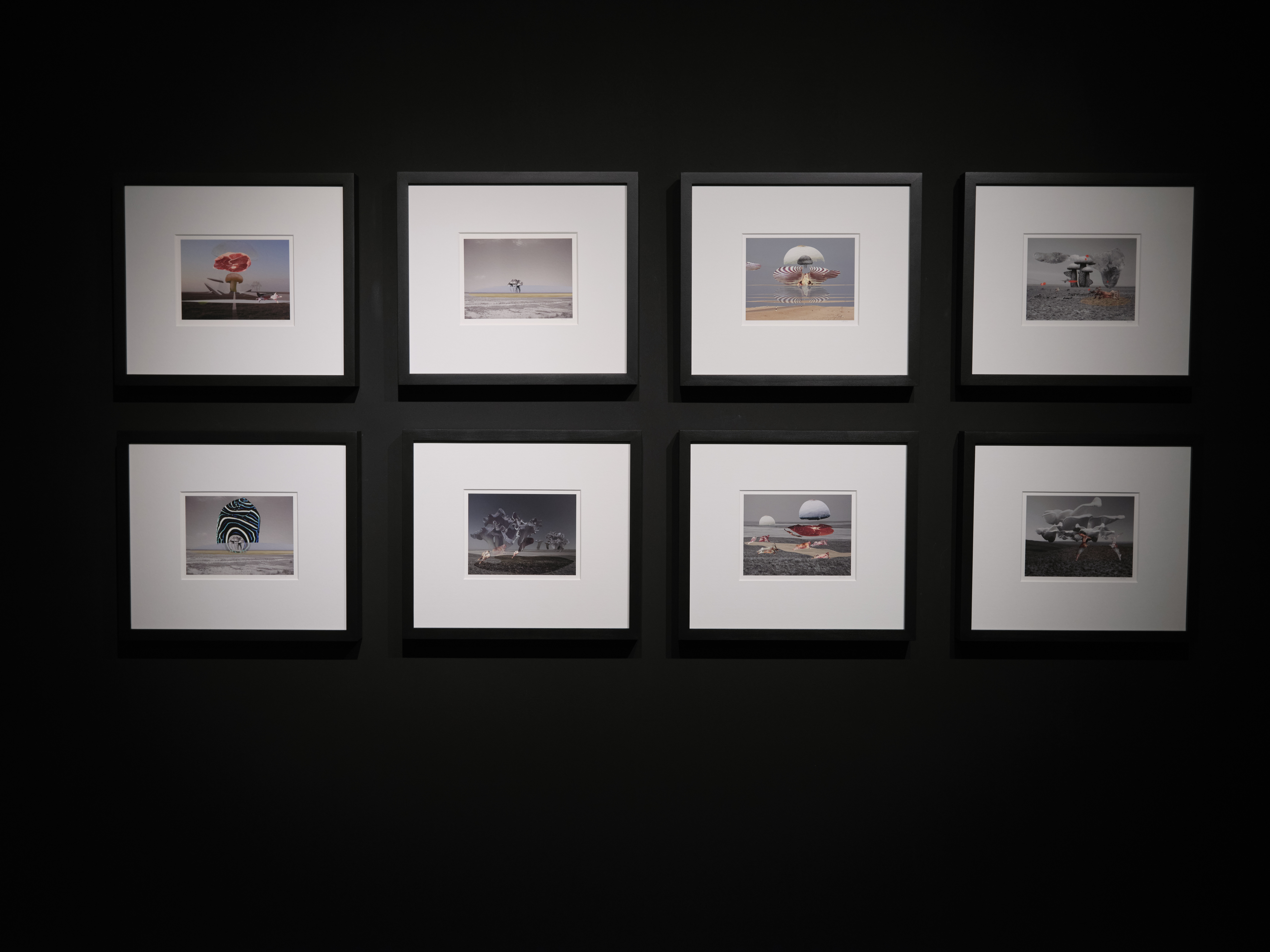
The theme of the Semei nuclear test site is explored through Nurbol Nurakhmet’s photo collage project “The Cooking Process.” Photo credit: Bauyrzhan Bismildin
The exhibition also incorporates aitys, a traditional Kazakh form of improvisational poetic dialogue, through performances exploring themes of language, memory, identity and transformation.
Other featured works include Anar Aubakir’s “Matrix of a New Subject,” which reinterprets the inner layer of a camel wool blanket as an artistic object and archive of generational memory.
The exhibition concludes with a digital installation by Ardak Mukanova exploring sacred space through light, myth and sensory perception.
During the opening ceremony, President of the Venice Biennale Pietrangelo Buttafuoco said he found the exhibition’s exploration of memory particularly compelling, describing art’s ability to serve as a form of archive while preserving its unique artistic expression.
The exhibition will run through Nov. 22.
