
ROME — A study to measure artificial intelligence capacity in Central Eurasia and guide investment and policy decisions was introduced at a conference hosted by the Massachusetts Institute of Technology (MIT) Kuo Sharper Center for Prosperity and Entrepreneurship in Cambridge, Massachusetts, on April 23.
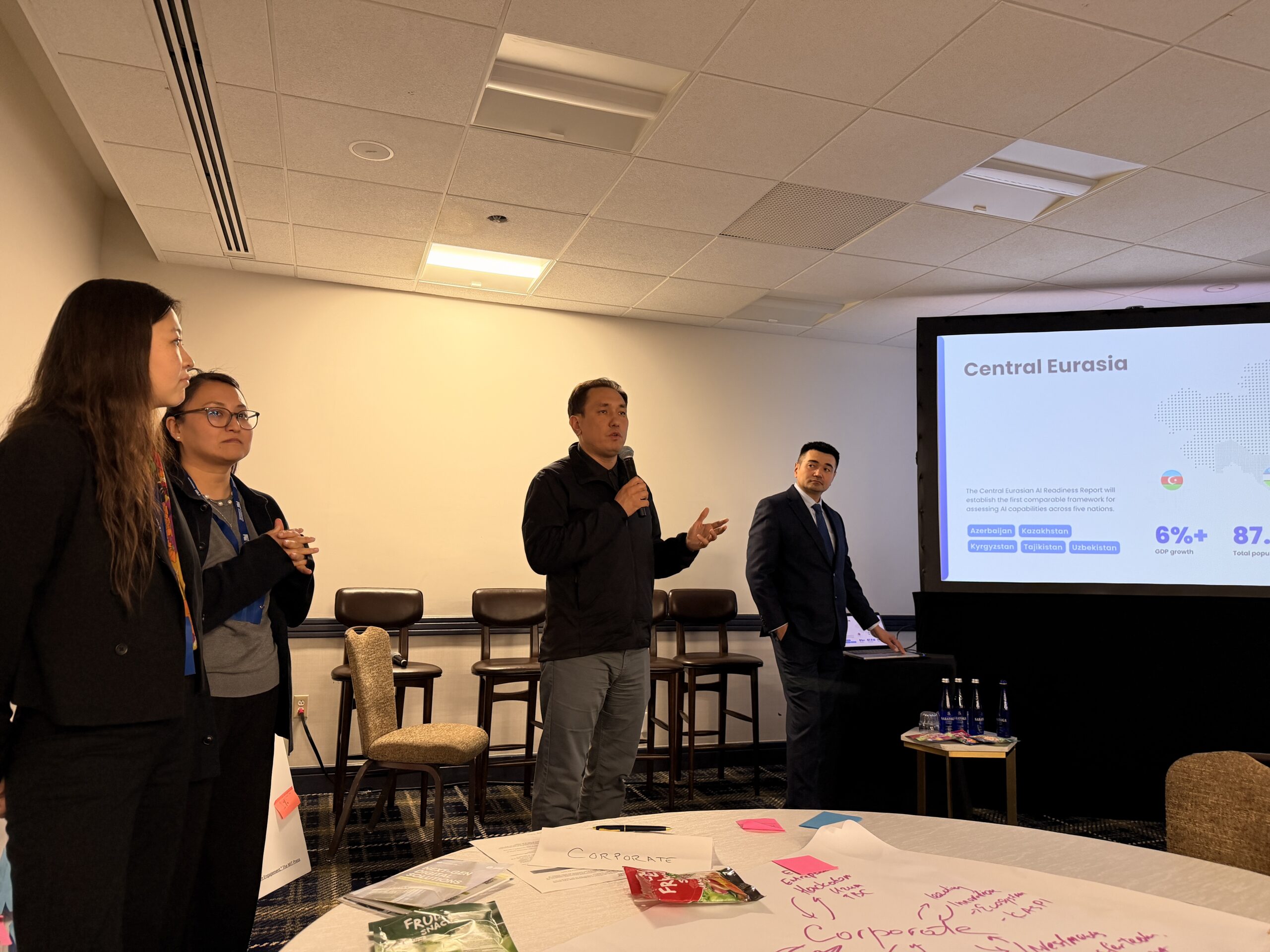
Photo credit: MIT
The study introduces a methodology to assess how countries build and scale AI systems, focusing on gaps that are often overlooked when analysis relies on isolated examples rather than a full ecosystem view.
“This is not just a regional study, we consider it a concept for how the world should assess AI ecosystems in emerging markets,” said Shamil Ibragimov, the director of research at the MIT center.
The Central Eurasian AI Readiness initiative will examine AI ecosystems in Azerbaijan, Kazakhstan, the Kyrgyz Republic, Tajikistan and Uzbekistan. It is being conducted in collaboration with the Silkroad Innovation Hub, with support from Freedom Holding, Astana Hub and IT Park Uzbekistan.
“We are beginning to build a framework for understanding how AI develops across markets and at what stage, starting with Central Eurasia. The methodology we are establishing is designed to travel, giving other regions a way to translate fragmented progress into a coherent story that investors and policymakers can act on,” he said.
National approaches to AI development
Countries in the region are expanding AI capacity through a combination of infrastructure investment, education and startup development, reflecting different national approaches within a shared regional trajectory.
“AI has become a national priority, and we are systematically investing in human capital, introducing new educational models, supporting AI startups, and creating platforms for collaboration between global tech companies and researchers. The recent launch of the International Center for Artificial Intelligence alem.ai is a key step in building a unified environment where talent, infrastructure, and innovation come together,” said Magzhan Madiyev, CEO of Astana Hub.
“This research will help present these efforts as a unified system and strengthen Central Eurasia’s position on the global AI map,” he added.
In Uzbekistan, development efforts focus on scaling both workforce capacity and applied use of AI across sectors.
“Through national initiatives such as the ‘Five Million Artificial Intelligence Leaders’ program, we are equipping a new generation with practical AI skills while embedding AI across startup development, export-oriented services, and public-private partnerships. This research reflects that tangible progress is already underway,” said Azamat Karamatov, CEO of IT Park Uzbekistan.
The report is structured around four areas: infrastructure, including computing capacity and data centers, government and legal systems, human capital and training, and AI-driven startups and commercialization.
Regional visibility and positioning
The initiative also places emphasis on how the region is represented globally, with stakeholders contributing data from within their own ecosystems.
“We have invested in the infrastructure – the computers, the data centers, the sovereign AI stack. (…) What we want now is for the startups, researchers, engineers, and ecosystem builders on top of it to be seen globally. That is why this research matters as it gives Central Eurasia’s AI ecosystem visibility,” said Maken Sikhayev, the adviser to the president of Freedom Finance Global PLC.
According to Asset Abdualiyev, the founder and CEO of Silkroad Innovation Hub, Central Eurasia has the ambition and growing capacity to become a more prominent participant in the global AI landscape.
“What we are starting to build together with MIT Kuo Sharper Center is the evidence base that will allow the region to be seen differently, as a place where AI is being built and scaled, and as a market that investors and policymakers can better understand,” said Abdualiyev.
The findings are expected to be presented beginning in September 2026 at regional technology events, including ICT Week Uzbekistan and Digital Bridge Kazakhstan.
