
ASTANA — Kazakhstan is undertaking one of the most ambitious railway modernization programs in its history, combining infrastructure upgrades, digital transformation, industrial development and expanding transit ambitions as the country seeks to strengthen its role as a key Eurasian transport hub. Updates presented during a June 16 government meeting chaired by Prime Minister Olzhas Bektenov showed progress across multiple fronts, from the renovation of railway stations and expansion of freight corridors to investments in rolling stock and railway manufacturing
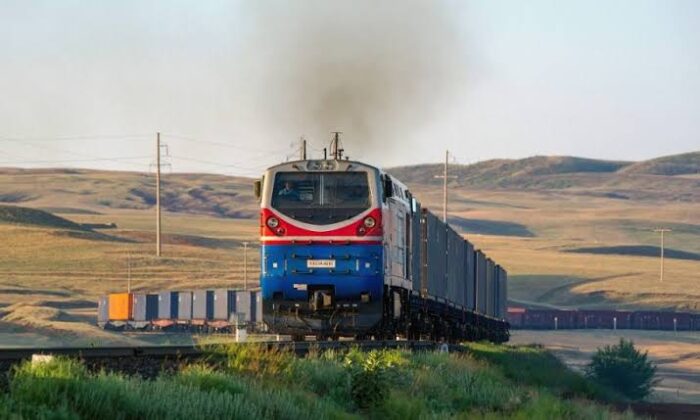
Photo credit: Kazakhstan Temir Zholy
Railway stations’ large-scale modernization
According to the Prime Minister’s press service, a key component of the modernization effort is the renovation of railway stations nationwide. According to Transport Minister Nurlan Sauranbayev, 124 railway stations in all regions of Kazakhstan have been included in a nationwide modernization program. Local authorities are simultaneously carrying out landscaping and improvement works in station areas.
The first 30 upgraded stations are expected to be commissioned before July 1. Sauranbayev described the initiative as the largest railway station modernization program implemented since Kazakhstan gained independence.
“The main objective of this work is to provide citizens with safe and comfortable railway transport,” he said.
Construction and installation work have already been completed at 36 facilities. Alongside station modernization, the country continues to renew its passenger fleet. More than 650 passenger railcars have been upgraded in recent years. The Ministry of Transport plans to increase the renewal rate of the passenger fleet to 90% by 2030.
Transit traffic becomes key growth driver
The railway sector’s growing importance is closely tied to Kazakhstan’s position on international transport routes. According to the Transport Ministry, Kazakhstan currently handles 80% of overland cargo transported from China to Europe. Transit transportation has emerged as one of the strongest drivers of growth within the railway industry.
Over the past five years, transit freight volumes increased from 20 million tons to 33 million tons. Officials now intend to accelerate that growth. The government plans to double transit volumes to 67 million tons by 2030 and increase them further to 100 million tons by 2040.
“Transit has become the main driver of the domestic railway industry,” Sauranbayev said, adding that the expansion of international transport corridors remains central to achieving these targets.
A broader logistics network and AI adoption in the rail sector
The government is also investing in terminal infrastructure, both inside and outside Kazakhstan. Seven terminals currently operate along key transport routes, while another seven facilities are under construction. Officials say the projects will help establish an integrated logistics network connecting East-West and North-South transport corridors. At the same time, efforts are underway to improve rail access to major industrial enterprises and mineral deposits.
Among the projects under consideration are upgrades to railway lines serving deposits in the Karagaily area of the Karagandy Region and the construction of the Inderbor-Uralsk railway line. According to the ministry, the new railway connection would provide direct links for the region and support the economic development of western Kazakhstan.
Digitalization has become another major focus of railway development. Sauranbayev said work is underway to create a unified data lake covering the railway sector’s key assets and operations. The ministry plans to introduce a Smart Rail system that will utilize artificial intelligence and big data analytics to improve operational efficiency and safety.
According to officials, the use of advanced analytics and AI technologies is expected to improve management processes, reduce costs and strengthen safety standards across the railway network. The initiative reflects broader efforts to integrate digital technologies into transport infrastructure and logistics management.
Railway manufacturing records strong growth
Railway modernization has also contributed to growth in domestic manufacturing. Minister of Industry and Construction Yersayin Nagaspayev reported that railway engineering now accounts for 13% of Kazakhstan’s total machinery production. The sector includes 60 enterprises employing more than 8,000 workers. In 2025, production in railway engineering increased by 22.5%, reaching 734 billion tenge (US$1.5 billion).
Nagaspayev attributed the growth partly to government programs aimed at renewing the rolling stock of the national railway operator.
“Over the past five years, investment in railway engineering has increased significantly,” he said.
The minister noted that Kazakhstan has succeeded in attracting major international manufacturers, including Wabtec, Alstom and Stadler.
Localization levels for some products have reached between 35% and 40%, with further efforts underway to expand cooperation with domestic suppliers, introduce new components and establish joint ventures. During the first five months of this year, production of rolling stock increased by more than 9%, while output of some product categories grew by as much as 1.7 times.
New rail lines set for launch this year
The government’s railway agenda also includes the completion of major infrastructure projects ordered by President Kassym-Jomart Tokayev. Prime Minister Bektenov said strengthening the country’s railway framework remains a top priority. Among the projects scheduled for completion this year are the Darbaza-Maktaaral and Moiynty-Kyzylzhar railway lines.
The government has instructed relevant authorities to launch traffic on both routes in November. According to Bektenov, the opening of the new lines is expected to help increase transit volumes to 55 million tons this year.
The projects form part of a broader strategy that combines infrastructure expansion, fleet renewal, station modernization and digital transformation to strengthen Kazakhstan’s role in regional and international transport networks.
As work progresses on railways, logistics facilities and industrial production, the sector is increasingly becoming a cornerstone of the country’s long-term economic and transit development plans.
