
ASTANA — For centuries, Kazakhs navigated vast steppe landscapes without maps or GPS, relying on stars, animals and environmental knowledge. These skills enabled nomadic communities to travel thousands of kilometers across Central Asia.
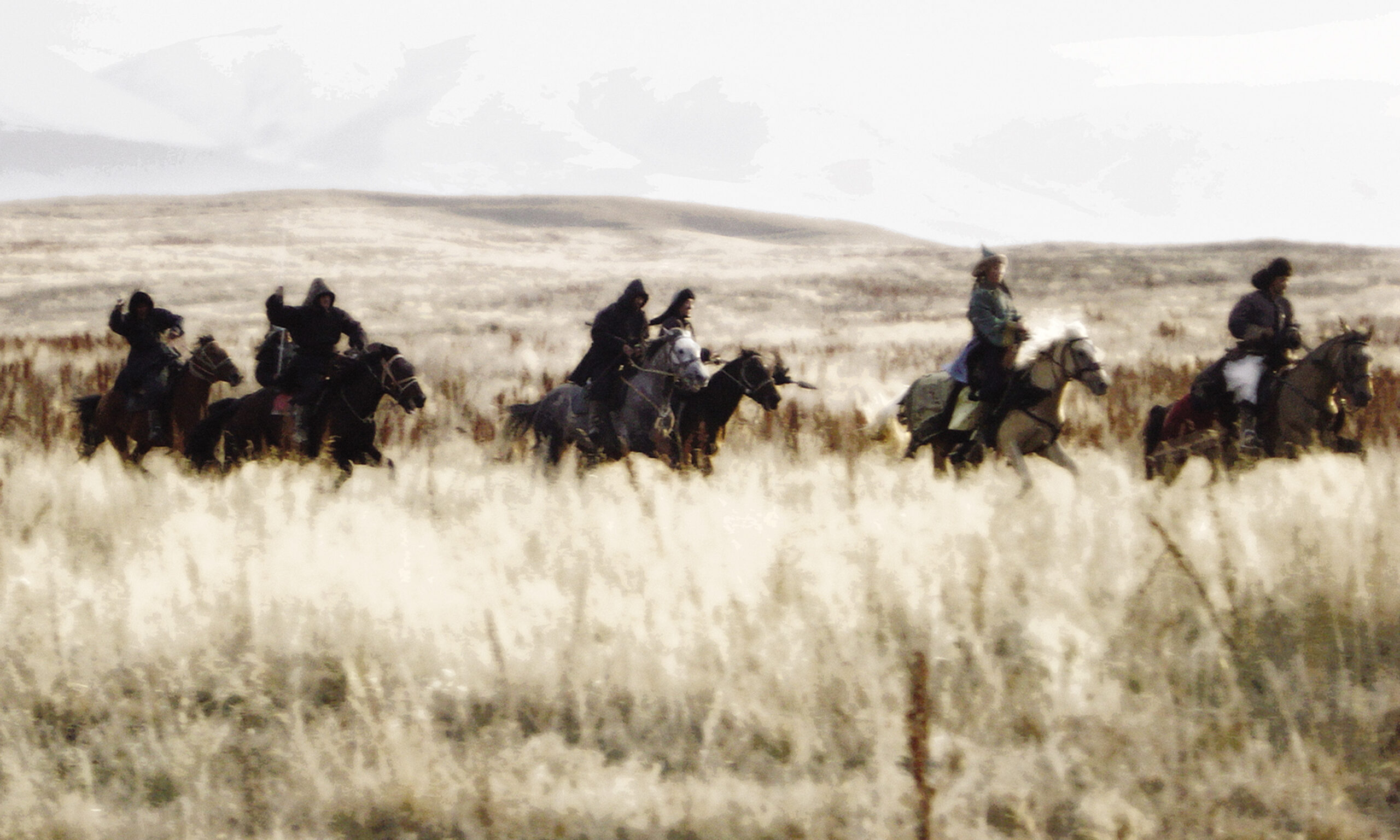
Nomadic and semi-nomadic societies developed sophisticated systems of observation rooted in centuries of experience, said Toktabai. Photo credit: nomadmgz.kz
Stretching from the Altai Mountains in the east to Atyrau near the Caspian Sea in the west, the Kazakh steppe spans immense and often sparsely populated territory. In such conditions, the ability to orient accurately was essential for survival.
Reading the sky
According to Akhmet Toktabay, a historian and ethnologist, nomadic and semi-nomadic societies developed sophisticated systems of observation rooted in centuries of experience. Travelers and researchers who visited what is now Kazakhstan frequently noted the Kazakhs’ keen observation.

Historian and ethnologist Akhmet Toktabai. Photo credit: qalam.global
“Travelers, wanderers and scholars who arrived in the territory of present-day Kazakhstan wrote a lot about the attentiveness of the Kazakhs: how in the wide steppes, dense forests, among mountains, in the dark night, in rain and snowstorms, they found their way home and preserved themselves, their livestock and their auyl [village],” said Toktabay.
“Being born in nature, Kazakhs from childhood perceived the entire surrounding world as their home and knew everything around them, including animals, birds, forests, trees and stones. Learning to ride a horse, they oriented themselves by the stars, distinguished all celestial bodies and, observing them, navigated the boundless steppe,” he said.
Attention was given to the new moon, the sun’s position and the movement of constellations. Kazakhs identified and named stars and planets, including Urker (the Pleiades), Sholpan (Venus), Esekkyrgan (Jupiter), Kyzylzhuldyz (Mars), Temirkazyk (the North Star), Zhetikarakshy (the Big Dipper), and Usharkar (Orion), among others.
These observations determined the timing of frosts, rainfall and winds, and guided decisions on seasonal livestock migrations and agricultural work. Folk astronomy was embedded in daily life and economic planning, helping communities adapt to natural cycles.
Navigation without instruments
Kazakhs observed celestial phenomena with the naked eye rather than telescopes. Toktabay referred to notes by Russian military officer Baron Wrangel, who described a young Kazakh saying he saw “one large star that at some moment ‘swallows’ another star and after some time ‘spits’ it back out.”
Wrangel suggested this referred to Jupiter aligning with another star, temporarily obscuring it before it reappeared at dawn.
“The ancestors of the Kazakhs possessed exceptional attentiveness, sharp eyesight and focus. In hard-to-reach places, in extreme conditions, they were able to determine direction precisely,” said Toktabay.
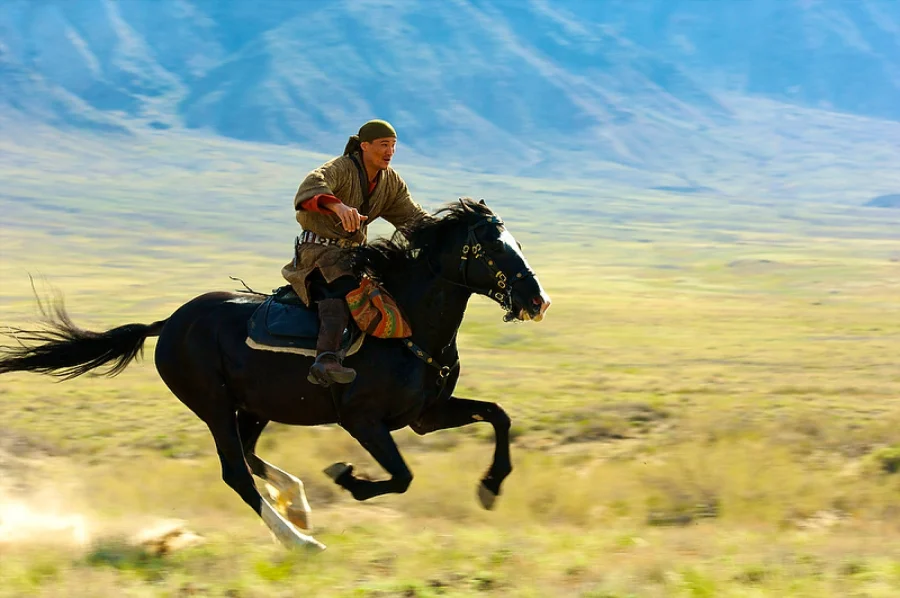
Kazakhs observed celestial phenomena with the naked eye rather than telescopes. Photo credit: e-history.kz
He added that long-distance orientation was inseparable from nomadic life. Seasonal migrations required precise knowledge of terrain across vast and often uninhabited areas.
For example, Kazakhs of the kishi (junior) zhuz, one of the three traditional socio-territorial groupings of Kazakh society, migrated thousands of kilometers across western regions. In winter, they left their wintering grounds in Bukhara, in present-day Uzbekistan, then moved toward pastures stretching as far as Aktobe in western Kazakhstan and Orenburg in Russia, before eventually returning. Toktabay stressed that even without settlements along the route, they knew the landscape’s features and found their way.
Guides across Central Asia
These skills extended beyond internal migrations. During expeditions across Central Asia toward China, Kazakhs often served as guides.
“Unlike sedentary peoples who were limited in their movements, Kazakhs could travel thousands of kilometers. Asian merchants also used Kazakhs as guides, paying them for their work. Russian travelers and many expeditions of the geographical society also noted that Kazakhs often became their guides,” said Toktabay.
Russian explorer Nikolai Przhevalsky mentioned Myrzash Aldiyarov, a native of eastern Kazakhstan known as a batyr (warrior). Aldiyarov guided Przhevalsky’s 1877 journey from Kulja, which is now Yining in China’s Xinjiang region, to Guchen, and later the 1879 expedition from Zaisan through Hami to Tibet and the upper reaches of the Yellow River.
“Myrzash knew very well the western part of Dzungaria adjacent to our border, where for many years he engaged in barymta [a customary practice of livestock raiding linked to intertribal disputes]. As a guide, Myrzash was very useful,” Przhevalsky wrote.
Animals as navigators
Navigation extended beyond celestial observation. Horses also played a role. Toktabay recalled a childhood memory from 1961, when he was returning to his auyl at night near the Chinese border.
“There was no road. Only dunes, hills and the same endless vegetation in every direction. I was afraid because I could not find the road. I cried, then I released the reins of the horse and fell asleep. I woke up when my father called out to me. Thanks to my horse and its ability to find the way, I returned home safely,” he said.
According to Toktabay, horses can detect distant objects and sense danger ahead, signaling to their rider and, if necessary, guiding them back.
Steppe botanists and weather forecasters
Environmental knowledge also extended to plant life. Russian scholar Mikhail Zalesky wrote that Kazakhs knew hundreds of grass species and distinguished which were suitable for sheep, cattle, or horses. By tracking flowering cycles, they could anticipate weather changes.
Weather forecasting by stars was practiced by individuals known as zhuldyz namashy (star reader), folk astronomers. Toktabay said scholar Khasen Abishev studied this tradition in the 1950s.
“Today’s weather is forecast by meteorologists. Earlier, stargazers themselves observed nature, followed the stars, recorded information and made conclusions based on personal observation. They passed their art from father to son, and in every aul there was its own stargazer,” said Toktabay.
“A wealthy bai [prosperous livestock owners] would consult them in summer, and with the first autumn cold, based on their forecasts, would send scouts on long journeys, sometimes thousands of kilometers, to search for land suitable for wintering. Such people were highly educated,” he said.
Toktabay recounted a story about a bai in the Altai region who owned thousands of horses and regularly consulted a stargazer before selecting winter pastures. One year, ignoring that advice, he sent his herds to the Markakol area in eastern Kazakhstan.
“But there a fierce winter storm broke out, and the bai lost all his horses. When a zhut [a severe winter disaster] grips an entire region, saving livestock is nearly impossible. You see how wise and observant the stargazers were,” he said.
The article was originally published on Kazinform.
