
ASTANA – Kazakhstan and Norway took a step toward deepening economic cooperation on May 21 as government officials and business leaders gathered in Astana for the second meeting of the bilateral Business Council, highlighting growing interest in trade, investment and joint projects in sectors ranging from renewable energy to aquaculture.
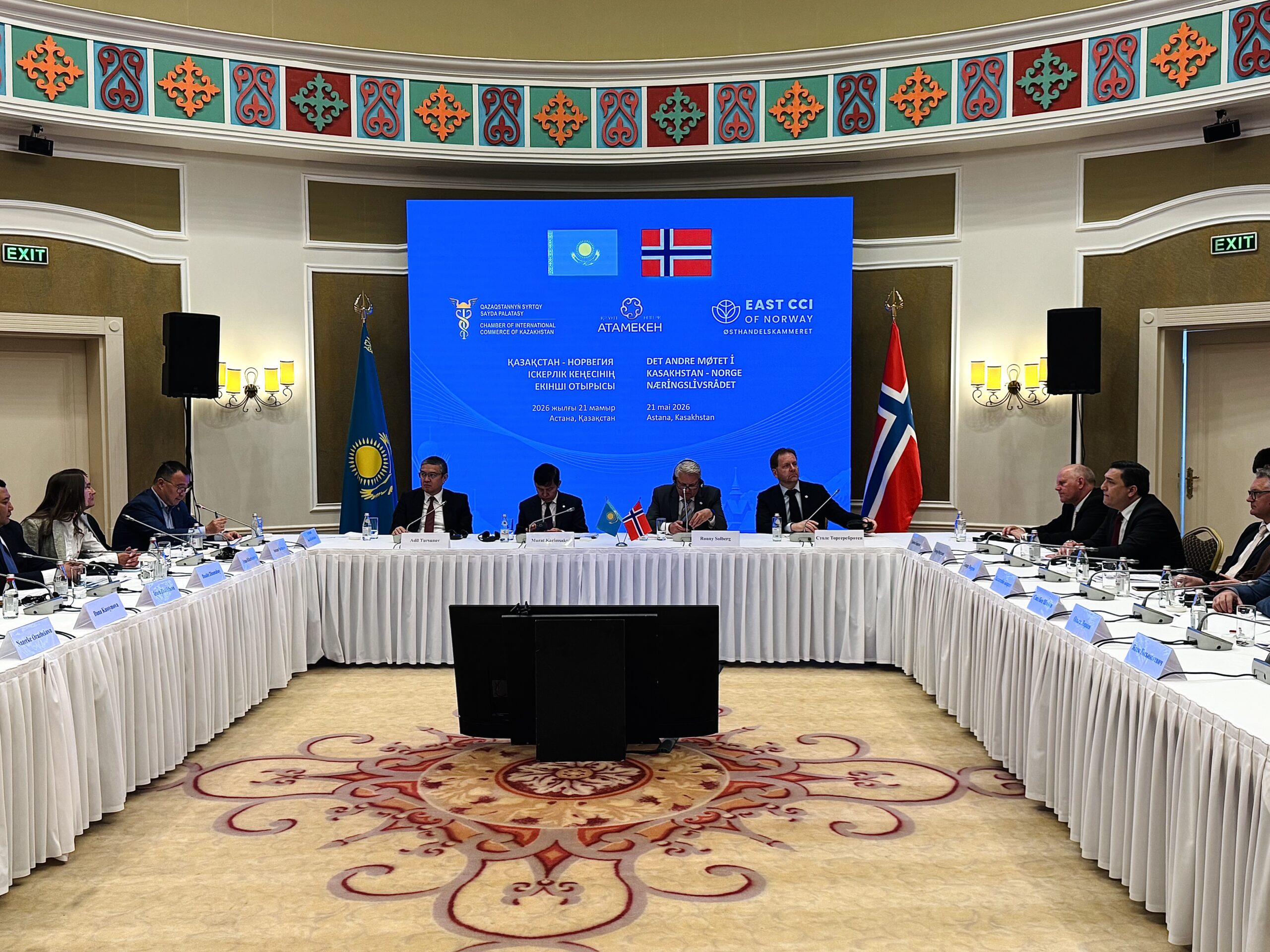
The first meeting of the Kazakhstan-Norway Business Council was held in Oslo in April 2025. Photo credit: Assel Satubaldina/ The Astana Times
Trade momentum
Economic ties between Kazakhstan and Norway have gained momentum over the past two years. In December 2024, the Chamber of International Commerce of Kazakhstan and Norway’s EAST Chamber of Commerce and Industry signed an agreement establishing a bilateral business council. The council held its inaugural meeting in Oslo in April 2025, marking the first such gathering in the history of Kazakh-Norwegian business relations.
In May 2025, a Norwegian delegation visited Kazakhstan and participated in the Astana International Forum, one of the largest Norwegian business missions to the country in recent years.
Bilateral trade has also shown strong growth. According to Kazakhstan’s Bureau of National Statistics, trade turnover between Kazakhstan and Norway reached $169.2 million in 2025, up from $123.1 million in 2024. Imports in 2025 stood at $161.3 million.
“These figures reflect the expansion of trade flows, the emergence of new niches for cooperation, and most importantly, strengthening of trust between Norway and Kazakhstan,” said Murat Karimsakov, chairman of the Chamber of International Commerce of Kazakhstan and deputy chairman of the Atameken National Chamber of Entrepreneurs.
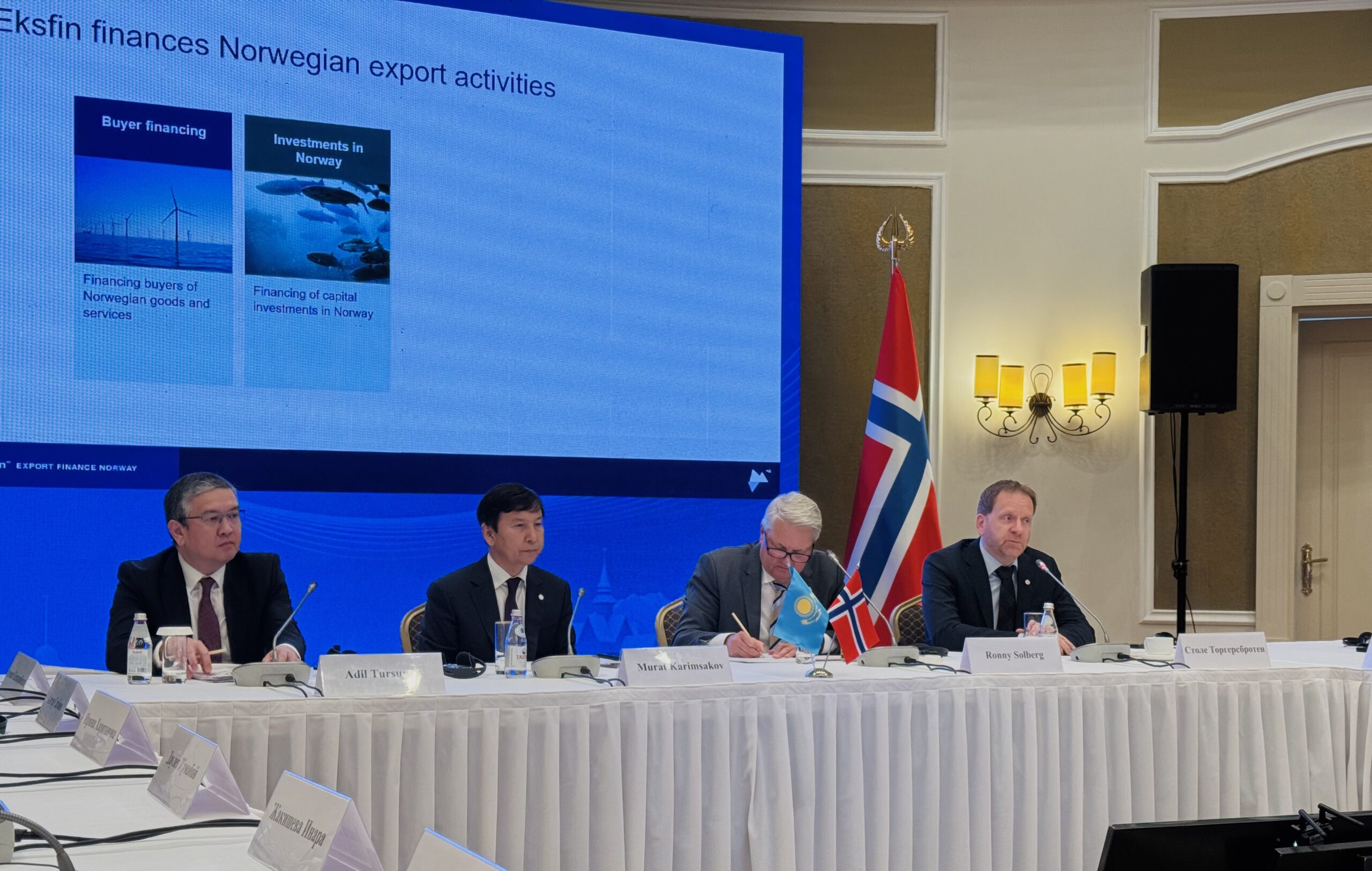
From L to R: Ambassador of Kazakhstan to Norway is Adil Tursunov; Chairman of the Chamber of International Commerce of Kazakhstan Murat Karimsakov; Chairman of Norway’s EAST Chamber of Commerce and Industry Ronny Solberg and Chief Legal Officer at Export Finance Norway (Eksfin) Ståle Torgersbråten. Photo credit: Assel Satubaldina/ The Astana Times
Addressing Norwegian counterparts, Karimsakov described Kazakhstan as a country with “vast resource potential, a strategic geographic position, and with ambitious programs of economic modernization.”
He said Kazakhstan sees significant value in Norway’s expertise, particularly in agriculture, aquaculture and fish processing, industrial safety solutions for the oil and gas sector, and circular economy practices.
As of today, 18 Norwegian companies are registered in Kazakhstan. These enterprises include such companies as Jotun, Mill, Optimar, and Det Norske Veritas.
“In 2025, these partners moved from negotiations to practical cooperation,” Karimsakov added, expressing confidence that institutional support will help scale such initiatives.
Reflecting on the delegation’s visit, which included stops in Almaty and Astana, Ronny Solberg, chairman of Norway’s EAST Chamber of Commerce and Industry, described meetings with government officials and business representatives as productive and constructive.
“We will continue our efforts in building stronger partnerships here in Kazakhstan,” he said. “I have to add, from a personal side, this is my first trip ever to Kazakhstan. It has been a pure pleasure to be here. I am very impressed with the country.”
Solberg said the positive outcomes of a previous business mission to Kazakhstan had encouraged the organization to return, adding that the productive meetings during the current visit could make such missions a regular tradition. He explained that the chamber’s model is built around industry-specific clusters that encourage companies within the same sectors to support one another and strengthen business ties across markets.
“One important aspect to this is that we are not only here to promote Norwegian businesses in Kazakhstan. We are also here to learn the most we can about your country, about your businesses and we would like this trade and business development to go both ways,” said Solberg.
Ambassador of Kazakhstan to Norway Adil Tursunov also highlighted rising momentum among businesses and institutions in both countries to deepen cooperation and explore new opportunities.
“At the embassy, we are also promoting a number of potential investment projects that would involve participation from several Norwegian companies spanning in sectors such as mining, manufacturing, logistics, renewable energy and agriculture,” said Tursunov.
“For example, while no more than 10 Kazakh companies participated in the first business council meeting in Oslo last year, just look at how many of our Kazakh business representatives are taking part in today’s event. This clearly demonstrates the Kazakh businesses see substantial opportunities for cooperation with the Norwegian partners,” he said.
At the same time, the Kazakh ambassador said the two countries have substantial room to expand economic cooperation and should continue working to deepen bilateral business ties.
“It is my strong belief that Kazakhstan and Norway still possess significant untapped economic potential. That is why we must continue building stronger economic bridges between our two countries,” he said.
Where Kazakhstan and Norway see untapped potential
Karimsakov said transport and logistics would be a key focus of the business council discussions, highlighting Kazakhstan’s role as a Eurasian trade hub and a major supplier of raw materials and technological products. He noted that Kazakhstan provides access to a market of more than 180 million people across Eurasia and facilitates around 70% of net transit between China and Europe.
“Norway is an important logistics hub of Northern Europe and gateway to the European market,” he added.
Alongside transport and logistics, both sides also identified renewable energy as a sector with significant potential for future cooperation. Solberg pointed to opportunities for cooperation in renewable energy.
Renewable sources generate more than 98% of Norway’s electricity, including 88% from hydropower and around 10% from wind energy. With thermal power accounting for just 1.6% of generation and being steadily replaced by renewables, Norway is approaching a fully renewable electricity system.
Solberg, a hydropower professional himself, noted that more than a century of hydropower development has given Norway extensive expertise in renewable energy technologies and equipment manufacturing.
“Hopefully, very experienced suppliers of renewable energy equipment in Norway can contribute to the development of renewable energy in Kazakhstan. Because Kazakhstan is very well suited for renewable energy,” Solberg said.
He said future growth in Norway’s renewable energy sector is expected to come largely from privately owned and financed small hydropower projects, while wind power has become an increasingly important source of new generation over the past two decades.
Cooperation in aquaculture
Beyond renewable energy, the meeting participants also highlighted aquaculture as an emerging area of Kazakhstan-Norway cooperation, pointing to efforts to bring Norwegian fish farming technologies and expertise to the Caspian Sea.
Anuar Satbayev, director of business development at Organic Fish, said the company is partnering with Norway’s AKVA Group and Optimar to introduce Norwegian fish farming and processing technologies to Kazakhstan’s sector of the Caspian Sea.
“Our goal is to bring advanced Norwegian technologies in fish farming and fish processing to Kazakhstan and produce organic salmon in its natural green environment. Our targeted production capacity is 5,000 tons. To reach it, we start with 100 tons and reach the target in the next few years,” he said.
The infrastructure includes offshore fish farms, feeding and maintenance vessels, harvesting facilities, a logistics base at the Port Kuryk, and a processing plant responsible for gutting, freezing and packaging fish products.
According to Satbayev, development began six years ago with extensive environmental and marine research to assess the suitability of the Caspian Sea for salmon farming. The farm, located around 20 kilometers south of Port Kuryk, is now entering its operational phase.
Norwegian aquaculture technology company Optimar is supplying equipment and expertise for fish harvesting and processing facilities. The companies signed a commercial contract in December 2025, while a memorandum of understanding was formalized during the Kazakhstan-Norway Business Council meeting.
The cages, measuring 120 meters in circumference and 25 meters in depth, are among the largest aquaculture installations developed in the Caspian Sea and Central Asia, he said. The first harvest is expected in September and could reach around 150 tons.
