
ASTANA – Leaders of the Eurasian Economic Union (EAEU) approved new trade initiatives and adopted a joint statement on the responsible development of artificial intelligence during a meeting of the Supreme Eurasian Economic Council on May 29, chaired by Kazakh President Kassym-Jomart Tokayev.
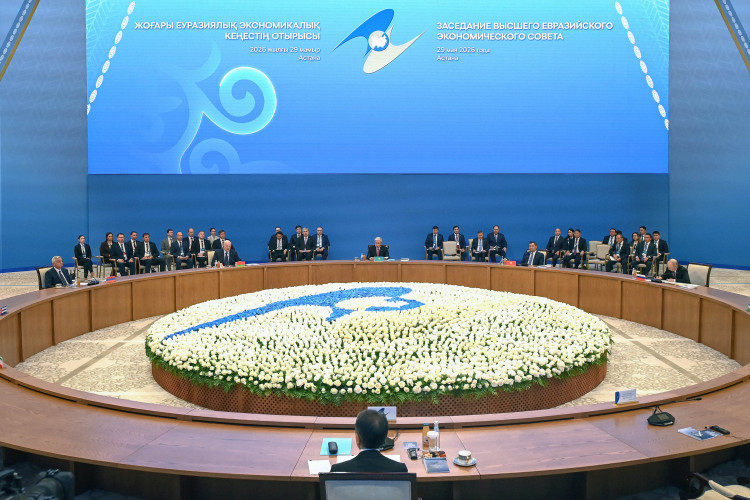
Leaders of the Eurasian Economic Union (EAEU) took part at the Supreme Eurasian Economic Council on May 29 in Astana. Photo credit: Akorda
The meeting brought together Belarusian President Alexander Lukashenko, Kyrgyz President Sadyr Japarov, Russian President Vladimir Putin, Armenian Deputy Prime Minister Mher Grigoryan, Uzbek President Shavkat Mirziyoyev, Cuban Vice President Salvador Valdez Mesa, and Iranian Minister of Industry, Mines and Trade Seyed Mohammad Atabak.
The council approved the launch of free trade negotiations with Tunisia, describing the North African country as a strategic entry point into the fast-growing African market for the five EAEU member states. Leaders also agreed to update elements of the 2019 free trade agreement with Serbia, clarifying shipping document requirements to simplify customs clearance between the EAEU and Serbia.
Tokayev emphasized the need to expand the EAEU’s economic partnerships beyond its traditional markets
“It is necessary to further expand the union’s relations with the countries of the Arab world, Southeast Asia, Africa and Latin America, as well as with reputable regional economic associations. Negotiations with India on the creation of a free trade zone are actively progressing,” he said.
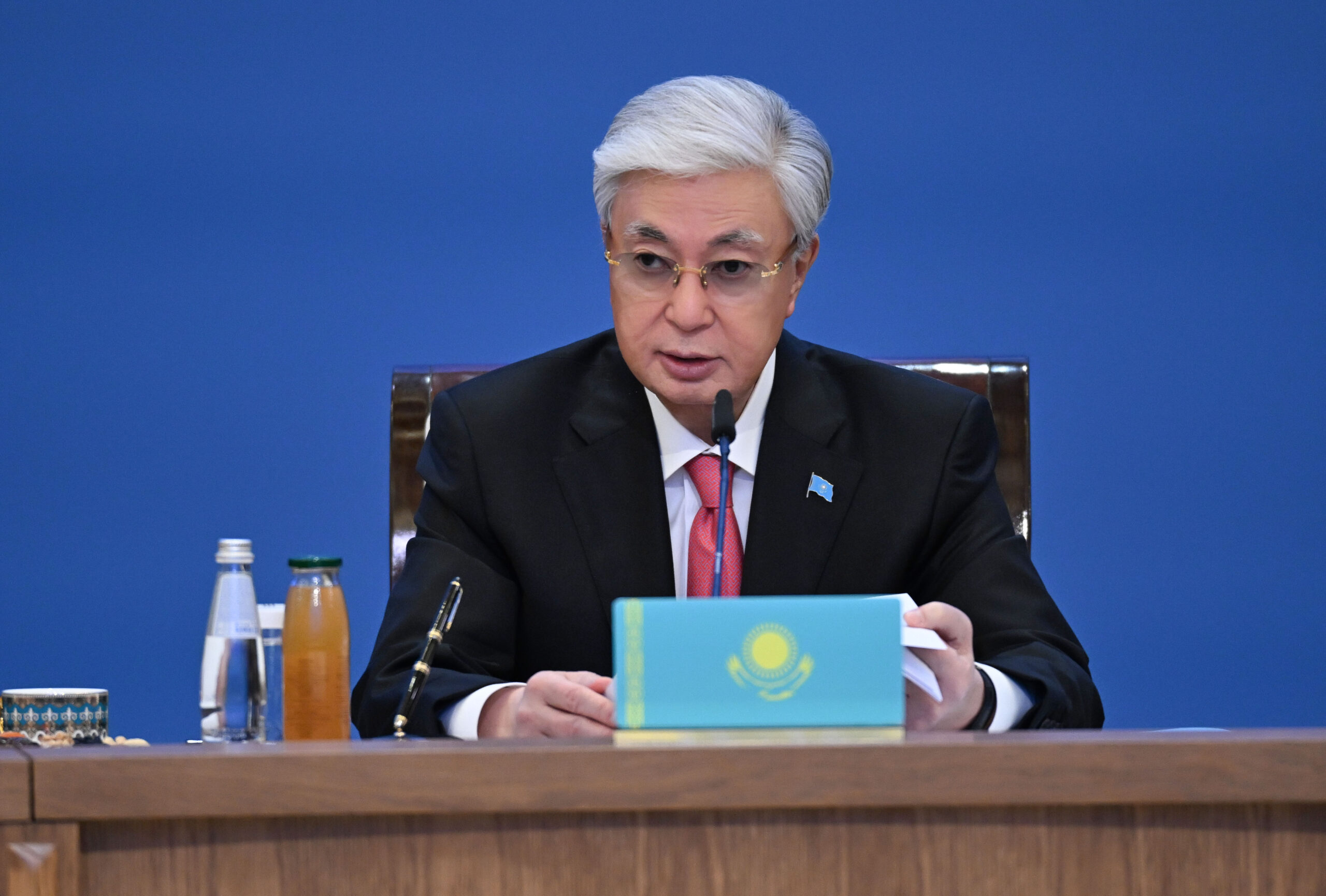
President Kassym-Jomart Tokayev chaired the Supreme Eurasian Economic Council in Astana. Photo credit: Akorda
The leaders reviewed the bloc’s trade policy achievements over the past five years, noting the entry into force of preferential agreements with Serbia and Iran, as well as the signing of new agreements with the United Arab Emirates, Indonesia and Mongolia. The interim trade agreement between the EAEU and Mongolia is scheduled to enter into force on July 22.
On the sidelines of the Eurasian Economic Forum on May 28, the Eurasian Economic Commission (EEC) and the Cuban government signed a five-year joint action plan aimed at expanding practical cooperation across multiple sectors.
AI and digital transformation
Tokayev described the adoption of the joint statement on the responsible development of artificial intelligence as the most important confirmation of the bloc’s unity at the meeting.
“I look forward to active cooperation in this area. We must focus our joint efforts on several priority areas, including strengthening the digital foundation of Eurasian integration. As a new technological order emerges, driven by digitalization and AI, the key factors for success will be the speed of data processing, the level of automation, and the depth of innovation,” he said.
Tokayev also identified the digitalization of Eurasian transport corridors as a strategic priority. He highlighted Kazakhstan’s efforts to digitize logistics through the Smart Cargo platform, which operates on a single-window principle and supports the development of digital transport corridors across the region.
“Mutual integration of information systems within the Union is a requirement of the time,” Tokayev said, calling for the creation of a comprehensive ecosystem of digital transport corridors throughout the EAEU.
He also emphasized the importance of digital transformation in industry and agriculture, urging member states to expand the use of digital technologies in the agro-industrial sector and strengthen food security.
“Our efforts can be focused on supporting high-tech initiatives that can strengthen the EAEU’s position in the global food market,” he said.
Tokayev added that the Eurasian Development Bank should continue to play a leading role in financing strategic projects and technological initiatives across the union.
Member States’ priorities
Armenian Deputy Prime Minister Mher Grigoryan welcomed amendments to the EAEU Treaty extending financial support mechanisms for cooperative projects in the agro-industrial sector.
“Armenia attaches great importance to the development of cooperation in the field of the agro-industrial complex,” Grigoryan said, adding that the measures would contribute to stronger food security within the union.
Uzbek President Shavkat Mirziyoyev described cooperation with EAEU member states as a key priority of Uzbekistan’s foreign economic policy.
“Today, our cooperation with the states of the Union has acquired the character of a comprehensive economic partnership,” Mirziyoyev said.
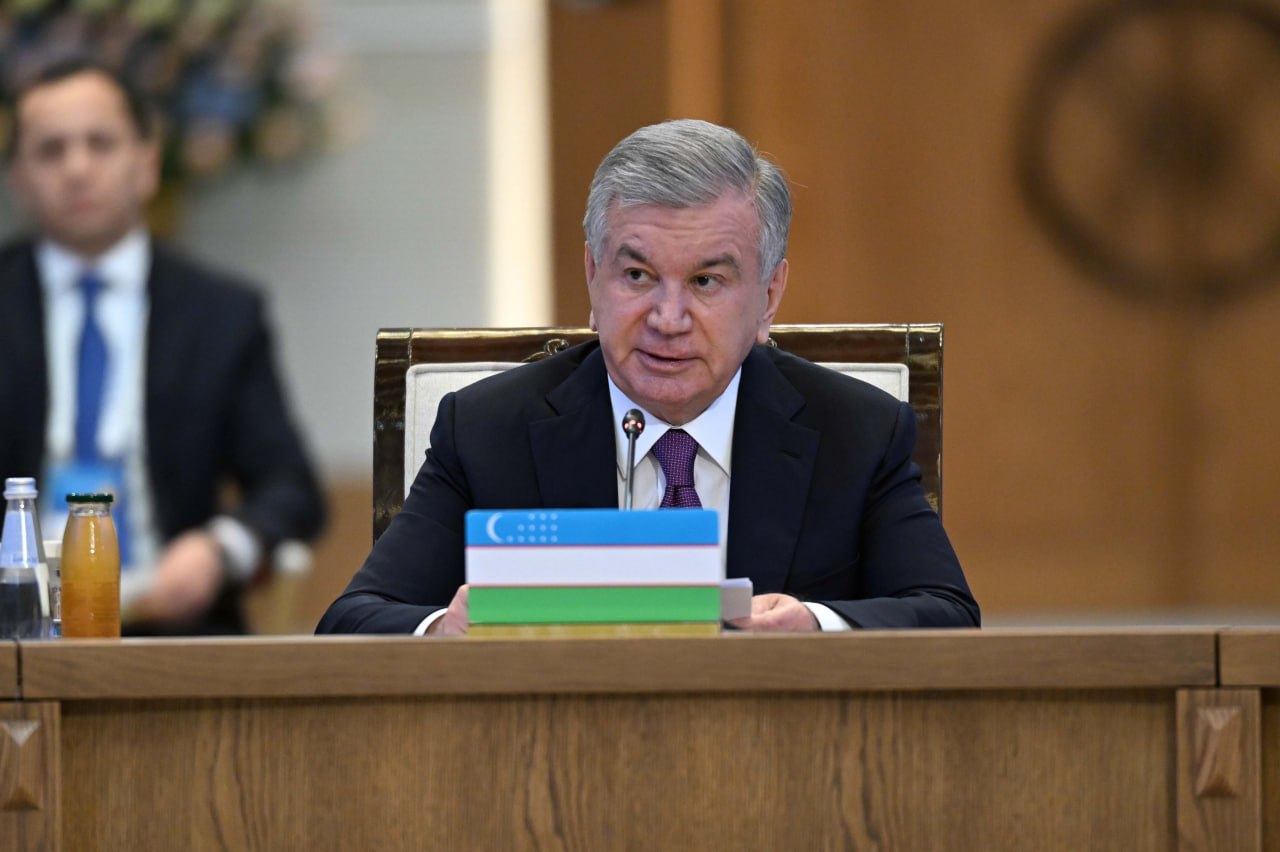
Uzbek President Shavkat Mirziyoyev described cooperation with EAEU member states as a key priority of Uzbekistan’s foreign economic policy. Photo credit: Akorda
He called for the creation of a common digital space to facilitate trade between Uzbekistan and EAEU member states, including harmonized regulations for e-commerce, customs procedures, certification systems, and electronic documents.
Mirziyoyev proposed deeper industrial cooperation and the creation of a joint project cooperation office in Uzbekistan.
“We are ready to establish a joint project office in Uzbekistan that will operate as a one-stop shop in partnership with the EEC. The office will help identify partners, support initiatives based in our free industrial zones, and facilitate access to financing,” Mirziyoyev said.
Other priorities outlined by Mirziyoyev included the adoption of a joint program for the green transformation of industry, strengthening labor mobility through integrated digital employment services and expanding regional tourism cooperation through the Tourist Ring of Central Asia initiative.
