
ASTANA – Kazakhstan’s national railway operator is expanding rail lines, ports and cargo capacity as companies seek more reliable land routes between China and Europe amid escalating tensions in the Middle East, according to Bloomberg.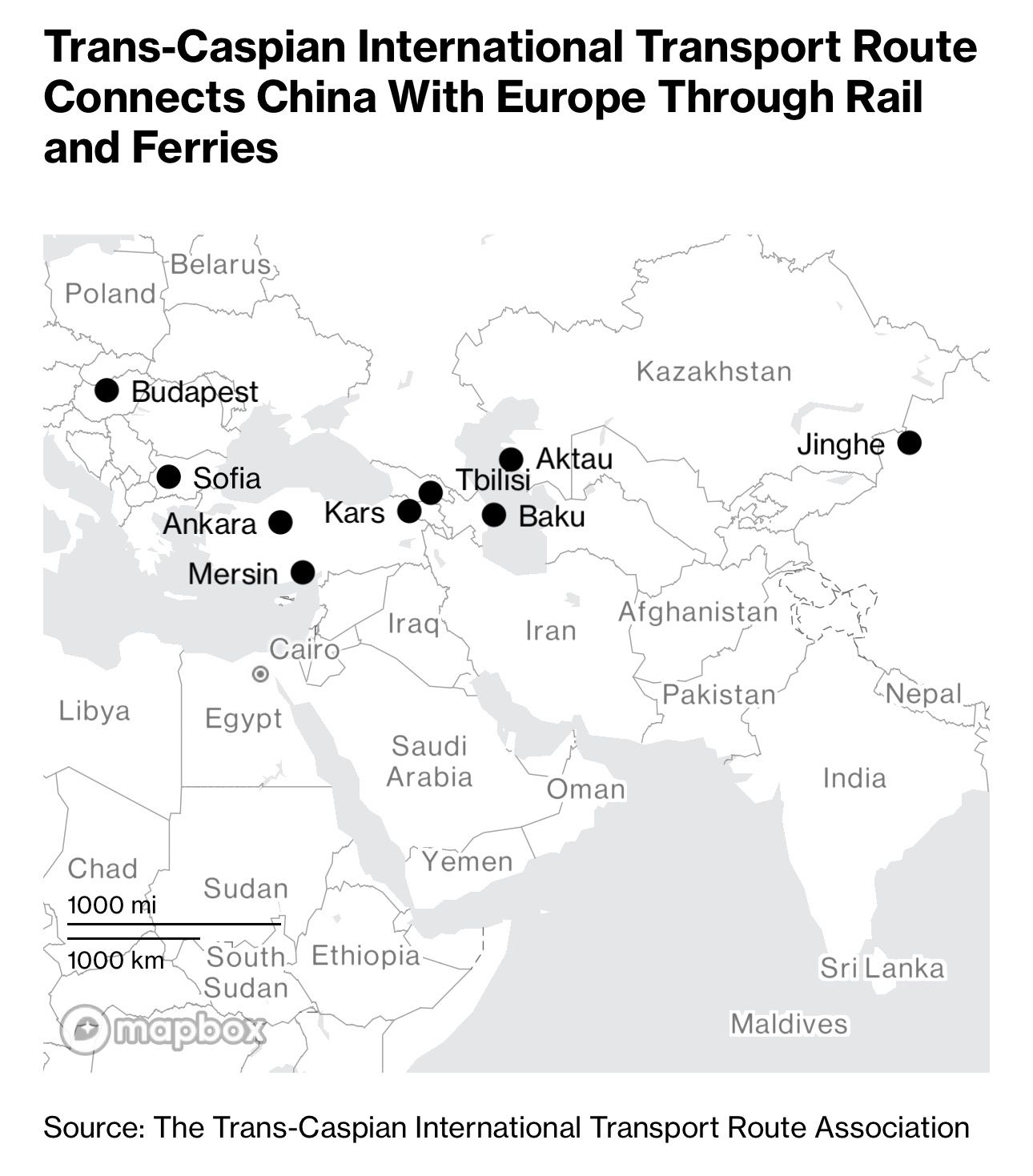
Kazakhstan Temir Zholy (KTZ) said instability around the Strait of Hormuz and the Iran war are increasing demand for overland cargo transportation.
“Chinese clients have become more interested in shipping by land rather than by sea because of reliability and predictable delivery times,” KTZ CEO Talgat Aldybergenov told Bloomberg on May 26.
The shift is boosting the importance of the Trans-Caspian International Transport Route (TITR), or Middle Corridor, linking China and Europe through Kazakhstan, Azerbaijan, Georgia and Turkiye. The route’s significance in global shipping has already increased since the Kremlin sent troops into Ukraine in 2022, prompting many to avoid rail links passing through Russia. UK-based Abrdn Investments Ltd estimates cargo volumes along the corridor have increased roughly tenfold since 2022.
KTZ plans to invest $10 billion in transport infrastructure by 2030, with about half already spent. This year, the company is building 900 kilometers of railway lines, including the Ayagoz-Bakhty route that will become Kazakhstan’s third rail crossing with China. Rail capacity between the two countries is expected to rise to 100 million tons by 2030 from around 55 million tons currently.
The company is also investing more than $100 million in six vessels to ease bottlenecks on the Caspian Sea. Four ships will be built by China’s Jiangsu Hantong Group and two by Baku Shipyard. The vessels will transport cargo from Kazakhstan’s Aktau and Kuryk ports to Baku before shipments continue to Europe.
Kazakhstan has also signed locomotive supply agreements with US-based Wabtec, France’s Alstom and Chinese manufacturers as KTZ expands rail capacity and logistics terminals in China and Europe.
In addition, KTZ plans to enter the air cargo market by acquiring its first cargo aircraft by the end of the year.
According to Aldybergenov, container traffic between China and Iran through Kazakhstan more than quadrupled in 2025 to around 4,600 containers, with further growth expected this year.
