
ASTANA – Scholars from across the Turkic world gathered in Almaty on May 21-22 for a major international conference marking the 100th anniversary of the historic 1926 Baku Turkological Congress, a landmark event that helped shape modern Turkology and discussions on a common Turkic alphabet, history, and cultural identity.
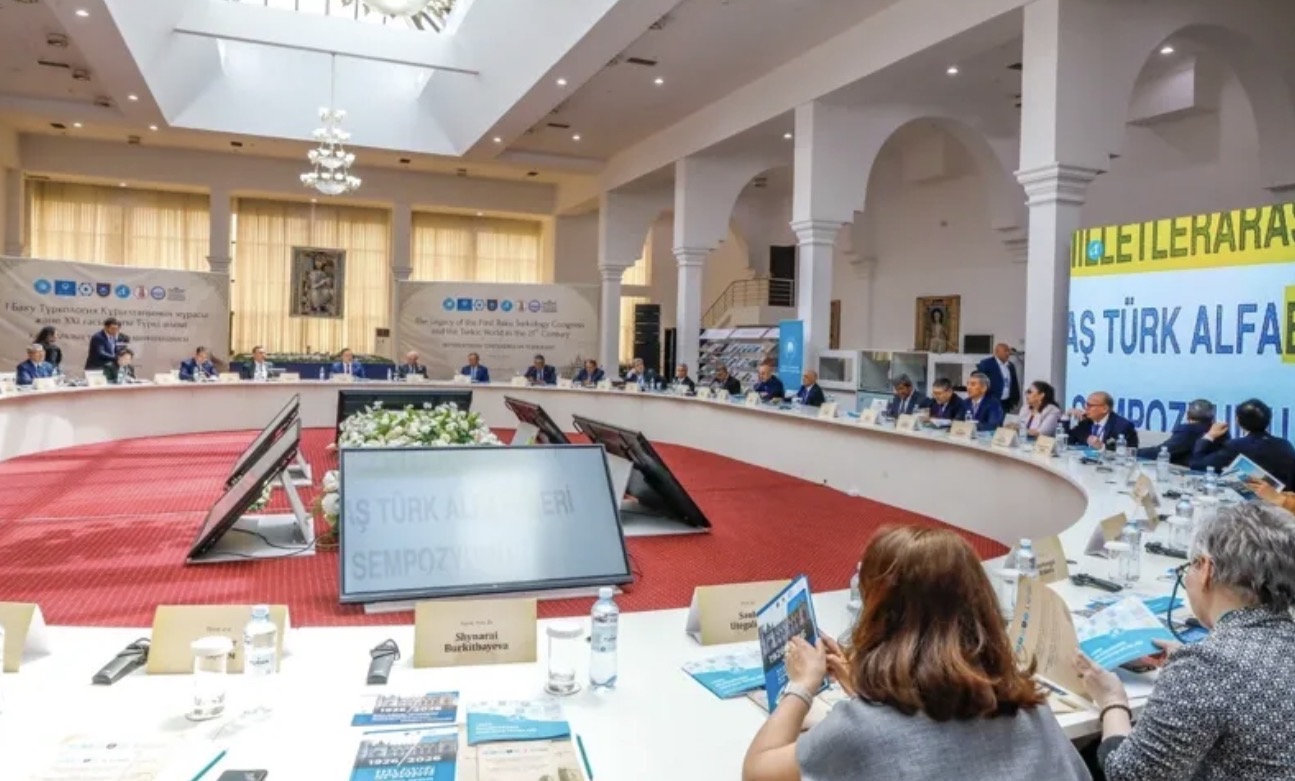
Photo credit: Alexander Pavskiy/Kazinform
Organized by the International Turkic Academy in partnership with Al-Farabi Kazakh National University and other institutions from Turkic countries, the conference brought together researchers from Azerbaijan, Kazakhstan, the Kyrgyz Republic, Turkmenistan, Turkiye, Uzbekistan, as well as the United States and European countries, reported Kazinform on May 21.
The 1926 congress in Baku was the first major gathering of Turkic intellectuals and scholars, uniting representatives of more than 32 Turkic peoples from regions stretching from Siberia and the Altai to the Balkans and Central Europe. Participants discussed Turkic languages, culture, and alphabet reform, including the historic transition from Arabic to Latin script.
President of Turkic Academy Shahin Mustafayev said the Almaty conference reviewed many of the same questions debated a century ago, including a common Turkic alphabet, shared terminology, and the future development of Turkology as a scientific field.
Many delegates to the 1926 congress were later repressed during the Soviet era, and Turkological studies remained politically sensitive for decades. Despite this history, organizers said interest in preserving and promoting Turkic heritage continues to grow across the Turkic world.
President of the International Foundation for Turkic Culture and Heritage, Aktoty Raimkulova, announced that a major symposium dedicated to the Baku Congress will also be held at UNESCO headquarters in Paris on Dec. 15, alongside concerts, exhibitions, and book presentations celebrating Turkic culture.
“Working at the foundation’s headquarters in Baku, I am pleased to see that Turkic peoples have preserved their cultural and historical heritage despite the repression of 130 out of the 131 delegates elected from the Turkic Soviet republics to the 1926 congress. For nearly 65 years after the Baku Congress, studying Turkology could jeopardize an academic career, even though Turkic culture and heritage continued to be studied around the world. Had the ideas and decisions of the congress been developed more fully, Turkology today might stand at a very different level,” she said.
As part of the anniversary events in Almaty, the National Museum opened an exhibition featuring rare photographs, archival resolutions from the 1926 congress, and translated literary works from Turkic nations. The exhibition will remain on display for six weeks.
