
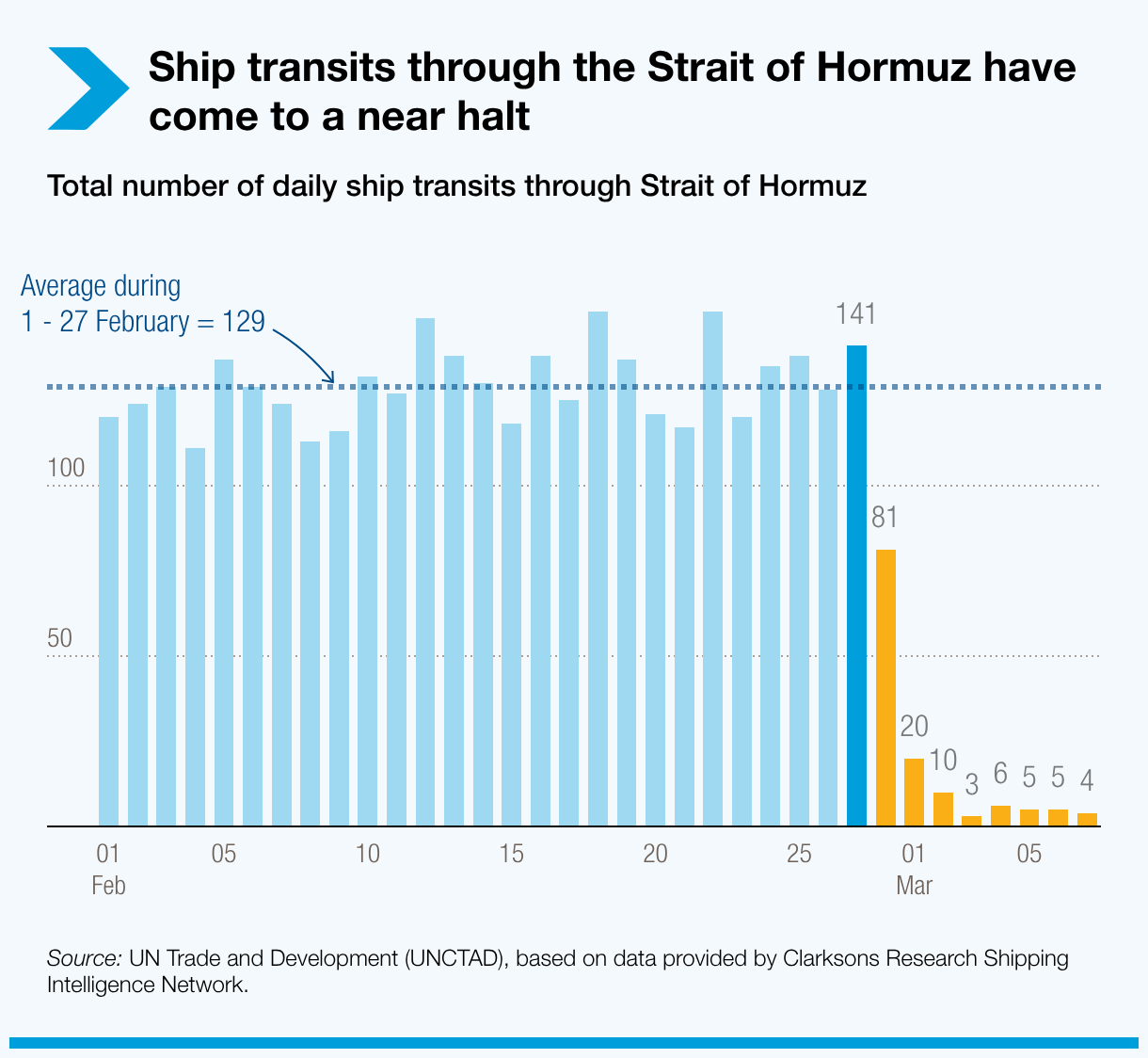
ASTANA – The closure of the Strait of Hormuz, a major global energy artery, left major oil producers unable to reach international markets and drove crude prices toward record highs. Despite a two-week ceasefire agreement, it will take time to clear the massive backlog in a waterway that carries a quarter of the world’s seaborne oil.
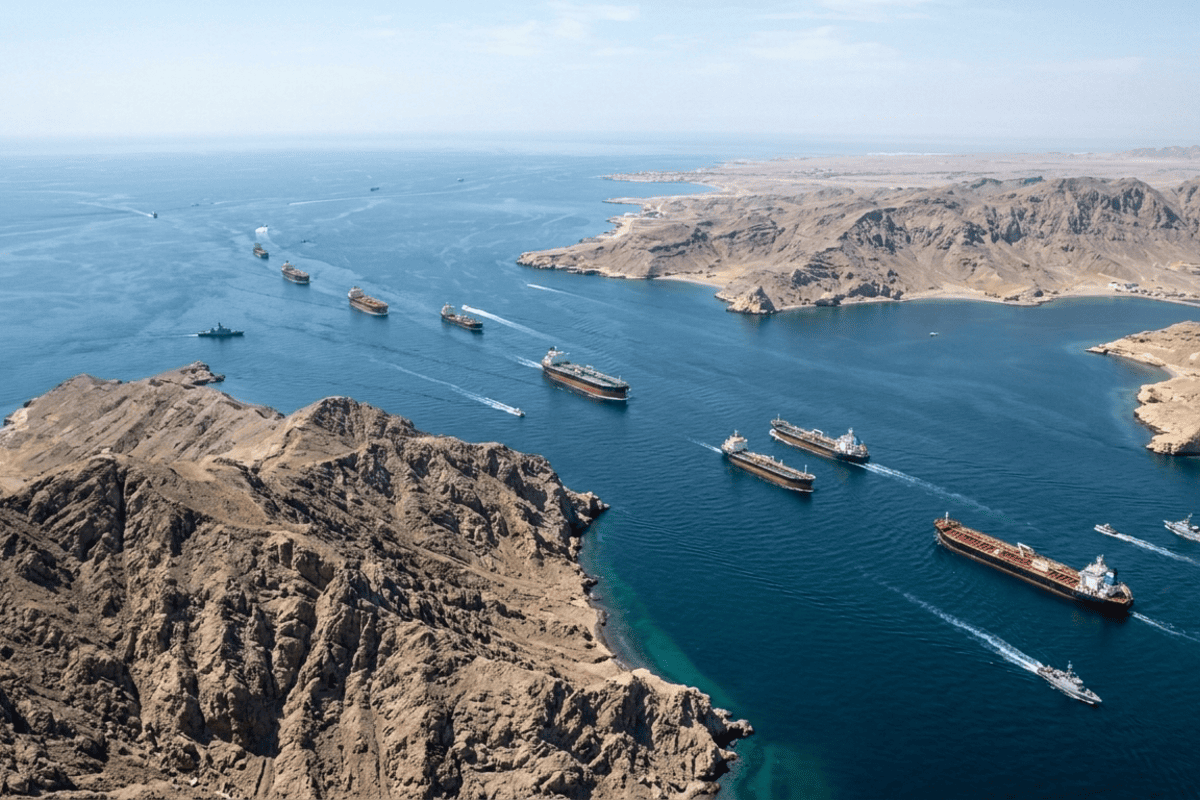
Photo credit: economymiddleeast.com
The Strait of Hormuz is a narrow sea passage separating Iran and the Arabian Peninsula that serves as the world’s most critical energy artery. According to data from the International Energy Agency (IEA), it carried 20 million barrels per day in 2025. Around 25% of the world’s seaborne oil trade transit through the Strait, with 80% going to Asia.
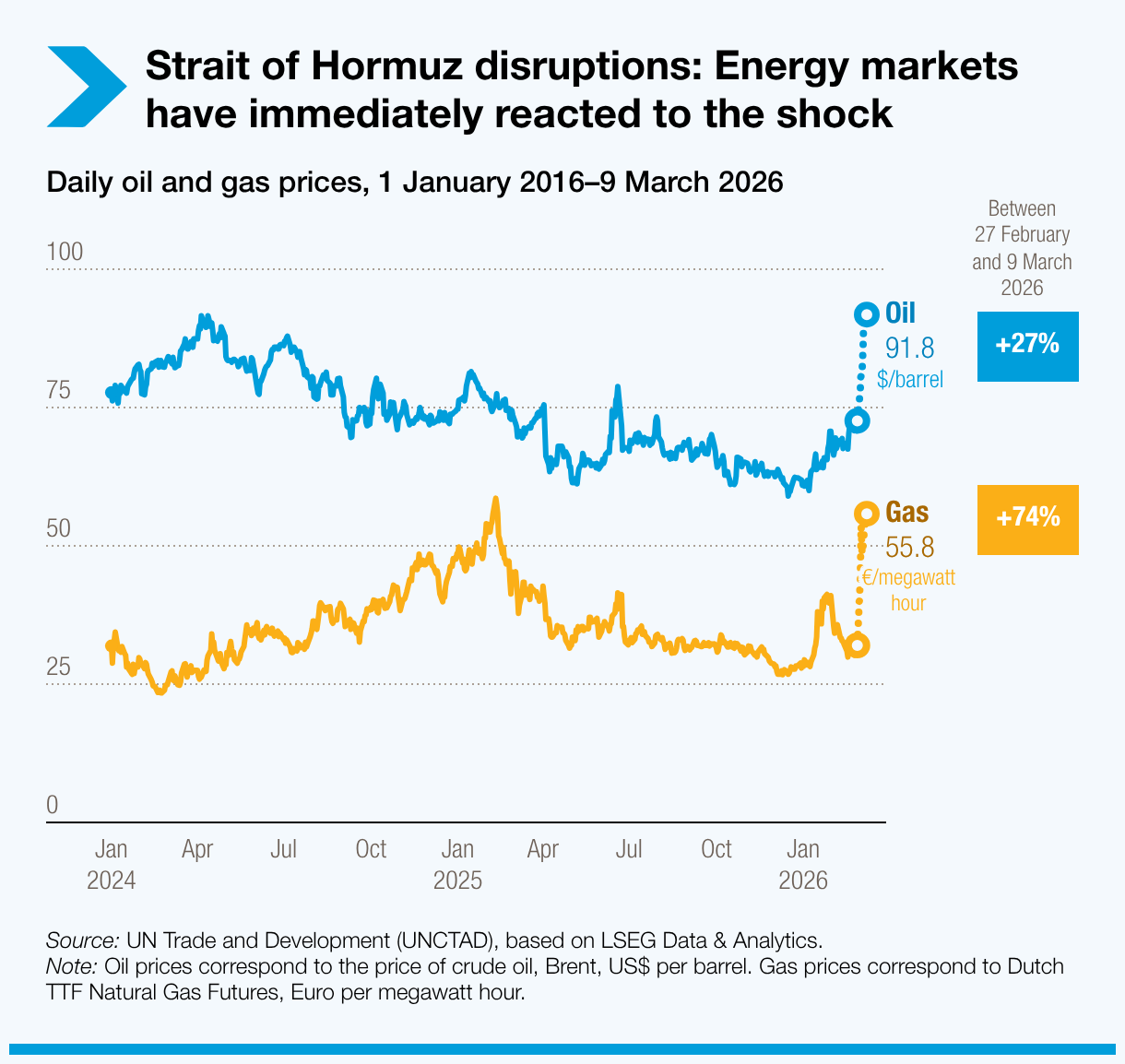
“While most of the oil transiting the Strait is destined for Asian markets, the impact of a disruption to the Strait would be global due to its immediate impact on pricing. The market impact would be exacerbated by the fact that, in addition to disrupting shipments of oil transiting the Strait, the vast majority of the world’s spare crude oil production capacity could be made unavailable as well,” said the agency.
Because the shipping lanes are narrow, just above three kilometers wide, and most Gulf countries have no other way to get their exports to the markets, even a small disruption can paralyze global energy markets.
Production ceiling
In Kazakhstan, sometimes viewed as the primary alternative, experts warn that the country is physically unable to capitalize on the crisis. According to Askar Ismailov, an oil and gas industry expert, a combination of peak production limits and bottlenecks in the Black Sea has left Kazakhstan hitting a ceiling.
“We don’t gain anything from this situation,” Ismailov told The Astana Times.
The expert noted that Kazakhstan is already operating at peak capacity. Unless something changes radically at the Kashagan field in the country’s west, a decline in oil production could follow next year.
He also pointed to risks stemming from the port of Novorossiysk, where periodic drone attacks have made the primary export route for Kazakh crude increasingly unreliable.
The expert also stressed that the cost of doing business in the region has skyrocketed as well. According to him, tanker freight rates have surged seven-fold in the last month, jumping from $2 per barrel to $14.
“In addition, insurance costs have quadrupled. This means a single tanker now requires roughly $200,000 just for insurance,” Ismailov said, adding that the rising oil prices technically offset these costs.
The expert noted there is an option to send Kazakh oil to China, but Kazakhstan is not yet seriously considering it. The Kazakhstan-China pipeline is running at only half of its 20-million-ton annual capacity. The Baku-Tbilisi-Ceyhan route is also not fully harnessed, stemming from the ongoing regional tensions and Azerbaijan’s reluctance to take large volumes of Kazakh oil not to compromise the quality of their own grade.
“We are getting requests from Turkiye, South Korea, and Bangladesh. They want to buy Kazakh oil to partially replace the Russian crude and replace the lost Gulf volumes, [but] our production limits and these transport hurdles stand in the way,” said Ismailov.
Jet fuel dynamics
Experts say even if the Strait reopens, the damage to the global fuel chain is already done, warning it will take months to get jet fuel supplies back to normal levels. However, Ismailov said these global market swings do not affect Kazakhstan.
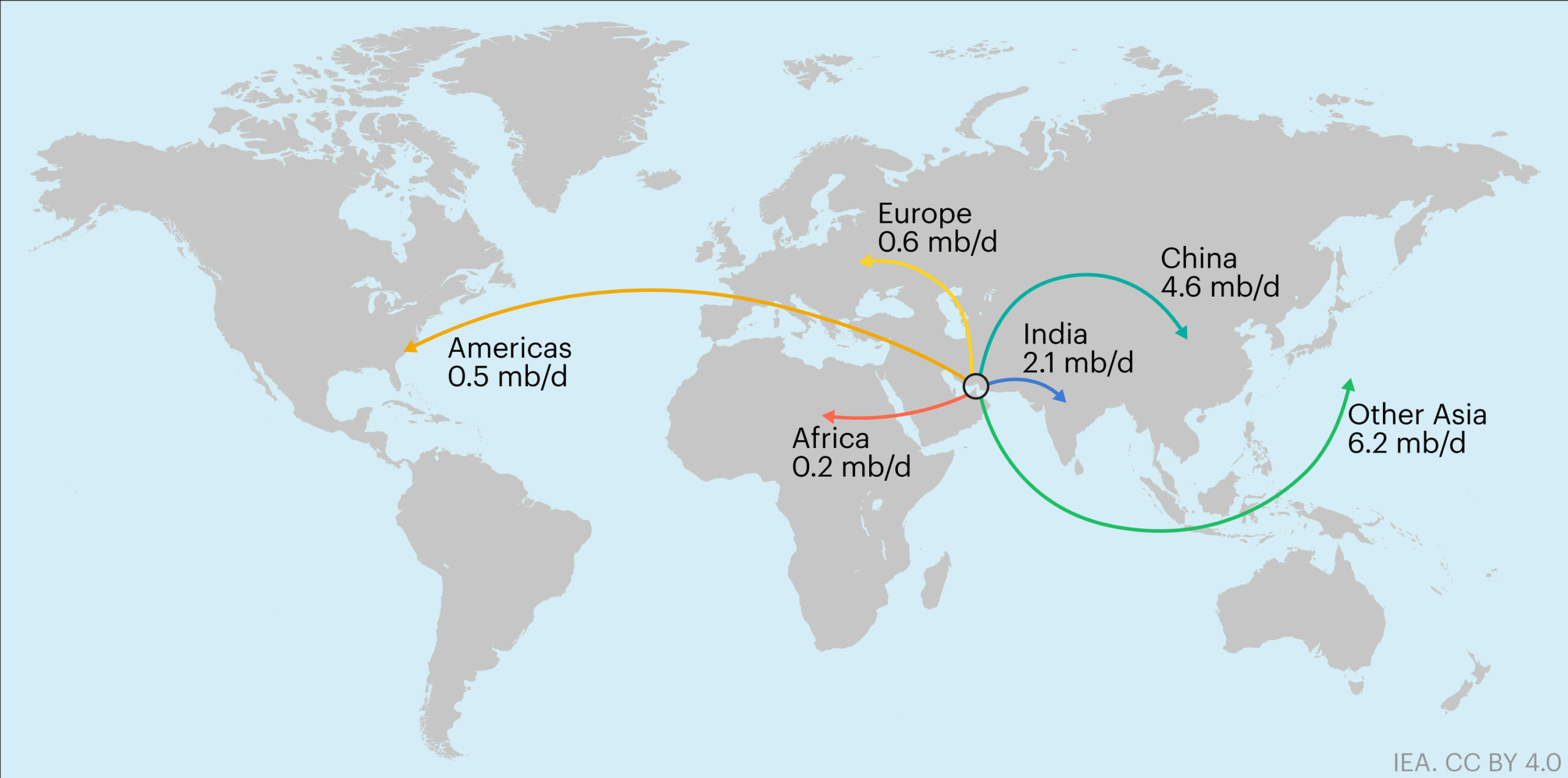
Crude oil exports transiting the Strait of Hormuz by destination (2025)
“The jet fuel we produce comes from domestic oil bought at state-regulated prices, roughly $25 per barrel, meaning global market swings don’t affect them. In this sense, it is easier for Kazakhstan,” he explained.
The real challenge is the supply gap. “We used to import around 200,000- 300,000 tons from Russia, but they have now imposed a total export ban. (…) Perhaps our domestic flights will not suffer much if the state makes a decision that this fuel cannot be used for international flights, so that our stable domestic transport remains and does not depend on external market conditions in any way,” he said.
He emphasized that the government needs to intervene to ensure this subsidized fuel isn’t diverted to international flights for profit. Until then, local passengers will continue to face ticket prices three to four times higher than those in Europe.
Recent oil production adjustments
Eight members of OPEC+ agreed on April 5 to implement a production adjustment of 206,000 barrels per day in May, in addition to the 1.65 million barrels per day of voluntary cuts announced in April 2023, reaffirming the importance of a cautious approach and retaining full flexibility. These members include Algeria, Iraq, Kazakhstan, Kuwait, Oman, Russia, Saudi Arabia, and the United Arab Emirates.
The group expressed concern regarding attacks on energy infrastructure, noting that “restoring damaged energy assets to full capacity is both costly and takes a long time, thereby affecting overall supply availability,” according to the group’s press statement. Since the war started on Feb. 28, roughly 40 key energy assets in the Middle East have been damaged, said IEA Executive Director Fatih Birol, as quoted by Reuters.
While OPEC fulfils its function, Ismailov questioned the role of Kazakhstan in this group.
“Primarily, it is a group of countries that can regulate production levels at the state level. In Kazakhstan, in principle, 80% of our oil is produced either through concession agreements at Tengiz or Production Sharing Agreements (PSAs),” he said, adding that the operators under these stable contracts decide for themselves how much they will produce and export.
